

A child can describe what is happening long before they can easily explain what might happen. Understanding when children use if then means looking at that shift: from talking about visible events to linking a possible condition with a consequence that has not happened yet. “If you put the block Continue Reading
Speech Milestones
When Do Children Start Using “Because,” “But,” and “And” Correctly?
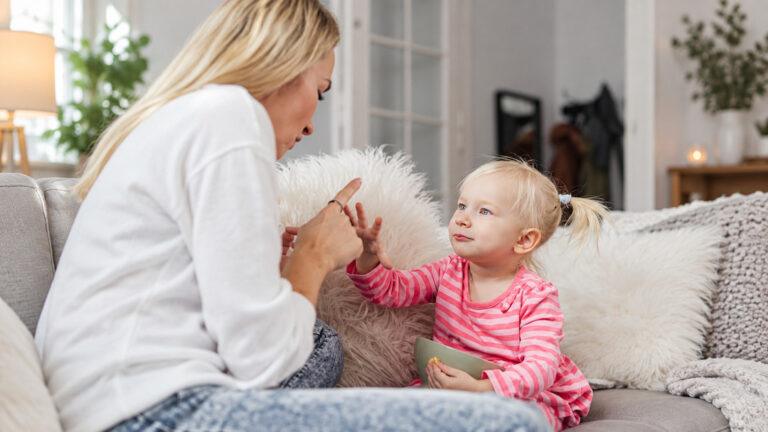
A child who says “I wanted the red one, but…” may sound as if they have mastered a sophisticated piece of grammar. Yet knowing when children use conjunctions requires looking beyond whether the word appears at all. “And,” “but,” and “because” do different jobs, and children can begin producing them Continue Reading
Teacher Discourse Strategies for Bilingual Speech

Teacher discourse strategies can shape bilingual preschool talk. See what recent studies support, what remains uncertain, and what to try.
What Happens to Language Around Age Two? Researchers Are Mapping the Shift
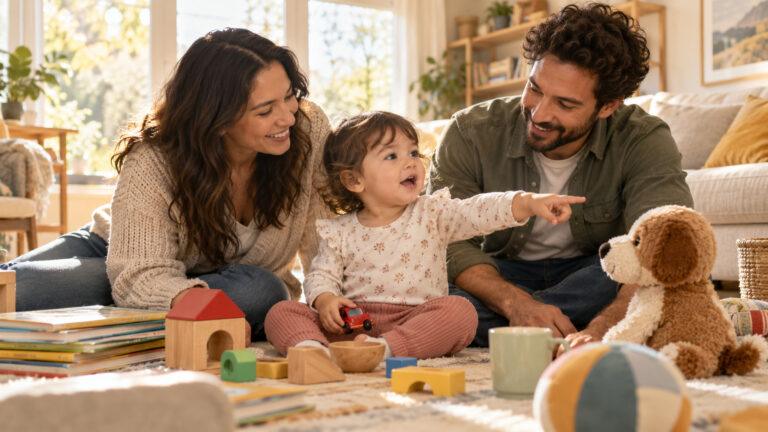
A two-year-old may seem to move quickly from scattered words to combinations that suddenly sound more organized. New research suggests that language development around age two may involve something deeper than simply collecting more vocabulary: the relationships between words themselves appear to become more complex. That does not mean every Continue Reading
When Do Children Understand Yesterday, Today, and Tomorrow?
A preschooler may announce, “Tomorrow we went to Grandma’s,” even though the visit happened yesterday. That does not necessarily mean the child has forgotten the event. Understanding time words requires children to do something unusually abstract: locate an experience in relation to a present moment that keeps changing. For parents Continue Reading
Bilingual Narrative Growth and Listening Skills

How bilingual narrative growth relates to listening comprehension, vocabulary, morphology, and practical speech-milestone support.
Speech Delay Spike After the Pandemic: What Helps

The speech delay spike after COVID-era disruptions is real in several datasets. Learn what parents can track and discuss with clinicians.
When Do Children Start Using Complete Sentences?

Parents often ask when do children start speaking in sentences because the change from isolated words to real conversation can feel dramatic. But “complete sentence” is not a switch that flips on at one age. Children usually move through a sequence: single words carry whole messages, two words show relationships, Continue Reading
When Do Children Begin Using Pronouns Correctly?
Parents often notice pronouns because the mistakes are unusually visible: “Me do it,” “Her has it,” or a child repeating “you” when they mean themselves. So when do children start using pronouns? The useful answer is not a single birthday. Pronouns emerge across toddlerhood, while accurate use develops as children Continue Reading
Speech Development Paths for Low-Income Children
Speech development paths differ among low-income children. Learn what research supports, what varies, and how adults can respond.