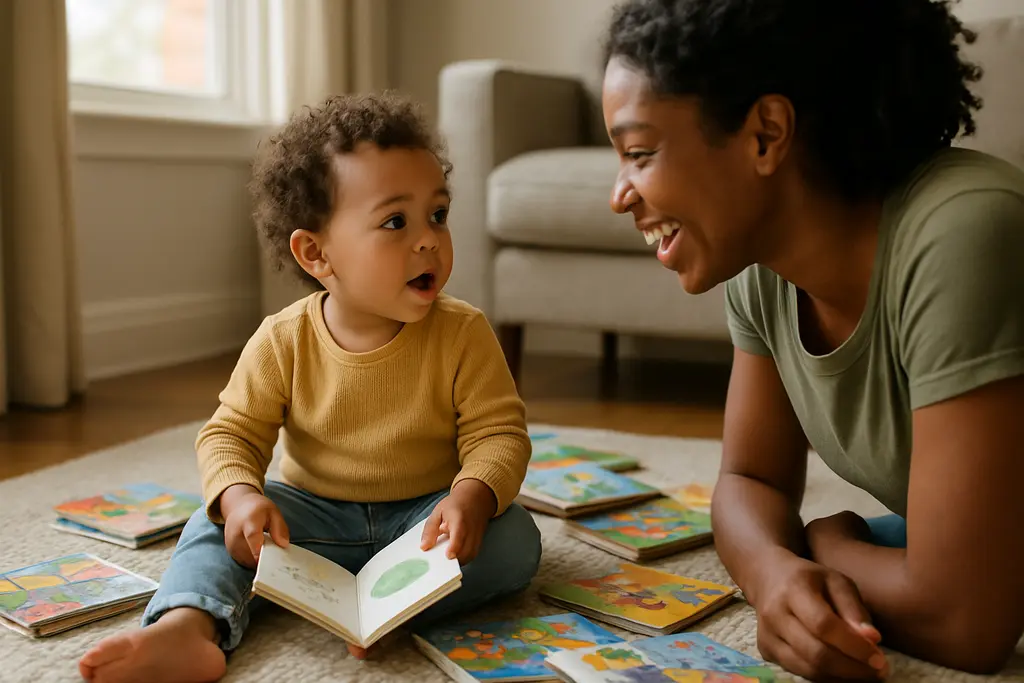
For many families, bilingual speech milestones raise a practical question: is a child developing typically, or is using two languages changing the timing of first sounds, first words, and early word combinations? Current research gives a reassuring but careful answer. Many early milestones appear to emerge on a similar timeline for bilingual and monolingual children, yet vocabulary measured in only one language can look smaller, especially when exposure is split across two languages.
That difference matters because a bilingual child’s communication is spread across people, places, and routines. A toddler may know food words in one language, bath-time words in another, and social phrases in both. If adults count only one language, they may miss part of what the child can say and understand.
What Bilingual Speech Milestones Show Early
Why Bilingual Speech Milestones Are Not One Score
Speech milestones are often discussed as if they happen in one straight line: babbling, first word, more words, and early combinations. For bilingual children, the line is still there, but it may be distributed across two languages. A child’s first meaningful word might appear in the home language, the community language, or both close together. A later word combination might mix languages or use one language with one caregiver and another language with another caregiver.
A longitudinal study published on January 15, 2025 compared 302 Polish bilingual children living outside Poland with 302 matched Polish monolingual children from 0 to 24 months. The researchers reported no significant differences in reaching milestones including babbling, first word, 10th word, 50th word, and first multi-word utterance early milestone study. The bilingual and monolingual groups were matched on factors such as sex, entry age, reporting duration, and parental education, which helped reduce some obvious demographic explanations for the findings.
What Recent Infant Data Can And Cannot Tell Us
The strongest lesson for bilingual speech milestones is not that every bilingual child develops in exactly the same way. It is that bilingualism alone should not be treated as proof of delay. The 2025 Polish study used both frequentist and Bayesian analyses. According to the research notes, Bayesian evidence supported no difference for first word and 10th word timing, gave moderate support for no difference in babbling and first multi-word utterance, and was inconclusive for the 50th word milestone.
That last point is useful for parents and educators. Some milestones are easier to compare than others. A first word is a clear event for many families, although even that can be hard to define if a child uses an approximation consistently. A 50-word milestone depends heavily on how words are counted, whether both languages are included, and how often each caregiver observes the child in each language.
Vocabulary Growth Depends On Language Exposure
Single-Language Scores Can Look Lower
Vocabulary findings are more mixed than early milestone timing. A November 2017 study following English monolingual and Spanish-English bilingual children from ages 2.5 to 5 years found that early bilingual children lagged behind monolingual children in English vocabulary growth between 30 and 60 months. The gap was smaller for children with greater English exposure and for children who had a native English speaker in the home language growth study.
For bilingual speech milestones, that distinction matters. A child may show a smaller vocabulary in English than a monolingual English-speaking peer while still building knowledge across two language systems. That does not mean parents should ignore slow progress. It means the question should be framed carefully: What does the child understand and say across both languages, and how much opportunity has the child had to hear and use each language?
Total Communication Gives A Fuller Picture
Research summarized in the notes also reported that bilingual infants often follow similar timing for universal early milestones, while vocabulary measured in only one language may appear smaller. The more useful clinical and educational picture includes all meaningful communication: spoken words in either language, consistent word approximations, gestures, pointing, shared attention, imitation, and early word combinations.
For example, a child who says “agua,” “mama,” “up,” “bye,” and a sibling’s name is not starting from zero in English or Spanish. The child is building a communication system that reflects daily life. A teacher who hears only English may see less language than a parent who hears both languages at home. A parent who hears only the home language may not know what the child is trying at preschool. Communication between adults helps prevent undercounting.
Practical Ways To Track Speech At Home
Keep Notes Across Both Languages
Tracking bilingual speech milestones works best when families count communication across both languages without requiring perfect pronunciation. A simple note on a phone or paper can include the date, the word or sound, the language context, what the child seemed to mean, and whether the child used it again later. This record can help families describe patterns more clearly if they speak with a pediatrician, early childhood educator, or speech-language professional.
Parents do not need to turn home life into a test. The goal is to notice usable communication. If a child says a word approximation every time the dog enters the room, that consistency matters. If the child points, vocalizes, and looks back to share attention, that is also communication worth noting. Families who want more support for language routines can read related ideas on linguistic exposure and bilingual vocabulary.
Use Daily Routines For Real Practice
Young children learn language through repeated, meaningful interaction. In bilingual homes, that can happen during meals, dressing, bath time, stories, errands, songs, and play. Adults can name what the child is looking at, respond to attempts, and expand short messages. If the child says “ball,” an adult might answer, “Big ball,” or use the family’s other language to say the same idea naturally.
Families sometimes worry that they must choose one language to protect speech development. The research notes provided here do not support the idea that bilingual exposure alone causes early milestone delay. At the same time, the notes do show that amount and quality of exposure can affect skills in a specific language. This means that children need real chances to hear and use each language they are expected to learn.
- Count words and meaningful approximations in both languages.
- Notice whether the child uses sounds, gestures, eye gaze, and words to affect what happens next.
- Share examples from home and school so one setting does not define the whole child.
- Watch progress over time rather than judging a single difficult day.
- Ask for professional input if communication seems limited across both languages.
Parents who are preparing written notes for school meetings may find general writing resources through a related network site offering writing service comparisons. Those resources are not a substitute for developmental assessment, but clear notes can make conversations with care teams easier.
When To Ask For Speech-Language Support
Concerns That Deserve Follow-Up
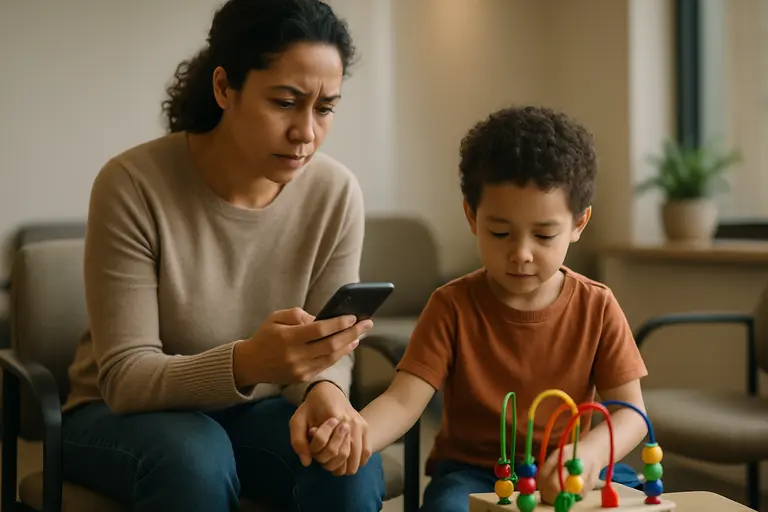
Because bilingual development can be misread in both directions, families need a balanced approach. It is not helpful to assume that every slower pattern is caused by bilingualism. It is also not helpful to assume that every smaller single-language vocabulary means a disorder. A concern is more meaningful when it appears across both languages and across settings, such as limited attempts to communicate, little response to familiar language, or loss of skills previously used.
A speech-language professional with experience in bilingual development can help interpret the pattern, especially when caregivers bring examples from both languages. The most useful information often includes who speaks each language with the child, how much the child hears each language, which words the child uses with which people, and whether the child communicates for different purposes such as requesting, refusing, greeting, commenting, and sharing attention.
Assessment has limits. A short sample in one language may not represent a bilingual child’s full ability. Standardized scores may not capture all home language knowledge, especially if the child’s exposure pattern differs from the group used to build the test. Families can ask how both languages will be considered and whether caregiver report, observation, and language sampling can be part of the process.
Bilingual Speech Milestones In Daily Family Life
Bilingual development is not a problem to fix. It is a language-learning context that needs careful observation. The strongest research in the notes showed similar timing for several early milestones in bilingual and monolingual infants and toddlers, while vocabulary growth in one language depended partly on exposure. Both findings can be true at the same time.
For parents, the practical message is steady and reassuring: speak with your child in the languages your family uses well, respond warmly to communication attempts, and track progress across both languages. For educators, the message is to ask what the child does at home before assuming a child has limited language. For clinicians, the message is to interpret milestones in relation to exposure, opportunity, and communication across the child’s full language experience.
Children do not need every word in both languages at the same moment to be making progress. They do need frequent, meaningful chances to communicate with people who listen and respond. That is where milestones become more than dates on a chart: they become signs of a child learning to connect with others.