
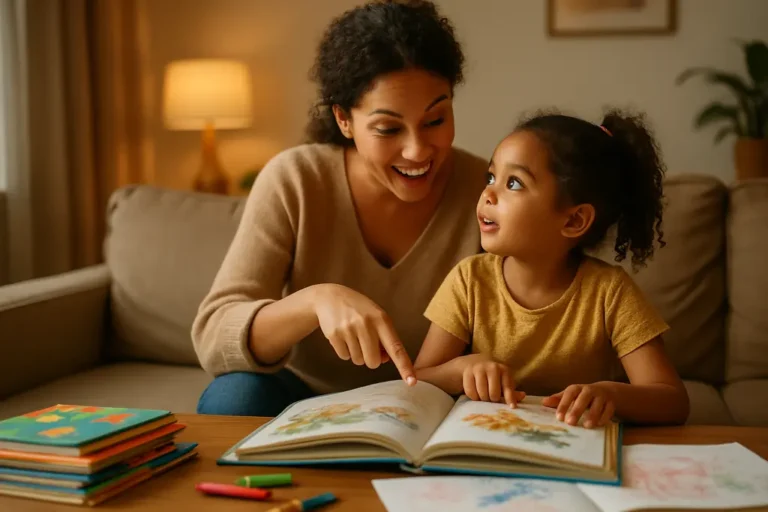
Use family literacy communication to connect school updates, home routines, and reading support without placing blame on families.
Communication Skills
How to Make Storytime More Interactive for Children Who Use AAC
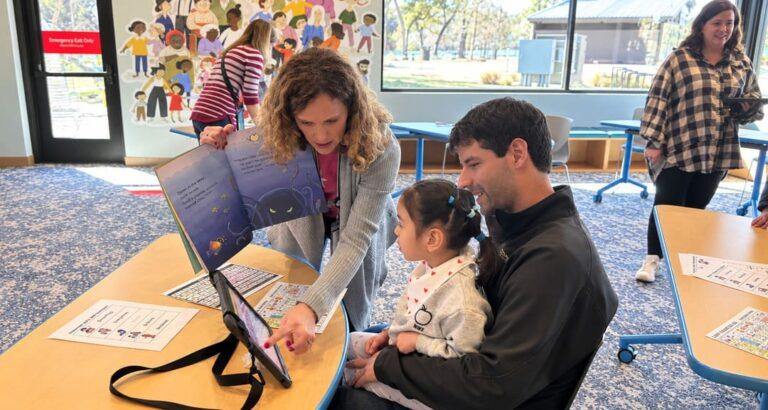
Reading together should give children a chance to share ideas, make choices, and enjoy a story—even when spoken words are difficult or unreliable. For children who use augmentative and alternative communication (AAC), storytime can include pointing to pictures, selecting messages on a communication device, using signs, making sounds, or responding Continue Reading
AAP Communication Strategies for Tough Talks

AAP Communication Strategies at the 2026 conference highlighted trust, misinformation, and practical ways pediatricians connect with families.
Bilingual Child Gestures and Early Learning

Bilingual child gestures can reveal early communication strengths. Learn what recent research suggests and how parents can respond.
How Parents Can Model Better Communication at Home

Children learn communication from more than the instructions adults give them. They also absorb how family members listen, handle interruptions, express frustration, repair misunderstandings, and respond when someone needs more time. That makes modeling communication skills at home one of the most practical ways to support a child’s development. No Continue Reading
How to Support a Quiet Child’s Communication Confidence

A quiet child may have plenty to say while needing more time, familiarity, or safety before saying it. Building communication confidence in quiet children begins with recognizing this difference: confidence is not measured by how quickly, loudly, or publicly a child speaks. Adults can help by creating comfortable openings for Continue Reading
A Child Should Not Need Perfect Words to Be Understood

A child should not have to produce a perfect word before receiving help, comfort, food, or a break. Helping children communicate needs begins by recognizing that a request can arrive through speech, gestures, signs, pictures, facial expressions, sounds, or a communication device. Adults can make those requests easier by noticing Continue Reading
Hand Gestures Parents Use to Support Learning
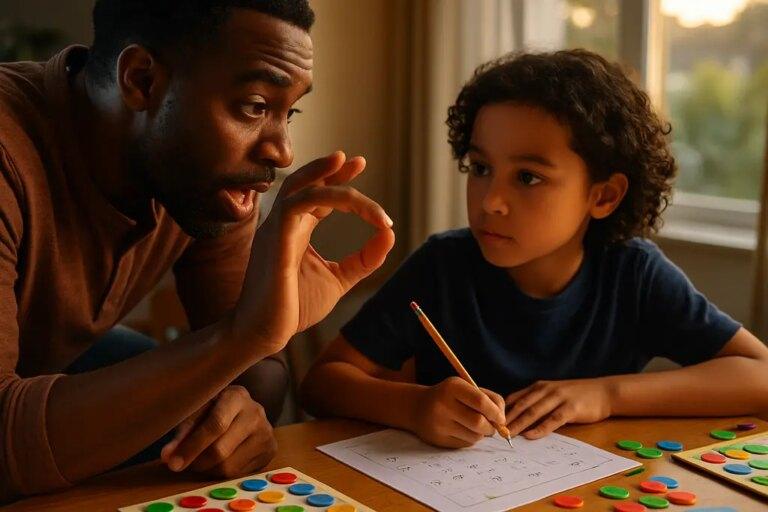
Hand gestures can help children connect words with meaning. See evidence-based ways parents can use movement during play, reading, and bilingual talk.
Culturally Responsive Interventions for DLLs

Culturally responsive interventions can support bilingual children when home language, family routines, and culture guide language goals.
The Most Helpful Part of a Question May Be the Silence After It

A question may take only seconds to ask, yet a child’s answer can require much more work. Understanding child response time helps parents recognize that a quiet pause may be evidence of thinking—not refusal, distraction, or a lack of knowledge. During that pause, a child may be interpreting the question, Continue Reading