
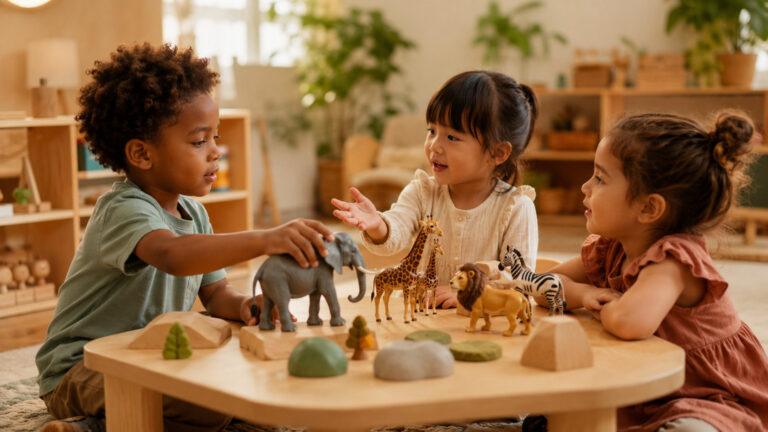
A plastic elephant refusing to share a watering hole may look like a tiny drama, but it gives a child a safe way to rehearse a difficult social moment. Toy animals for social communication work because they turn invisible skills—waiting, noticing feelings, repairing conflict, and responding to another person—into actions Continue Reading
Garden Talk: Planting, Watering, and Watching Words Grow

Imagine a classroom without walls, where lessons sprout from the soil. The Garden Language Lab turns any spot into a vibrant space for growing skills. You don’t need a big backyard. A sunny windowsill, a patio corner, or even a tabletop can become your launchpad. Start simple. A few pots Continue Reading
Maps, Roads, and Ramps: Vehicle Play that Teaches Directions and Story Sequences

Imagine a world where a simple journey across the living room floor becomes an epic adventure. With a few toy cars, some makeshift roads, and a cardboard ramp, children embark on a hands-on exploration. This goes far beyond just pushing vehicles around. This interactive activity is a powerful tool for Continue Reading
Bath‑Time Language Lab: Prepositions, Verbs, and Routine Requests

What if your child learns best in the tub? The tub is a perfect place for learning. It’s full of sounds and fun, making it great for language skills. Your bathroom is like an “Echo Chamber Opportunity.” It makes sounds louder, helping your child practice words. Toys and water play Continue Reading
Story Sequencing Activities That Help Children Organize Their Ideas
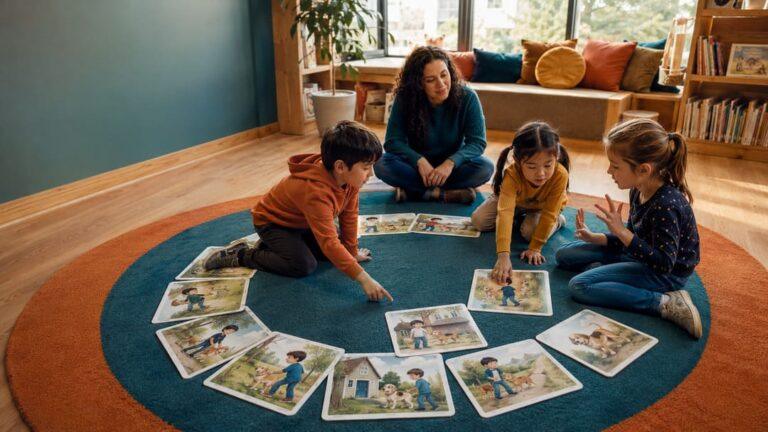
A child may remember every exciting part of an event and still tell it in an order no one else can follow. Story sequencing activities help turn that collection of details into a connected account by teaching children how to identify what happened first, what changed next, and how the Continue Reading
How To Use Toys For Better Language Development
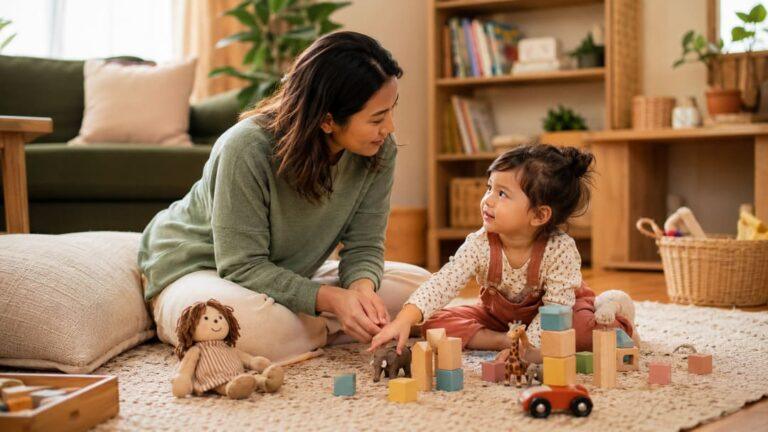
Toys for language development are often misunderstood because many parents look for the “best” toy instead of the best interaction. A toy does not teach language by itself; the words, pauses, turn-taking, sounds, and shared attention around the toy are what make play powerful. That matters because families are surrounded Continue Reading
Family Photo Stories: Use Albums to Teach Past Tense, Pronouns, and Heritage Words

What if your most treasured memories could become your child’s most powerful language lesson? The albums on your shelf hold more than just pictures. They are a gateway to conversation, learning, and deeper connection. Flipping through these pages together naturally encourages specific language skills. Children describe what they see, using Continue Reading
Why Children Need More Time To Answer Questions

Child response time can change the entire quality of a conversation. When adults ask a question and rush to fill the silence, children often lose the very space they need to understand, organize, and answer. For families working on communication skills, this small pause matters more than it may appear. Continue Reading
Smart Co‑Viewing: If Screens Are On, Make Language the Star

Let’s change our view on screen time. It’s not just about watching. It’s a chance to connect and learn together. Assoc Prof Dr Mazlina Che Mustafa says it’s all about high-quality, interactive content. The key is to watch with your child. Prof Dr Azlina Mohd Kosnin agrees. She believes technology Continue Reading
Playground Communication Boards Help Children Connect

Playground communication boards are becoming one of the simplest ways communities can make play more inclusive for children who struggle to speak, speak consistently, or speak at all. They matter because the playground is where children do more than run and climb; they ask, choose, reject, invite, repair misunderstandings, and Continue Reading