Playground communication boards are becoming one of the simplest ways communities can make play more inclusive for children who struggle to speak, speak consistently, or speak at all. They matter because the playground is where children do more than run and climb; they ask, choose, reject, invite, repair misunderstandings, and learn how connection works in real time.
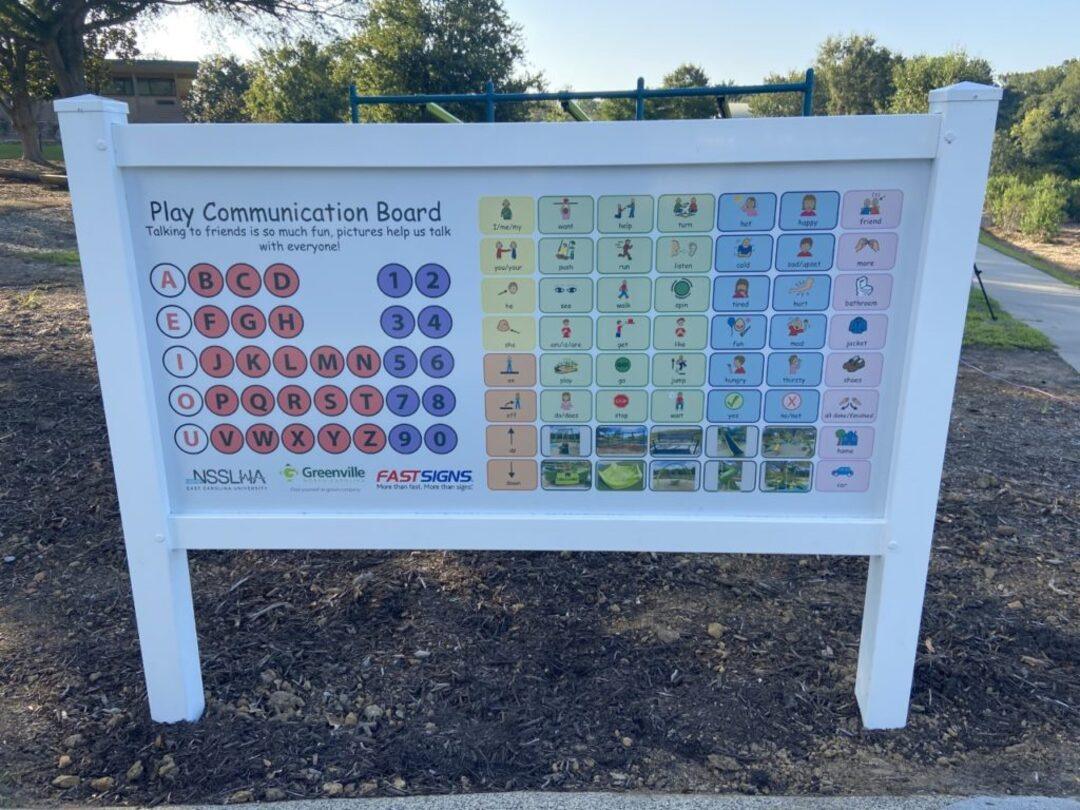
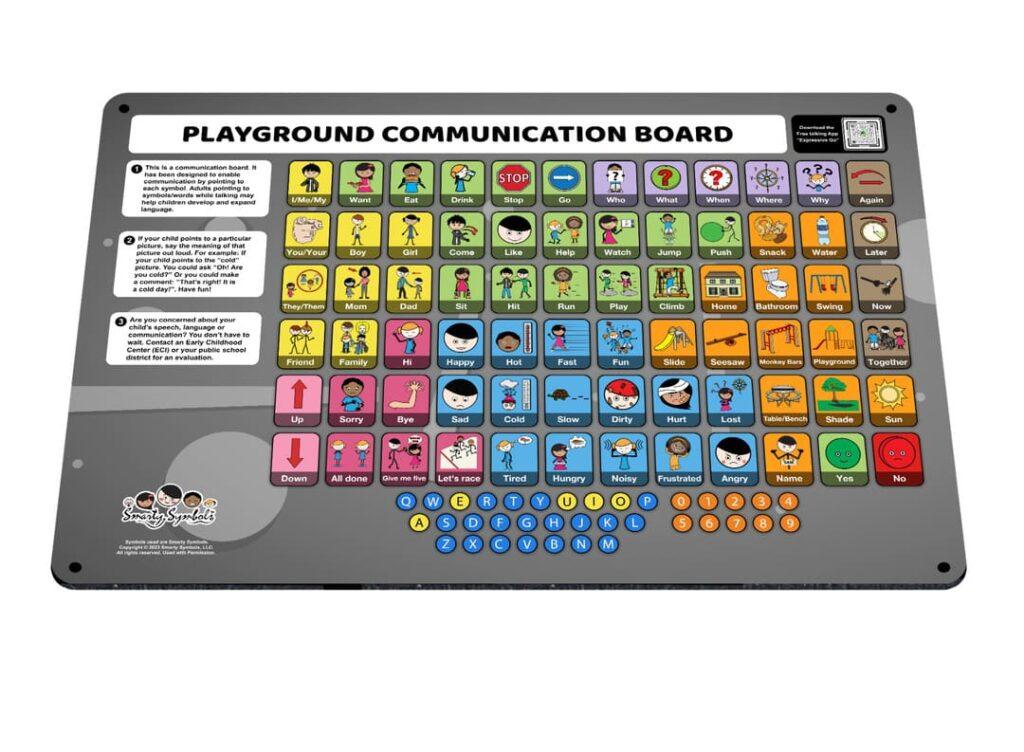
The idea is gaining attention as more parks and schools add visual communication tools to public play spaces. In Westbrook, Connecticut, a communication board at Ted Lane Field playground includes 72 symbols children can point to when they need help, want a turn, feel hot, or want to choose an activity, as detailed by CT Insider in its coverage of the new playground communication board.
Why Playground Communication Boards Are More Than A Helpful Sign
A communication board may look simple from a distance: pictures, words, colors, and common phrases arranged on a durable sign. But for a child who cannot quickly form spoken language under pressure, that board can change the entire rhythm of play.
The most important shift is access. Children who are nonverbal, minimally speaking, speech-delayed, shy, hard of hearing, learning English, or rebuilding communication confidence may all benefit from a visual tool that lets them participate without needing perfect speech in the moment.
That matters because playground interaction moves fast. A child may want the swing, need a break, dislike a game, feel overwhelmed, or want another child to wait. Without a reliable way to express that, frustration can build quickly. A board gives children a visible, shared system for basic needs and social choices.
It also gives adults something practical to model. A parent, therapist, teacher, or sibling can point to “go,” “stop,” “help,” or “my turn” while saying the words aloud. The child is still playing, but the communication opportunity is built into the environment.
The Hidden Barrier In Ordinary Playgrounds
Traditional playgrounds are often designed around movement: slides, swings, climbing structures, open space, and sensory stimulation. Those are valuable, but they do not automatically make a playground communicatively accessible.
For many children, the hardest part of play is not climbing the ladder. It is joining the group, asking for a turn, responding when another child says no, or explaining that something feels uncomfortable. Those small moments can decide whether a child stays involved or withdraws.
That is where communication access becomes the real issue. A playground can be physically accessible and still leave some children socially locked out. Communication boards address that gap by giving children and peers a common visual language where social interaction naturally happens.
How Visual Tools Turn Play Into Language Practice
Play is one of the strongest settings for communication growth because children are motivated. They want the ball, the swing, the chase game, the snack, the friend, or the next turn. That motivation creates natural reasons to communicate.
The value of a playground board is not that it replaces speech therapy. It extends the principles of communication support into daily life. The American Speech-Language-Hearing Association explains that augmentative and alternative communication can include no-tech and low-tech options, including picture boards and writing, which support people who have difficulty with speech or language.
| Playground Moment | How A Communication Board Helps | Skill Being Practiced |
|---|---|---|
| Asking for a turn | Child points to “my turn” or “wait” | Requesting and turn-taking |
| Feeling overwhelmed | Child points to “break,” “stop,” or “help” | Self-advocacy |
| Choosing equipment | Child points to “slide,” “swing,” or “climb” | Decision-making |
| Joining peers | Child points to “play” or “friend” | Social initiation |
| Solving conflict | Child points to “no,” “mine,” or “all done” | Boundary-setting |
The key takeaway is that communication boards work best when adults and peers use them, not just when they are installed. A board that becomes part of the playground culture can support everyday language practice without making a child feel singled out.
The Design Details That Decide Whether Children Actually Use Them
Not every board will have the same impact. Placement, vocabulary, durability, visibility, and adult modeling all matter.
A board placed near the busiest play area is more useful than one tucked beside a fence. Symbols should match what children actually need to say in that setting: help, stop, more, slide, swing, bathroom, hot, thirsty, hurt, friend, wait, and all done. If the vocabulary does not match real playground moments, the board becomes decoration instead of support.
Design also has to consider the child’s height, line of sight, and ability to point. Communities should involve speech-language professionals, educators, and families when deciding what belongs on a board.
For parents trying to understand whether these tools are supporting real progress, it helps to monitor small changes at home and in public. Simple observations, such as whether a child points more often, initiates more requests, or shows less frustration during play, can be part of how families track your child’s communication growth over time.
The Next Test Is Whether Communities Treat Boards As Living Tools
The next stage for playground communication boards is not just wider installation. It is better follow-through.
A board can be funded, photographed, and celebrated, but the real measure is whether children use it six months later. Are teachers modeling it during recess? Are parents aware it exists? Are symbols maintained and cleaned? Are children encouraged to use the board without being pressured? Are peers taught that pointing, gesturing, and using pictures are valid forms of communication?
Those questions matter because inclusive tools can fade into the background if no one owns them after installation. The strongest programs will likely be the ones that treat communication boards as part of a larger inclusion strategy, not a one-time improvement project.
Playground communication boards are not a cure-all, and they are not a substitute for individualized support. But they are a clear sign that communities are beginning to see communication as part of accessibility. For children who need another way to be heard, that shift can turn the playground from a place of frustration into a place of connection, confidence, and shared participation.