
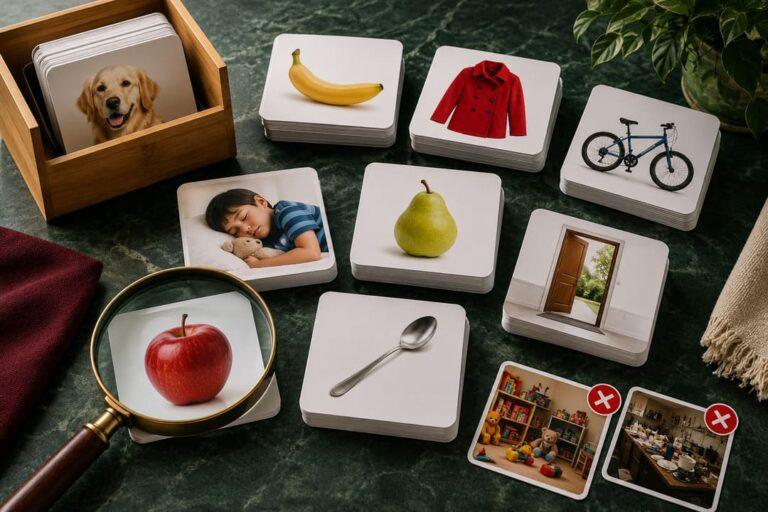
Picture cards are easy to reach for when adults want quick language practice, but recognition is not the same as knowing how to use a word. Picture cards for vocabulary become genuinely useful when children move beyond naming and begin describing, sorting, comparing, questioning, and connecting the image to real Continue Reading
Speech Milestones From 18 to 24 Months

Speech milestones from 18 to 24 months are less about producing a perfect list of words than about building a more flexible communication system. During these six months, many toddlers move from scattered labels and gestures toward purposeful vocabulary, short word combinations, clearer requests, and stronger understanding. The most useful Continue Reading
How to Play I Spy for Speech and Language Development

The classic I Spy game is often treated as a way to pass time in a waiting room or car, but its real value is the conversation hidden inside the guessing. Used deliberately, I Spy for speech and language development can strengthen vocabulary, listening, sound awareness, categories, describing words, and Continue Reading
How Bilingual Children Learn Grammar in Two Languages
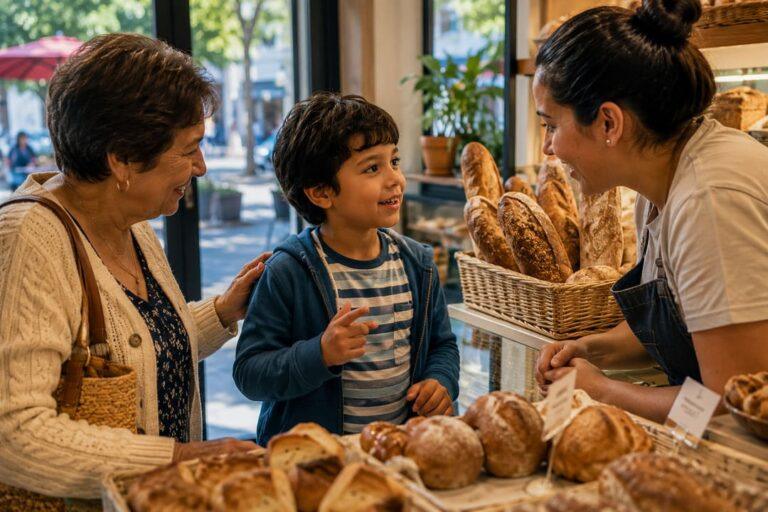
Bilingual grammar development rarely advances in two perfectly matched lines. A child may produce longer sentences in one language while using simpler patterns in the other, even when both languages are developing normally. That unevenness often reflects experience, not confusion. Families noticing mixed-language sentences can also review how language switching Continue Reading
When Do Bilingual Children Start Combining Words?

Bilingual word combinations often appear before children can produce long or polished sentences in either language. A phrase such as “more leche” or “mama go” may sound incomplete to an adult, yet it can reveal that a toddler is already connecting two ideas into one purposeful message. The words do Continue Reading
How to Use Barrier Games to Improve Listening and Clear Communication
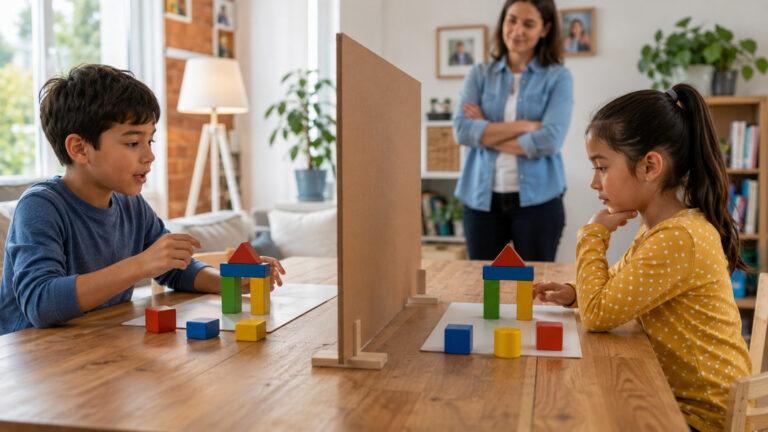
Children hear directions all day, but they rarely get to discover whether their own words are clear enough for someone else to act on. Barrier games for communication change that dynamic by hiding a model from one player and making language—not imitation—the only path to a matching result. One person Continue Reading
The Mystery Bag Language Game: Build Vocabulary, Describing, and Conversation Skills Through Play
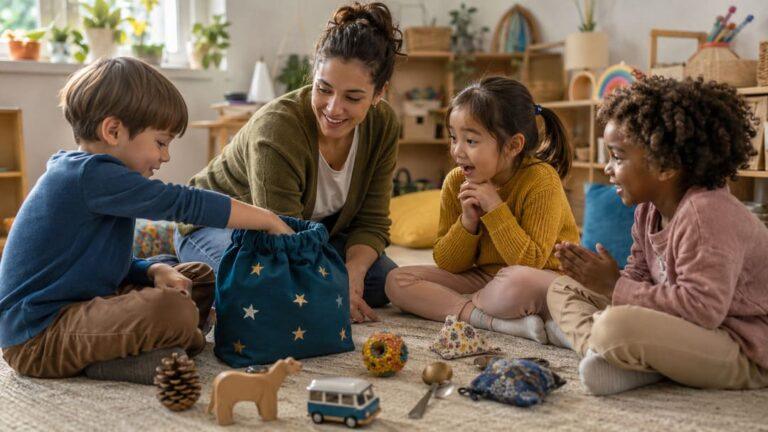
The mystery bag language game looks almost too simple: hide familiar objects, invite a child to reach inside, and let clues guide the exchange. Yet that small moment of uncertainty gives children a real reason to search for words, explain what they notice, listen carefully, and keep a conversation moving. Continue Reading
How Play-Based Language Activities Help Children Communicate With Confidence
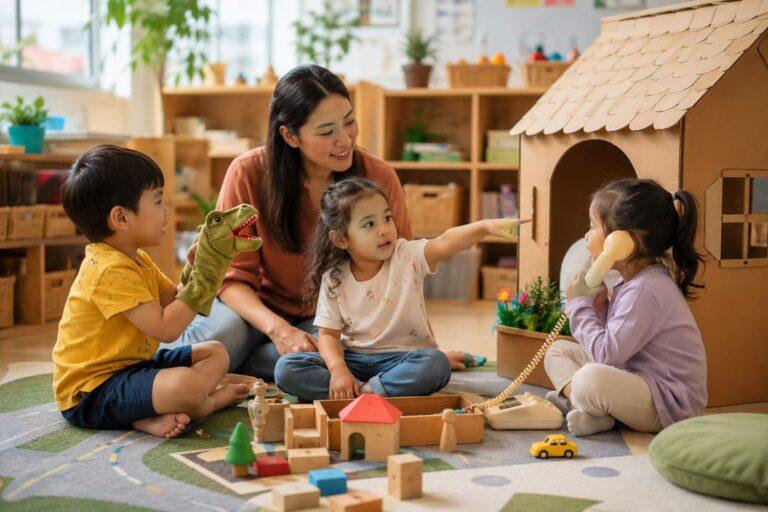
A child may know what they want to communicate yet hesitate when every conversation feels like a test. Play-based language activities change that pressure by giving words, gestures, sounds, and facial expressions an immediate purpose inside something the child already wants to do. The goal is not to disguise a Continue Reading
How Music And Songs Support Early Communication Skills
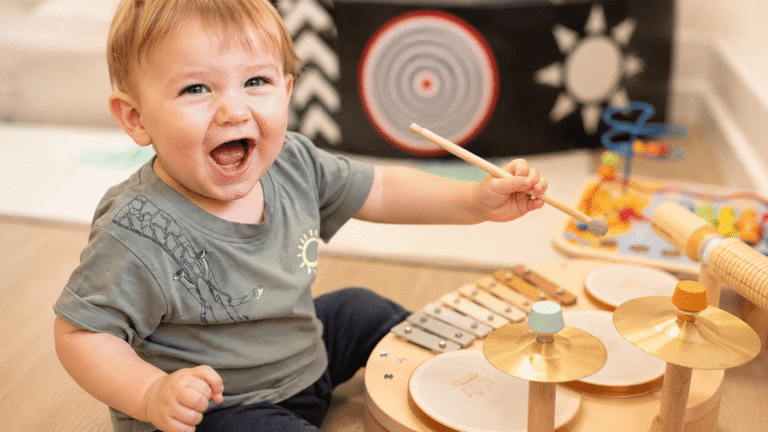
A familiar song can turn a quiet child into an active communication partner before a full sentence appears. Music and early communication connect because rhythm, repetition, gesture, and anticipation give children several ways to participate—not just one demand to speak clearly. The real value is not the song playing in Continue Reading
The Quiet Reason Toddlers Learn More When Adults Stop Turning Language Into Lessons

Toddlers rarely learn language because an adult turns the room into a classroom. The real power of play-based language activities is that they meet children where their attention already lives: in movement, repetition, surprise, imitation, and shared delight. That is why the conversation around early communication needs to shift away Continue Reading