

A child does not always answer the moment a question ends. Understanding child response time can help parents recognize that those quiet seconds may be active thinking rather than avoidance, confusion, or unwillingness to participate. Children may be interpreting the question, finding the right words, deciding what they want to Continue Reading
Communication Skills
bilingual discourse strategies for syntax growth

Use bilingual discourse strategies to support young children’s longer sentences with careful questioning, extensions, and home-language support.
Family Screen-Time Boundaries That Make Room for Conversation
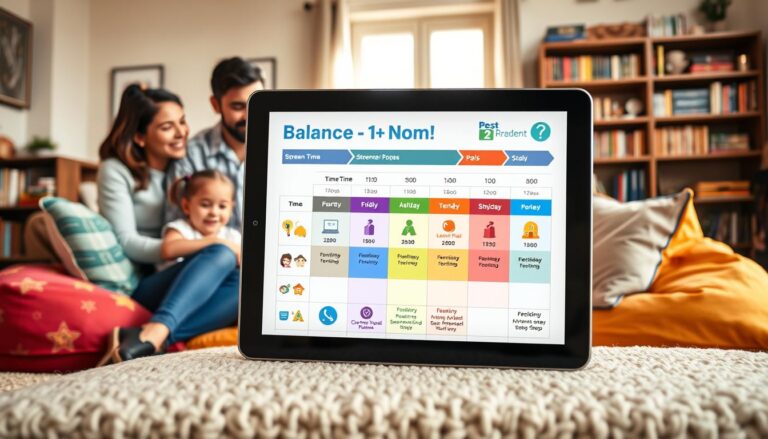
Build manageable family screen-time boundaries around everyday conversation, playful exchanges, age-appropriate content, and continued access to communication tools.
Teacher Language Switching and DLL Skills

Teacher Language Switching can support DLL communication when it is purposeful, consistent, and paired with clear classroom interaction.
Bilingual Storytelling: Digital or Traditional?
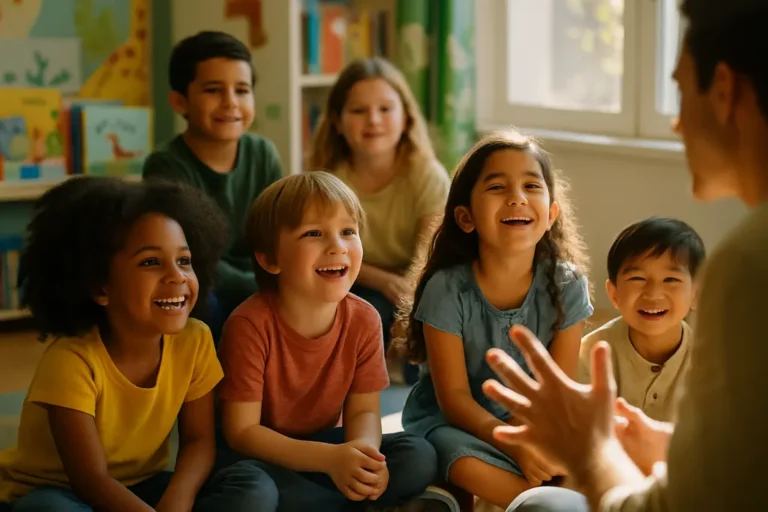
Bilingual Storytelling can use screens or spoken retell. Learn what research supports, what remains uncertain, and how adults can help.
What to Do When a Child Is Misunderstood: Teaching Communication Repair

A child says something, the listener looks confused, and the conversation stalls. Communication repair in children is the skill of noticing that a message did not land and trying another way to make it understood—not simply saying the same thing louder or being corrected until every sound is perfect. Breakdowns Continue Reading
Speech Processing Autism: Brain Activity Clues
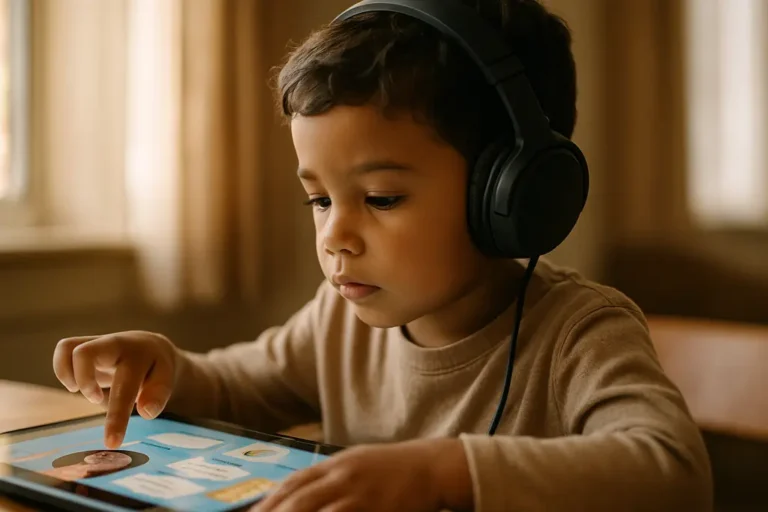
Speech Processing Autism research can help families read brain studies carefully and turn findings into practical communication questions.
Language Patterns in Bilingual Autistic Children
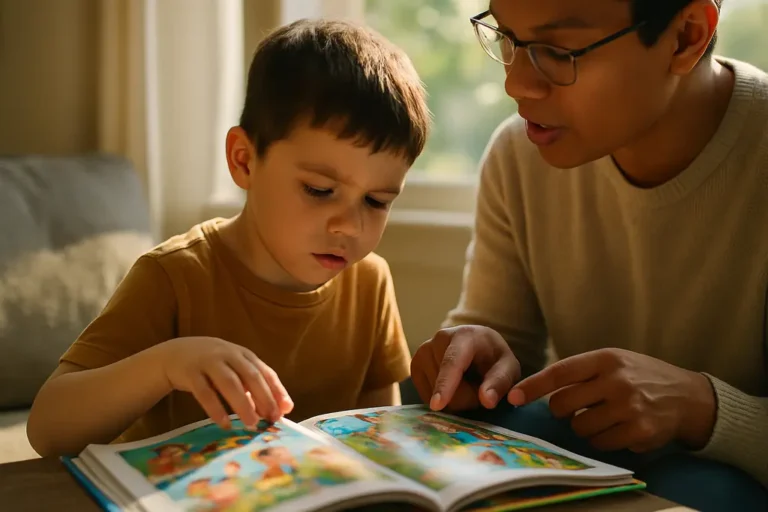
Bilingual Autistic Children may adapt differently across home languages. Learn what recent research suggests and what support can look like.
“Mad” Isn’t the Only Feeling: How a Bigger Emotion Vocabulary Helps Preschoolers Communicate

A preschooler who says “I’m mad” may actually be disappointed, jealous, frustrated, embarrassed, or overwhelmed. Building emotion vocabulary for preschoolers is not about teaching impressive words; it gives children more precise ways to explain experiences that otherwise may come out as crying, withdrawing, yelling, or a vague “I don’t like Continue Reading
Word Learning in Children: Research Lessons

Word learning improves when adults teach target words in meaningful routines, repeat them, and support bilingual children’s full language use.