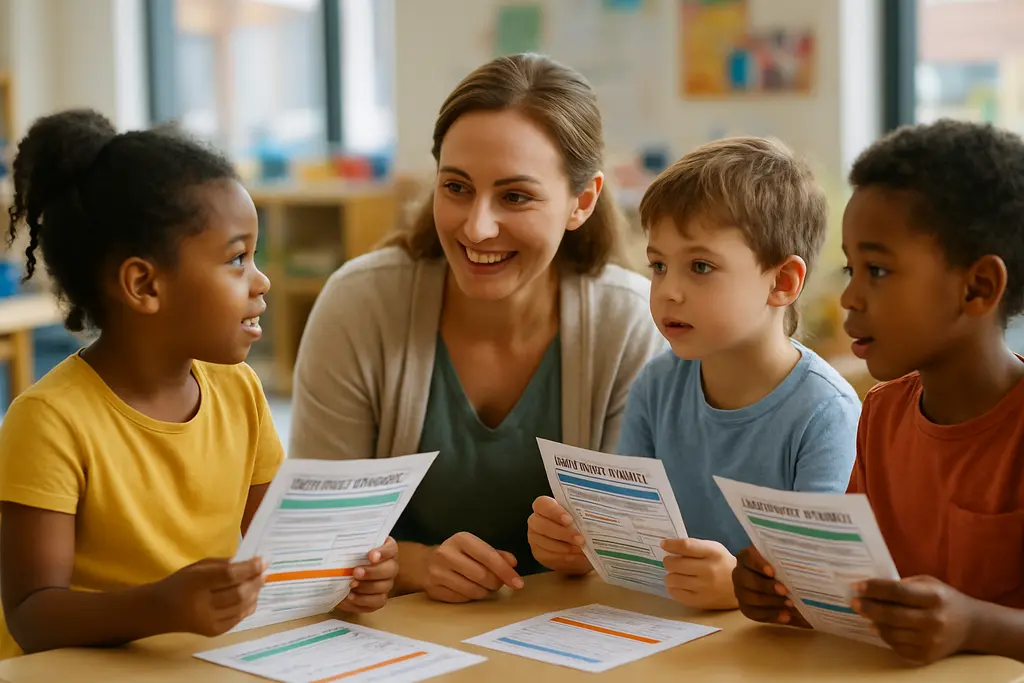
The Houston Questionnaire gives clinicians, educators, and researchers a structured way to ask Spanish-English bilingual children about their own language experience and perceived proficiency. It was developed for Spanish-English bilingual children ages 4 to 8 by Castilla-Earls, Ronderos, and Fitton, and the 2022 validation work describes it as a child self-report measure rather than a stand-alone diagnostic tool Houston-Q validation study.
That distinction matters. Young bilingual children often move between languages across home, school, books, play, media, and community routines. Parent report, teacher observation, direct language testing, and child self-report can each add a different piece of information. None of those sources should be treated as perfect on its own. Used with care, the Houston Questionnaire can help adults listen to the child’s own view of language use while still respecting the limits of self-report in early childhood.
What The Houston Questionnaire Measures
Houston Questionnaire Scores And Factors
The measure includes 25 questions. The item formats include yes/no questions, 5-point Likert-scale items, multiple-choice questions, and some open items. The validation study identified three correlated factors: self-perception of Spanish proficiency, self-perception of English proficiency, and bilingual experience, which includes patterns of language use and exposure.
Scoring is meant to separate perceived skill from experience. Spanish and English self-perception proficiency scores are scaled from 0 to 10, where 0 reflects no proficiency and 10 reflects full proficiency. The bilingual experience score is scaled from 0 to 20, where lower scores reflect experiences more in Spanish and higher scores reflect experiences more in English. This does not mean a child is “better” or “worse” because one language score is higher. It means the child is reporting where language experience and confidence appear to sit at that point in time.
| Area | What It Captures | How Adults Can Read It |
|---|---|---|
| Spanish self-perception | How the child rates their Spanish ability | A clue about confidence, not a full language diagnosis |
| English self-perception | How the child rates their English ability | A prompt to compare self-report with observed performance |
| Bilingual experience | Reported use and exposure across daily contexts | A way to discuss where each language appears in the child’s life |
Reliability And Validity Findings
In the original validation sample, the three factors showed internal reliability estimates reported as coefficient omega values of about .910 for Spanish self-perception, .753 for English self-perception, and .893 for bilingual experience. The authors described these as good internal consistency. Reliability does not prove that a measure answers every clinical question, but it does support the idea that the items within each factor were working together in that sample.
The validation sample included 113 bilingual children whose ages ranged from 3 years 11 months to 8 years 2 months. The study also reported important sample details: about 54% of the children came from families where the mother had not attended college, and 70% qualified for free or reduced-price lunch. These details help readers understand the group studied rather than assuming the findings apply in exactly the same way to every bilingual community.
How Child Self-Report Adds Context
What Children May Tell Adults Directly
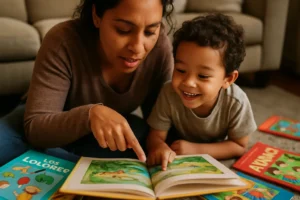
Child self-report can bring forward information that adults might miss. A child may know that they use one language with a grandparent, another during classroom writing, and both while watching a show or reading books. In the validation research, many children reported using both Spanish and English across activities: 60% with classroom teachers, 59% during book reading, 66% while learning to write, and 54% while watching television.
Those percentages should not be treated as targets for families. They describe one study sample. A child who uses one language more at home and another more at school may still be developing in a healthy bilingual pattern. The practical value is that the questions can make language routines visible. That can guide adults toward better follow-up questions, such as who reads with the child, which language is used during pretend play, and whether the child has chances to speak both languages for meaningful purposes.
Why Parent And Child Reports Both Matter
A 2026 study on alignment between parent and child self-report found moderate correlations between child scores on the Houston-Q and standardized assessments, with Spanish and English self-perception scores showing small-to-moderate relationships with standardized language measures parent and child report study. The same research direction supports a cautious interpretation: child report is useful, but it should sit beside parent report and direct assessment rather than replacing them.
For families and school teams, this can reduce overreliance on a single score. If a child reports strong English confidence but direct testing shows weak sentence comprehension, the team can look more closely at the demands of the task. If a parent reports high Spanish exposure but the child reports mostly English use in school activities, both may be true in different settings. For more background on this idea, Talk and Play offers a related resource on child self-report in bilingual assessment.
Practical Uses For Teams And Families
Using Results In Speech And Language Planning
The Houston Questionnaire can support conversations before, during, and after a bilingual language evaluation. A speech-language pathologist might use it to ask where the child hears and uses each language, then compare those answers with caregiver interviews, teacher input, language sampling, and standardized or criterion-referenced measures. For educators, the results may point to classroom routines where a child already uses both languages, such as book reading, writing instruction, or teacher interaction.
Families can use the discussion to notice everyday opportunities for language growth. If a child reports mostly English during books but Spanish during family routines, adults may decide to keep strengthening Spanish through storytelling, songs, and shared conversations at home. If the child reports little confidence in one language, adults can respond with low-pressure practice rather than correction-heavy drills.
- Use the child’s answers as conversation starters, not as final labels.
- Compare self-report with parent input, teacher observations, and direct language measures.
- Ask about real routines, including meals, play, books, writing, and media.
- Watch for changes over time, especially after school placement or home routine changes.
- Refer assessment decisions to qualified bilingual professionals when concerns arise.
Families looking for related language activity resources may want to explore offerings from Leap Year Publishing, where they can find materials to facilitate literacy and communication as part of their assessment discussions.
Limitations To Keep In View
What The Research Does Not Yet Prove
The original validation sample was localized in or around Houston, Texas. That matters because the region has substantial Spanish-English language use and access to bilingual education. The study notes that 39.3% of the population speaks Spanish at home in that context. A tool validated in one geographic and linguistic setting may not perform the same way in communities with different bilingual profiles, different school models, or different patterns of socioeconomic access.
The age range is also specific. The measure was developed for young Spanish-English bilingual children, not for adolescents, adults, or children who use different language pairs. Its findings should not be stretched to children learning languages other than Spanish and English unless future research supports that use. Even within Spanish-English bilingual groups, children differ in dialect, schooling, literacy exposure, family language policy, and comfort speaking with unfamiliar adults.
A Careful View Of Self-Perception
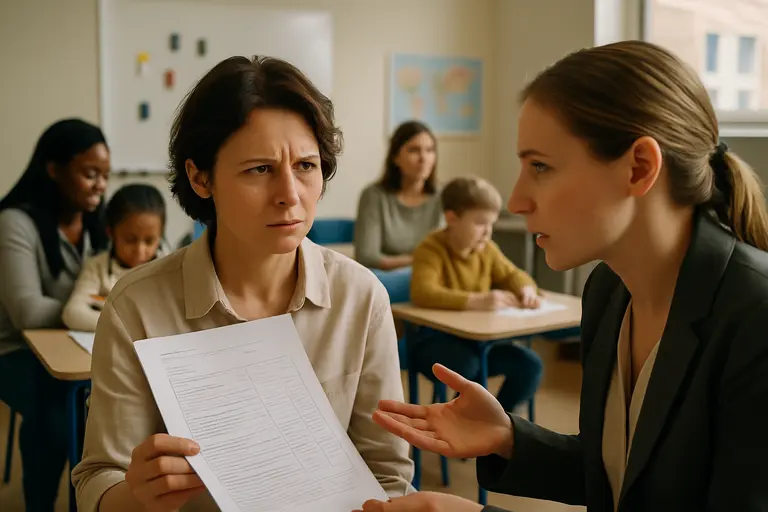
Young children can offer meaningful information, but they may interpret questions differently from adults. A child’s confidence may be shaped by personality, classroom experiences, family expectations, or the testing situation itself. A high self-rating does not prove advanced language skill. A low self-rating does not prove language disorder. The score is best read as one window into how the child experiences bilingual life.
This is where supportive practice matters. Adults should avoid using the results to rank a child’s languages or pressure the child to “prove” ability. A better use is to identify where communication feels comfortable, where support may be needed, and which routines could offer more chances for listening, speaking, reading, and storytelling in each language.
Using The Houston Questionnaire Responsibly
The strongest use of the Houston Questionnaire is practical and careful: it helps adults ask better questions about a bilingual child’s language experience. It can show whether a child reports more Spanish, more English, or both across daily activities, and it can give insight into how the child views their own proficiency.
For speech and language planning, the tool should be part of a broader evidence-based process. That process may include caregiver interview, classroom input, direct assessment in both languages when possible, language sampling, observation during natural interaction, and attention to cultural and educational context. The current research supports the value of child self-report, but it also leaves open questions about use beyond the populations studied.
For families, the main takeaway is not to chase a perfect score. The better goal is to understand the child’s real language opportunities and build from them. A bilingual child’s speech milestones and language growth are supported most effectively when adults listen carefully, document patterns honestly, and provide meaningful chances to communicate in the languages that matter in the child’s life.