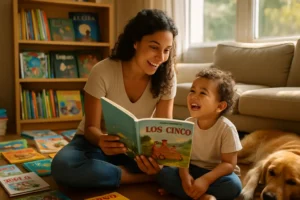
Project ImPACT is a caregiver-mediated intervention model focused on social communication, imitation, play, and language. For bilingual and culturally diverse families, the main question is not whether a manual can be translated word for word. The better question is whether coaching can fit the child’s real relationships, home language, and daily routines without losing the evidence-based structure that makes the model useful.
That distinction matters for families who speak more than one language at home, use caregiving routines that differ from clinic expectations, or need services through public insurance or community programs. A social communication tool is more likely to be used consistently when it feels practical during meals, sibling play, dressing, caregiving, and shared book time—not only during a scheduled therapy visit.
What Project ImPACT Teaches Caregivers
The model has been studied across many delivery formats, including individual caregiver coaching, group coaching, classroom staff training, telehealth, direct therapist-implemented intervention, and self-directed materials with coaching through an app. The official Project ImPACT research page reports more than 70 primary research studies from 2005 through 2026, conducted in 9 countries across 4 continents, and notes that the manual has been translated into nine languages with one more translation in development.
Social Communication In Daily Routines
At its core, the approach teaches adults to respond to a child’s communication, arrange the environment to encourage interaction, model language, and build imitation and play within activities that are already happening. Those activities may look different across households. One family may practice turn-taking during a floor game. Another may use a cooking routine, a prayer routine, a bath routine, or a sibling-led pretend play routine.
For bilingual children, daily routines often include more than one language. A caregiver may comfort a child in one language, use school-related words in another, and switch languages depending on who is in the room. A culturally responsive use of the model should make space for that reality rather than treating bilingual communication as a problem to fix.
Live Coaching Versus Self-Directed Materials
Research summarized by the program indicates that formats with live coaching, either in person or through telehealth, have produced stronger outcomes than self-directed formats alone. That does not mean self-directed materials have no value. It means families and providers should be cautious about expecting a workbook, video, or app to replace responsive feedback from a trained coach.
Live coaching can be especially relevant for families adapting strategies across languages. A coach can observe how a parent naturally talks with the child, which relatives participate in care, and which routines offer the best communication opportunities. The coach can then help the family adjust prompts, models, and expectations without requiring the family to abandon its usual way of interacting.
Project ImPACT Across Languages And Routines
For bilingual families, Project ImPACT may be most useful when intervention planning begins with the child’s actual communication community. That includes parents, grandparents, siblings, childcare staff, and others who may use different languages or different interaction styles with the child.
Why Project ImPACT Needs Cultural Fit
Research with Spanish-speaking, Latine, Medicaid-eligible, and otherwise under-resourced families in the United States has reported that trained providers showed greater cultural responsiveness. The adaptations described in the research included use of the family’s home language, attention to cultural values, and stronger partnerships with caregivers. Those adaptations were associated with higher attendance and greater program completion.
This is a practical finding, not only a cultural one. If a caregiver feels that a provider understands the household’s language use, respects caregiving values, and works with family routines instead of against them, the family may have fewer barriers to practicing strategies between sessions. Families seeking broader context may also find related discussion of culturally responsive interventions helpful when thinking about dual language learners.
Translation Is Only One Piece
A translated manual can improve access, but translation alone does not answer every clinical or educational question. Words may change across languages, but routines, expectations for adult-child play, views of disability, and comfort with direct coaching can also vary. A provider should avoid assuming that one translated version automatically fits every family that speaks that language.
For example, coaching a parent to “follow the child’s lead” may need clear examples in the family’s daily context. In some homes, adults may be more familiar with teaching through direct instruction than child-led play. A coach can explain the purpose of following the child’s interest while still respecting the caregiver’s role and values.
Research Findings And Limits
The evidence base is encouraging, but it is not uniform across every child, family, or delivery format. Families deserve a balanced explanation: some studies have shown gains in social communication, communication measures, and related skills, while other findings have been more limited or dependent on caregiver and child factors.
Infant Research Shows Both Promise And Boundaries
A randomized controlled trial published around mid-2025 delivered the intervention in homes over 12 weeks to caregivers of infants at elevated likelihood of autism. The study reported that the intervention reduced social hyporesponsiveness, which in turn improved expressive language outcomes, but only among infants whose caregivers had higher education levels at study entry, according to the article available through PMC.
That caregiver education finding should be handled carefully. It does not mean less-educated caregivers cannot support their children. It does suggest that standard coaching may not work equally well for every family unless programs address access, learning supports, time demands, language, and service barriers.
Findings Differ By Format And Outcome
Other studies reported in the research summary show mixed but useful patterns. A 2022 pilot study in China with 68 caregiver-child dyads during the COVID-19 pandemic found that online group delivery improved parent-reported child social communication and reduced parenting stress, but did not significantly affect child language skills in that sample.
In a U.S. multisite study involving 471 children with autism spectrum disorder ages 2 to 14, 69 children were assigned to the ImPACT arm. Over about 12 weeks, standardized Autism Impact Measure tools detected improvements in communication, peer interaction, and social reciprocity, but not repetitive behaviors. These findings support using the model for communication-related goals while avoiding claims that it changes every area of autism development.
The program was designated in 2020 by the U.S. National Clearinghouse on Autism Evidence and Practice as one of 10 manualized interventions meeting evidence standards, and one of two parent-implemented interventions with that designation. Even with that recognition, research on who benefits most remains limited. Evidence suggests stronger language gains for children with fewer added developmental risk factors and for caregivers with higher education levels, but predictors have not been identified consistently for all outcomes.
Practical Questions For Bilingual Families
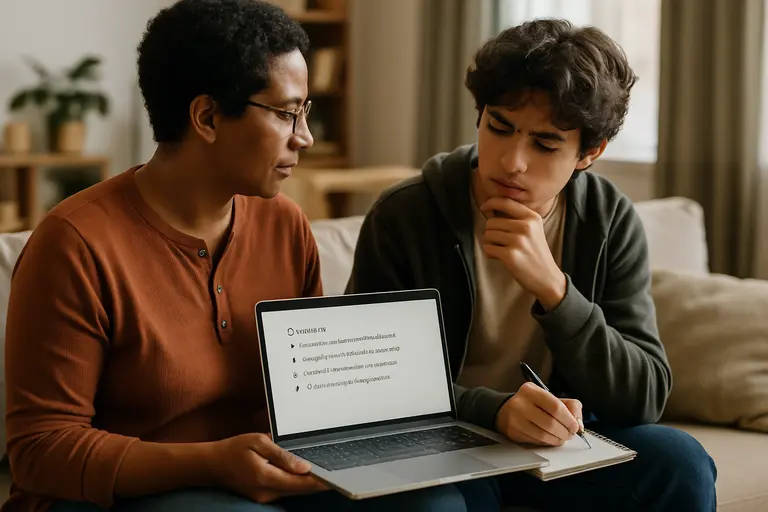
Families do not need to choose between evidence and cultural fit. The stronger question is how to hold both. A provider can preserve the core teaching strategies while adapting examples, language models, coaching style, and home practice to the family’s setting.
Choosing The Language For Intervention
There is no fact in the provided research showing that families must use only one language for this intervention. Based on the studies described, the supported point is narrower: culturally responsive providers used the family’s home language and attended to cultural values. For a bilingual child, that means families should ask how coaching will support the languages the child actually hears and uses.
A speech-language pathologist, early intervention provider, or autism specialist can help identify meaningful words and social routines in each language. The goal is not to make every session perfectly equal across languages. The goal is to support communication that the child can use with real people in real settings.
What To Ask Providers Before Starting
Before beginning a program, families can ask direct questions about training, coaching format, cultural responsiveness, and language access. These questions are especially useful when services are delivered through schools, clinics, community agencies, or telehealth.
- Will coaching happen live, through self-directed materials, or through a combination?
- Can sessions include the language or languages used at home?
- How will the provider learn about family routines before assigning practice activities?
- What outcomes will be tracked: social communication, expressive language, play, imitation, stress, or attendance?
- How will the plan change if the child or caregiver is not making progress?
Families sometimes discover resources through allied network sites, including PolygraphianZ; however, for child communication decisions, it is essential to base them on trusted sources like pediatric, educational, and autism intervention research cited here.
Using Project ImPACT Across Languages
Project ImPACT offers a structured way to coach caregivers in social communication strategies, and the research base includes multiple countries, delivery formats, and culturally responsive adaptations. The strongest use for bilingual families is likely not a direct copy of clinic routines. It is careful coaching that keeps core strategies intact while respecting home language, family roles, and daily routines.
Families should expect clear explanations, shared goal setting, and honest monitoring of progress. Providers should be transparent that outcomes can vary, that live coaching appears stronger than self-directed materials alone, and that some research has found differences linked to caregiver education and child developmental profiles.
Used thoughtfully, the model can give caregivers practical tools for creating more opportunities to communicate during ordinary life. For bilingual children, those opportunities should include the people, languages, routines, and relationships that already shape how the child learns to connect.