
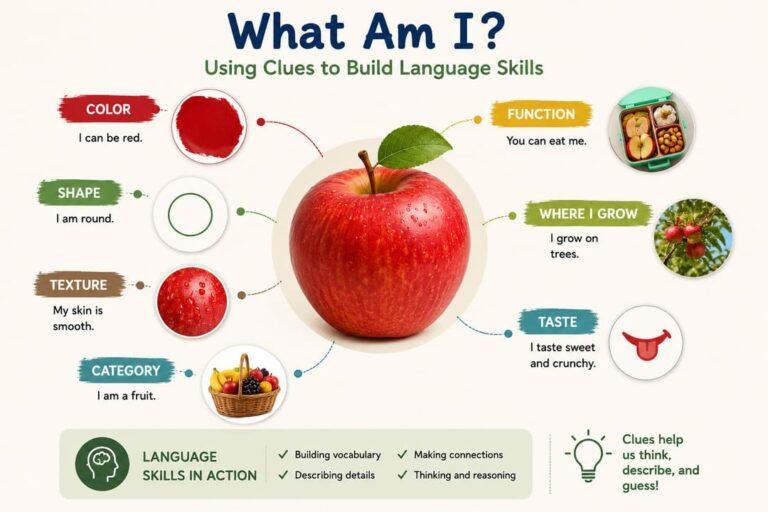
The best What Am I riddles for kids do more than produce a correct guess. A carefully chosen clue asks a child to connect vocabulary, categories, sensory details, sentence structure, and another person’s point of view—all inside a game simple enough to repeat anywhere. Children often know more than they Continue Reading
How to Use Puppets to Encourage Children to Talk
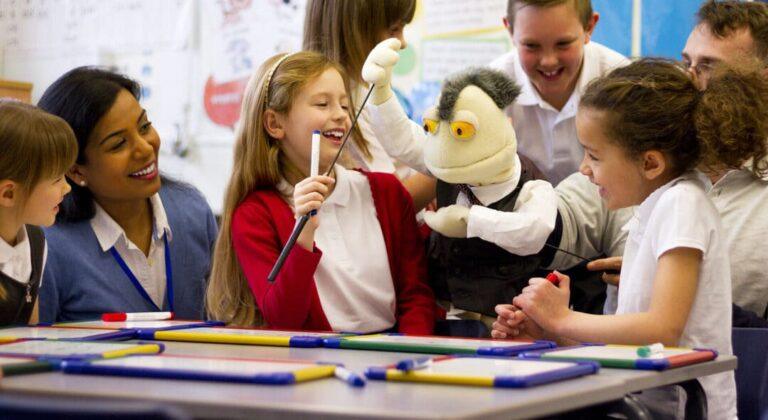
Puppets can change a conversation before either person says a word. During puppet play for language development, a child who hesitates when questioned directly may suddenly answer a silly character, correct its mistake, explain a problem, or give it instructions. The puppet is not powerful because it teaches a scripted Continue Reading
How Many Words Should a Toddler Say at Each Age?

How many words should a toddler say? The question sounds numerical, but vocabulary development is not a race toward one universal total. A useful answer combines broad age expectations with the quality, consistency, and growth of the words a child uses. By age three, counting every word becomes less informative. Continue Reading
How to Turn Snack Time Into a Language-Building Activity
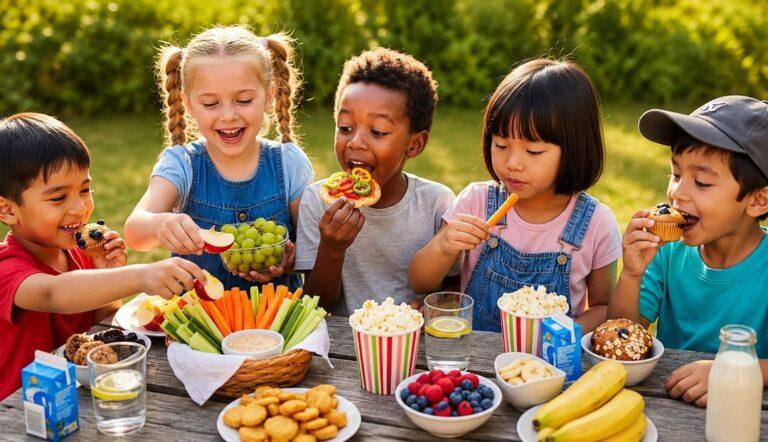
Snack time is one of the few daily routines in which children naturally have something to request, reject, choose, describe, and discuss. Snack time language activities work because communication changes what happens next: a child can ask for more, select a food, explain a preference, or help prepare what everyone Continue Reading
When Should a Child Say Their First Word?

A first word can feel like a finish line, but the first word milestone is one visible moment in a longer communication process. Babies spend months listening, babbling, using gestures, and discovering that sounds can influence another person. Parents may count a word too early when it is still playful Continue Reading
When Do Babies Start Babbling? Early Vocal Milestones Explained

When do babies start babbling? The answer is not one birthday or one perfect “ba-ba-ba,” but a progression from soft coos to increasingly speech-like sound patterns during the first year. Understanding that progression helps caregivers enjoy early vocal play without turning every sound into a test. Babbling matters because it Continue Reading
From Babbling to First Words: How Early Speech Usually Develops

The journey from babbling to first words begins long before a baby clearly says “mama,” “ball,” or “more.” Early speech develops through listening, vocal experimentation, gestures, imitation, and repeated exchanges that gradually give sounds a stable meaning. That progression is easy to misunderstand because a word-like sound may appear weeks Continue Reading
How Clearly Should a Child Speak? Understanding Speech Intelligibility Milestones
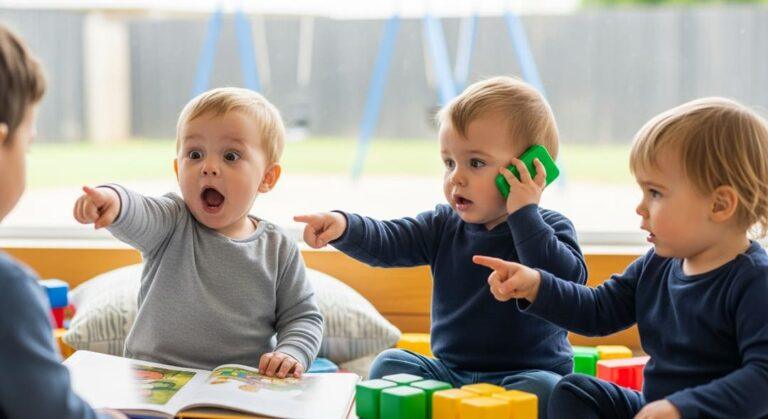
Speech intelligibility milestones help parents answer a deceptively simple question: how much of a child’s speech should other people understand? Simplified age-percentage rules still circulate widely, even though clarity is shaped by age, context, listener familiarity, sound development, and whether the child is making steady progress. A child can have Continue Reading
How to Use Pretend Shopping to Build Functional Language Skills
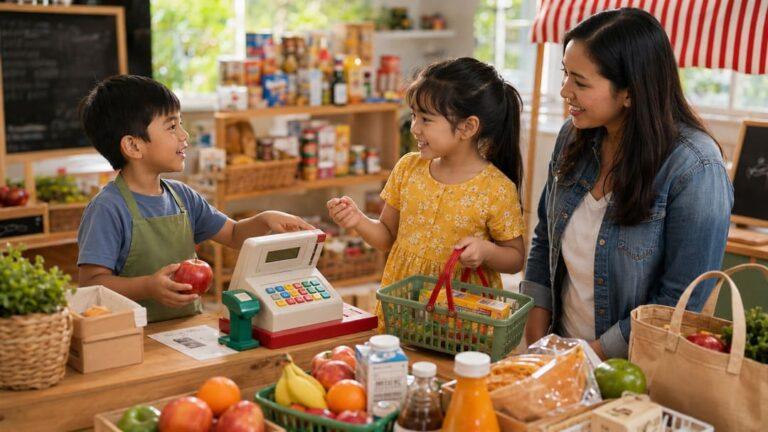
A pretend shop can turn an empty cereal box, a toy register, and a handful of play coins into a practical communication challenge. Pretend shopping language skills grow because children have meaningful reasons to greet someone, request an item, ask a question, make a choice, count products, and repair a Continue Reading
Speech Milestones From 12 to 18 Months
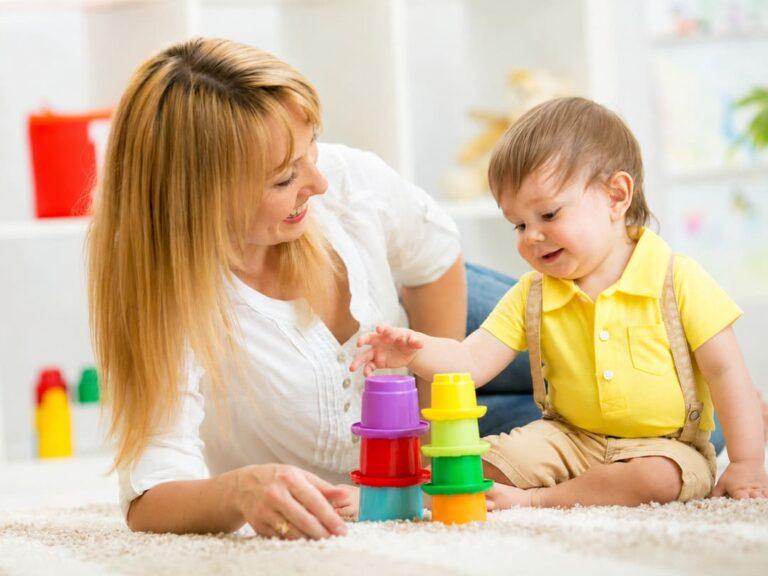
Speech milestones from 12 to 18 months can look deceptively small: a point toward the refrigerator, an imperfect “ba” for ball, or a copied animal sound. Together, these behaviors show a major shift from reacting to language toward using sounds, gestures, and words deliberately. Progress is easier to recognize when Continue Reading