Modern society is facing a big problem. Conversations often end quickly. It feels like people from different generations are from different worlds.
This issue isn’t just about age. It’s about big changes in culture, technology, and life experiences. What one generation values, another might find strange.
The generational gap is a real challenge. It’s about differences in values, beliefs, and communication styles. These differences come from different social, cultural, and technological backgrounds.
Does a text message count as a real conversation? Some people think so, while others are confused. This confusion is where the real problem lies.
Is understanding each other important? Absolutely. We believe that bridging the generational gap is an exciting adventure. It begins with a simple, honest multi-generational talk.
Oral History Projects
History books are old news. The real treasure is in the living, breathing stories of people today. Oral history projects are a dynamic way to share cultural exchange. It’s not just listening; it’s creating history together.
Imagine a time when old wisdom meets new curiosity. A teen recording their grandparent’s stories is more than just collecting memories. They’re building a bridge between generations.
It’s not just about asking questions. It’s about capturing the essence of change. What did the moon landing sound like on an old radio? How did people feel during tough times? These questions reveal deep insights and stories.
Don’t just ask questions; create a journey of discovery. Ask about first jobs, acts of kindness, or tough choices. You’re looking for the stories that aren’t in books.
This is more than anthropology; it’s about connecting with family. It strengthens family bonds and keeps history alive. You get to hear the stories that shape us.
Technology Teaching Exchanges
Imagine a classroom where the teacher is twelve and the student is seventy-two. This isn’t a dystopian plot twist. It’s the beautiful irony at the heart of modern family communication. The smartphone, blamed for teen isolation, is actually a key to connection.
We suggest a tech détente. A program where everyone feels respected. Kids teach the how, while adults share the why and what for. This is reverse mentoring that brings families closer.
It’s like translating digital languages. A teen teaches a grandparent how to use video calls. This opens a door for weekly chats. In return, the grandparent shows the value of handwritten notes and long phone calls.
Technological change has widened the generation gap. But it can also bridge it. The goal is to learn a new way of connecting, not just to download apps.
| Role in Exchange | Skills & Knowledge to Share | Core Lesson for the Other Generation |
|---|---|---|
| The Young “Teacher” | Setting up video calls, using social media safely, understanding new apps, digital etiquette. | Practical “how-to” for modern tools. Demystifies technology. |
| The Older “Student” | The value of patience, the art of conversation, critical thinking online, historical context. | The “why” behind communication. Adds depth and context to digital interactions. |
| The Mutual Benefit | Shared laughter over memes, a functional family group chat, collaborative photo albums. | Technology becomes a shared language, not a barrier. Builds respect and understanding. |
How do you start without feeling condescending? Begin with curiosity, not curriculum. Ask your teen to show you how they made a funny video. Ask your grandparent about staying in touch when they were your age. See it as an exchange of cultural knowledge.
The benefits are more than any software update. It’s seeing a senior expertly curate their Instagram feed. It’s a family group chat that works for planning reunions. It’s sharing a meme that makes both Gen Z and Boomer laugh for the same reason.
This turns technology from a divider into a connector for family communication. It stops being a wall and becomes a window. The lesson plan is simple: swap expertise, practice patience, and watch a new closeness emerge.
Recipe Sharing Sessions
Forget the awkward interview; the most profound multi-generational talk often happens with a wooden spoon in hand. The kitchen is more than a room. It’s a place where generations can meet and share. Here, talking isn’t forced. It’s mixed into the batter and shared with a sprinkle of salt.
I’ve seen a simple question—”Why do we add nutmeg here?”—unlock a story about a great-grandmother’s pantry. This is the magic of cooking together. It creates a dialogue that flows naturally. You’re not staring at each other. You’re working side-by-side, your hands busy, your guards down.
A recipe is a family’s story. It’s a heirloom written in cups and teaspoons, passed down through touch and taste. The real knowledge lives in the tacit details: the “pinch” that was Grandma’s thumb and forefinger, the “dash” that means “until it smells right.” Decoding this culinary cryptography is a form of cultural anthropology you can literally taste.
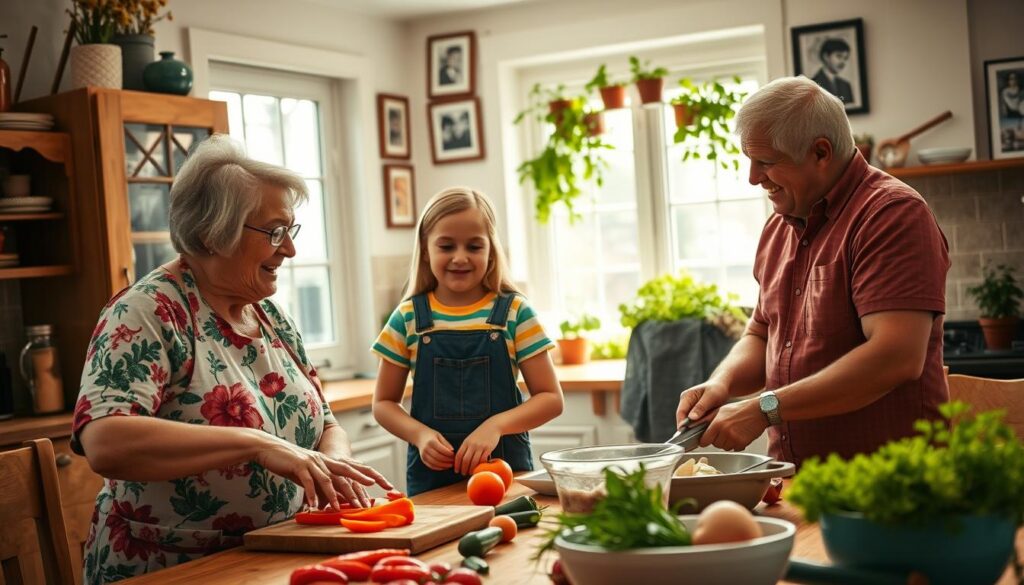
The environment itself does most of the work. The warmth of the oven, the sound of sizzling, the shared focus on a task—it all conspires to open doors. The mess is democratic. Everyone has flour on their nose, so no one feels judged. This is the perfect setting for spending quality time together, where stories surface as naturally as steam from a pot.
So, how does this culinary exchange actually reshape communication? It moves it from a verbal transaction to a shared, physical experience. The bonding agent isn’t just egg yolk; it’s the collective memory you’re creating in real-time.
| Communication Style | Typical Setting | Pressure Level | Knowledge Transferred |
|---|---|---|---|
| Direct Q&A | Living room, facing each other | High | Explicit facts, dates, names |
| Side-by-Side Activity | Kitchen, working collaboratively | Low | Tacit knowledge, stories, sensory memories |
| Written Correspondence | Distance, asynchronous | Medium | Reflective thoughts, curated updates |
| Digital Mediation | Screen-based, often fragmented | Variable | Information, less context |
The table shows why the kitchen wins. The low pressure and collaborative setting are key. When you’re kneading dough or frosting a cake, you’re not just making food. You’re following a recipe for good communication. The conversation becomes part of the process, not the sole objective.
This isn’t about creating a five-star meal. It’s about creating a five-star connection. You might end up with lopsided cookies. You will definitely end up with a story you’ve never heard before. That’s the real measure of success. The secret ingredient was never in the cupboard. It was in the easy, side-by-side multi-generational talk that the cooking made possible.
Letter Writing Renaissance
What if the most radical tool for connecting across generations was invented centuries ago? We’ve all felt the empty ping of a text notification. It demands a quick response, not deep thought. Bringing back handwritten letters is not just nostalgia; it’s a bold move.
Letters are the opposite of scrolling through screens. They offer a chance for slow, thoughtful communication. For kids, writing a letter is like a mental workout. They learn to organize their thoughts, pick the right words, and share feelings beyond emojis.
For older relatives, getting a letter is a big deal. It breaks up the routine of bills and ads. It’s something to keep, read again, and treasure. A letter carries more emotional value than countless digital messages.
Texting is fast, but writing letters is a slow, thoughtful process. It teaches the value of each word. It’s a slow-burning cultural exchange, where stories and values unfold on the page.
Writing letters is like having a conversation with history. It uses a technology that everyone can understand. Pen and paper make everyone equal, regardless of age.
Writing letters has clear benefits. Kids learn patience and storytelling. Older people get a special piece of someone’s time and thoughts. It’s a quiet, meaningful way to connect, without the rush of digital communication.
This practice creates a special bond. It’s not just about sharing news; it’s about sharing a part of oneself. The letter becomes a lasting piece of cultural exchange, carrying wisdom and wonder between generations. In a world of quick digital messages, a handwritten letter is a lasting, personal mark.
So, let’s call it what it is: a smart communication hack for our digital age. It avoids the noise of algorithms and notifications. It offers depth in a world that often values surface. The renaissance isn’t about going back; it’s about moving forward with wisdom.
Photo Story Creation
Every faded snapshot is a time capsule, but the real treasure isn’t the image—it’s the collective memory it unlocks. We’ve all got them: the digital shoebox overflowing in the cloud or the physical album buried on a shelf. These aren’t just pictures; they’re frozen dialogue. The goal of Photo Story Creation is to hit play.
This is collaborative archaeology for your clan. Gather artifacts from different eras—Grandpa’s black-and-white army photo, Mom’s 80s prom hair, your kid’s first TikTok screenshot. The mission isn’t just to identify who’s in the frame. It’s to unpack the context. What song was on the radio that day? What inside joke caused that genuine laugh? What hopes or anxieties hide behind those posed smiles?
A teenager might see a stiff, formal portrait. A grandparent can narrate the palpable hope behind the expression. This activity uses visual cues as a universal language, effortlessly bypassing generational jargon. A picture, as they say, is worth a thousand words. But which thousand? That’s where the magic of family communication happens.
You’re not building a timeline; you’re building a multi-voiced narrative. The caption becomes a conversation starter, not an endpoint. So, how do you excavate these stories? The methodology is flexible, fitting any family’s style.
| Method | Tools Needed | Best For | Key Outcome |
|---|---|---|---|
| Digital Slideshow with Voiceover | Phone/computer, photo scanning app, basic editing software | Tech-comfortable families, long-distance members | A polished, shareable documentary with firsthand audio commentary. |
| Physical Scrapbook Session | Prints, album, glue, pens, memorabilia (tickets, notes) | Tactile learners, multi-generational gatherings | A tangible heirloom created together, sparking impromptu stories during assembly. |
| Impromptu Table Pass | A single provocative photo from any source | Jumpstarting conversation, weekly dinner ritual | Spontaneous, raw memories and connections that formal projects might miss. |
The format is less important than the function. Whether you’re recording a voiceover for a digital montage or gluing a picture into a book, you are actively co-authoring your history. This shared narrative strengthens bonds in a way mere facts cannot. It transforms “That’s your great-aunt Betty” into “That’s your great-aunt Betty, who taught herself to drive at 45 and showed up to this picnic with a pie she baked to celebrate.” Now that’s a story. That’s connection.
So, open the shoebox. Start passing pictures. Listen. You’ll find that the most powerful tool for connecting generations has been sitting in your attic—or your iCloud—all along.
Multi-Age Game Nights
Multi-age game nights are more than fun. They’re a place where people from different ages talk and laugh together. It’s like a social experiment where everyone plays by the same rules.
The key to a great game night is the games you choose. Look for games that are easy to learn and fun for everyone. Think about games like Monopoly, cards, or games that make you think.
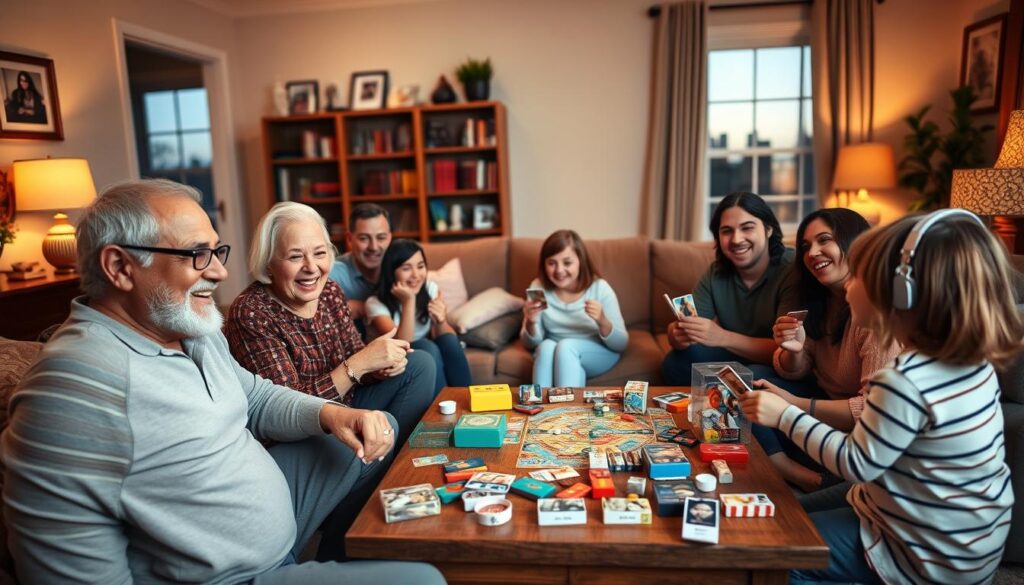
When the game starts, something special happens. Everyone becomes equal, no matter their age. A kid can beat a grown-up in strategy games. A grandparent’s calmness can win the game.
People from different ages show how they solve problems. Some like to play it safe, while others take big risks. Everyone learns important skills like how to lose gracefully and think ahead.
The real win is the laughter and fun everyone has. It’s the joy of playing together that matters. This is what makes game nights special.
Game nights are a chance for people of all ages to connect. They create a space where everyone feels welcome. It’s not about forcing conversations, but about enjoying each other’s company.
Values Exploration Talks
Imagine a family debate where ‘financial security’ means different things to everyone. For one, it’s a pension plan. For another, it’s a crypto portfolio. This isn’t just about money. It’s a clash of worldviews, shaped by different times.
Values are at the heart of every generational clash. One side values tradition and stability. The other values change and individuality. One generation sees responsible planning as the other sees risk aversion.
Let’s not fight. Let’s have a cultural exchange. We’re not trying to change each other. We’re exploring our values together.
How do you have a talk without it turning into a fight? Use the Sage’s approach. Create a space for exploration, not debate. Here are some ways to do it:
- Current Events Lens: Choose a news story. Ask why it makes us react differently. It’s about understanding the value behind the reaction.
- Family Decision Analysis: Look back at a family choice. Explain why each person thought it was right. Was it about security, freedom, legacy, or innovation?
- Cinematic Morality: Watch a film from another era. Discuss the hero’s choices. What values does the movie show? How would a remake change those values?
This cultural exchange shows us how values differ. What does ‘security’ mean to someone who lived through the Depression? It’s a paid-off house and savings. For a Millennial, it’s flexibility and maybe a crypto portfolio.
How has ‘success’ changed? For Boomers, it was climbing the corporate ladder. For Gen Z, it’s about personal brand, mental health, and social impact. Both are valid, shaped by their times.
To navigate these talks, use the right tools. Forget debating points. Use these practices instead:
| Value Concept | Traditional Lens (e.g., Boomer/Silent Gen) | Modern Lens (e.g., Millennial/Gen Z) |
|---|---|---|
| Security | Stability, longevity, physical assets | Flexibility, digital assets, portfolio diversity |
| Success | Hierarchical achievement, ownership | Autonomy, purpose, work-life integration |
| Responsibility | Duty to institution/family, long-term sacrifice | Duty to self/community, sustainable balance |
First, ask open-ended questions. “What life experience most shaped your view on this?” not “Why can’t you see my point?”
Second, be curious. Listen to understand the value’s origin, not just to argue against it.
Third, be a historian. Identify the events that shaped these perspectives. Context is key.
This is the toughest connection to make. You’re linking worldviews, not just people. But the reward is deep understanding. You gain tolerance and insight into the person across from you. And that’s a connection no generation gap can break.
Overcoming Common Challenges
You’ve set the stage for connection, but now you’re facing the real test. You might get an eye-roll, a dismissive sigh, or a classic ‘okay, boomer’ retort. This isn’t failure. It’s data. Think of it as your guide for navigating the challenges of family communication.
Let’s analyze the friction. The goal isn’t to eliminate disagreement but to turn it into a curious exploration. The key skills are Active Listening, Empathy, and Strategic Patience.
First, Active Listening. This means hearing the emotion behind the words. Is your teen’s grunt about their phone actually frustration with social pressure? Is Grandpa’s rant about “kids these days” a mask for feeling obsolete? Listen for the subtext. Your response should be a mirror, not a rebuttal.
Second, Empathy. This requires understanding another’s experience. A Boomer’s value for job security is different from a Gen Z’s pursuit of gig economy flexibility. Neither is wrong. They’re products of their time. The trick is to ask yourself, “What world built this belief?” It turns frustration into fascination.
Third, Strategic Patience. Change happens slowly, not quickly. You won’t rewrite decades of programming in one chat. The goal is incremental understanding. Celebrate the small moments: the shared laugh, the one question asked out of genuine curiosity. Patience is the quiet engine of long-term connection.
Now, let’s translate therapy-speak into family language. Use the ‘I’ statement. Instead of saying “You never listen!”, say “I feel overlooked when I’m interrupted.” This shift focuses on your emotional reality without assigning blame. It’s less about being right and more about being understood.
But what about when the landscape seems foreign? Finding common ground is an active search, not a passive hope. It often lives in shared values, not shared interests. You might not both love TikTok or classic rock, but you likely both value honesty, security, or humor. Anchor the conversation there. Ask, “What does ‘respect’ look like to you?” The answers will map the middle ground.
To turn these concepts into actions, keep this quick-reference guide handy. Think of it as your communication Swiss Army knife.
| Common Friction Point | The Underlying Trigger | Tactical Response | Desired Outcome |
|---|---|---|---|
| “You’re always on that phone!” | Fear of missing out on connection; feeling replaced by technology. | Use an ‘I’ statement: “I miss hearing your stories. Could we have a device-free dinner?” Then, actively listen to their perspective on their digital social world. | Negotiated, respectful tech boundaries that honor both needs. |
| “That’s not how we did it.” | Anxiety about irrelevance; a need for their experience to be valued. | Practice empathy: “That method worked for your generation. Help me understand the principle behind it so we can apply it today.” Find the common value (e.g., efficiency, quality). | Blended wisdom that respects tradition while adapting to the present. |
| The Defensive Shutdown | Feeling attacked or misunderstood; a protective emotional retreat. | Employ strategic patience. Don’t push. Reflect: “I can see this is upsetting. Let’s take a break and come back to it.” The pause is powerful. | Preservation of the relationship over “winning” the point; renewed dialogue later. |
| Dismissive Language (“OK, Boomer”/”Snowflake”) | A shortcut to express frustration with perceived generational stereotypes. | Call a playful truce on labels. Say, “Let’s ditch the generational buzzwords for a minute. What’s the real issue here?” Redirect to the specific topic. | Moving from caricature to individual, substantive conversation. |
The real magic happens when you see challenges as opportunities for deeper bonds. Each eye-roll is an invitation to dig deeper. Each sigh is a clue. Your family communication isn’t broken because it’s hard. It’s alive because it’s complex.
This playbook isn’t about achieving perfect harmony. It’s about upgrading the quality of your disagreements and the depth of your understandings. The connection might feel like a negotiation at times. But with active listening as your tool, empathy as your compass, and patience as your strategy, you’re not just bridging a gap. You’re building something entirely new in the space between.
Long-Distance Solutions
Geography shouldn’t be an excuse for a generation gap. Physical distance is just a challenge, not a relationship killer. Today’s world has tools to keep families close, no matter where they are.
Our goal is to make meaningful talks happen, even across oceans. Forget awkward video calls. Start a virtual book club or watch a movie together online. These activities turn a call into a special event.
Online, families can share and learn from each other. Create a playlist together on Spotify. Watch the same documentary and talk about it. Use a family blog or photo album to share stories and photos. It’s more than just updates; it’s a shared history.
Effective family communication today needs the right tools and approach. Use tools like collaborative whiteboards or game apps to stay connected. Helping a senior set up a device is an investment in your bond.
Distance shouldn’t be a big deal. With the right mindset and digital tools, it’s just another way to connect.