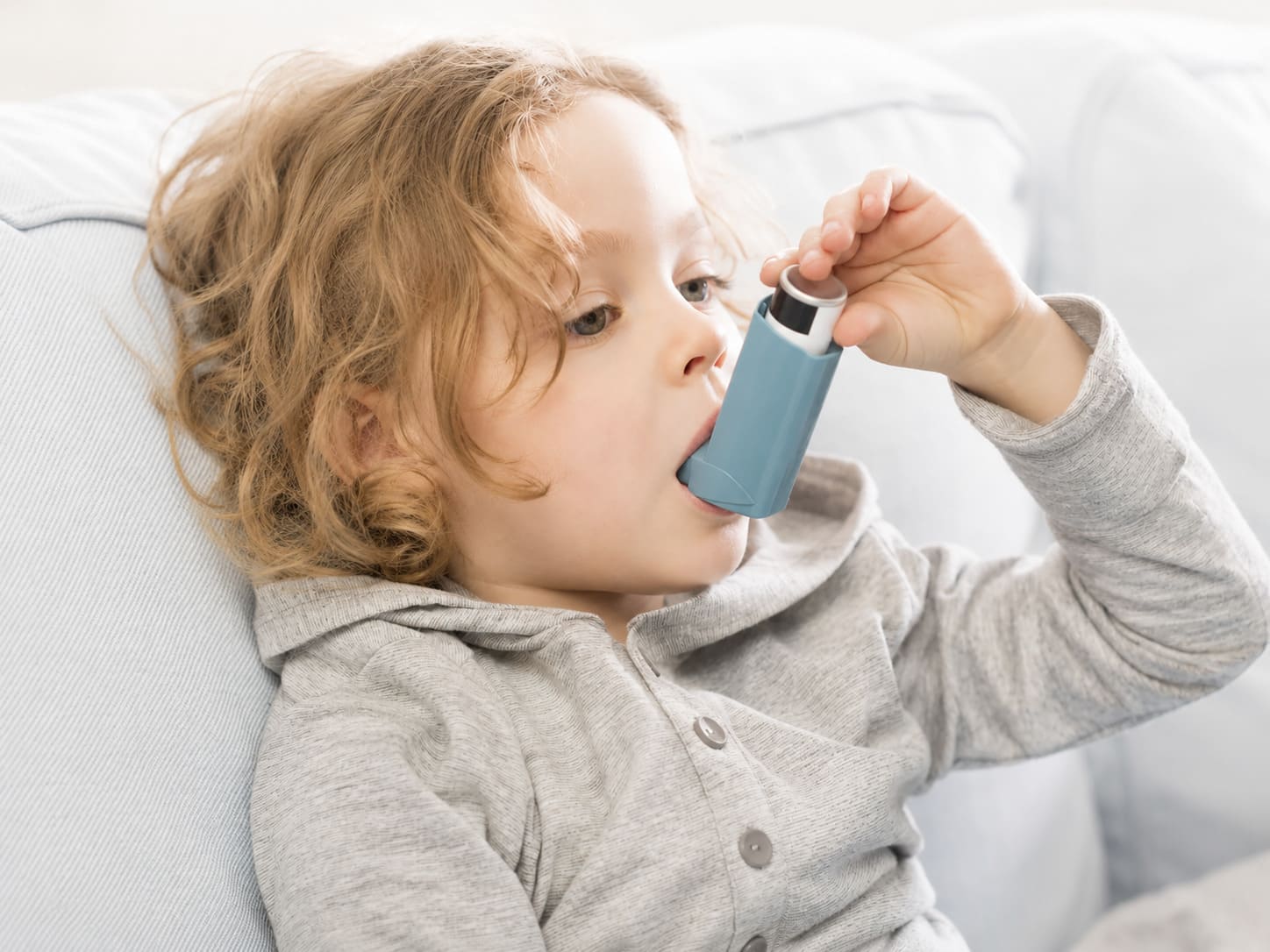
Speaking depends partly on airflow, so it makes sense that parents may notice differences in a child’s voice or phrase length when breathing is difficult. But the relationship between asthma and speech development needs careful boundaries: respiratory symptoms can affect the mechanics of speaking without automatically causing a speech-sound or language disorder.
Parents concerned about pronunciation can compare what they are hearing with broader speech-sound concerns while also considering whether changes appear mainly during coughing, wheezing, illness, exercise, or other periods of respiratory difficulty.
Speech Uses Breath, but Breath Is Not Language
Four concepts can sound interchangeable in everyday conversation but mean different things clinically: breathing, voice, speech, and language.
Breathing provides the airflow needed for voice. Voice is the sound created when airflow interacts with the vocal folds. Speech involves shaping that sound with movements of structures such as the tongue and lips. Language is the system children use to understand and communicate meanings, words, and sentences.
A child might therefore have a weak or unstable voice during respiratory symptoms while still understanding language and constructing age-appropriate sentences. Another child might have a language concern that has little to do with breathing.
That separation helps families describe what changed. “He runs out of breath before finishing a long sentence” gives a different clinical clue from “She does not understand two-step directions.”
Asthma and Speech Development Need Careful Separation
A July 20, 2026, Yeshiva University feature described work presented by speech-language pathology graduate student Jemma “Shayna” Lifschitz, with clinical associate professor Elisabeth Mlawski. The presentation examined how respiratory difficulties associated with asthma may interact with breath support, voicing, speech stability, and intelligibility in children.
The July speech-and-asthma presentation is a timely reason to look more closely at respiratory demands during speech. It should not be stretched into a conclusion that asthma causes developmental language disorders or that every child with asthma needs speech therapy.
The physiology is real: airflow from the lungs contributes to voice production, and vocal-fold vibration creates sound that the mouth and tongue shape into speech. The basic sequence is illustrated in the voice and speech mechanics.
What remains essential is identifying which part of communication is actually difficult.
Listen for the Pattern Around Breathing Symptoms
A single breathless conversation after running is not enough to identify a communication problem. Context matters.
Parents can notice whether voice or speech changes occur mainly during an asthma flare, after physical activity, during respiratory illness, or even when breathing appears comfortable. They can also note coughing, wheezing, chest tightness, unusual pauses, hoarseness, reduced loudness, or difficulty sustaining longer utterances.
Those observations should be shared with the child’s medical team because symptoms need medical context. Asthma management belongs with qualified healthcare professionals, and new or worsening respiratory difficulty requires appropriate medical attention.
If speech remains difficult to understand even when the child’s breathing is stable, an SLP may need to examine speech sounds separately. If hoarseness or another persistent voice change is present, medical and voice evaluation may be appropriate.
Language concerns deserve their own description. Difficulty finding words, understanding directions, building sentences, or telling a coherent story cannot be assumed to result from reduced breath support.
Different Concerns Point to Different Professionals
Families often benefit from separating the first question before choosing the professional to contact.
| What the family notices | Main area involved | Possible first conversation |
|---|---|---|
| Wheezing, chest tightness, shortness of breath | Respiratory health | Pediatrician or asthma clinician |
| Persistent hoarse, weak, or unusual voice | Voice | Pediatrician, ENT, or SLP as appropriate |
| Speech remains difficult to understand | Speech production | Speech-language pathologist |
| Difficulty understanding or forming language | Language | Speech-language pathologist |
| Sudden severe breathing difficulty | Urgent medical concern | Follow the child’s emergency medical plan |
More than one professional may be involved. An SLP does not replace asthma care, and a respiratory diagnosis does not answer every speech or language question.
The table is also not a triage tool for emergencies. Families should follow the child’s asthma action plan and medical guidance when respiratory symptoms worsen.
Better Questions Protect Children From Overgeneralization
The most useful next step is not to ask whether asthma “causes speech delay.” Ask what changes, when it changes, and whether the concern remains when respiratory symptoms are well controlled.
Families should also be cautious about internet breathing drills, blowing activities, or exercises presented as treatment for speech or asthma. A university discussion of breathing and speech is not a home breathing prescription. Respiratory treatment should follow medical guidance, while speech or voice exercises should be selected only when an appropriate professional identifies a need.
For younger children, progress should still be viewed across a range of abilities: understanding, gestures, play, sounds, words, phrases, speech clarity, voice, social interaction, and hearing. Losing previously acquired communication skills or showing persistent difficulty deserves professional discussion regardless of asthma status.
The connection between asthma and speech development is most useful when it helps clinicians and families ask sharper questions. Pattern over time matters more than assuming that one diagnosis explains everything.
A child can have asthma and typical speech-language development. A child can also have asthma and a separate communication concern. Keeping those possibilities distinct allows medical care to address breathing while communication professionals evaluate speech, voice, or language on its own evidence.
FAQ’s
Can asthma cause a language delay?
Asthma affects the respiratory system, while language involves understanding and using words and sentences. A child with language concerns needs individualized assessment rather than assuming breathing difficulty is the cause.
Should a child with asthma do breathing exercises for clearer speech?
Not without professional guidance. Asthma management should follow the child’s medical plan, and speech or voice exercises should be recommended only when a qualified clinician has identified a specific need.
When should an SLP become involved?
Consider discussing an SLP evaluation when speech clarity, voice, language, or functional communication concerns persist beyond periods of respiratory symptoms or interfere with everyday participation. Medical concerns should continue to be managed separately.