A hearing-loss diagnosis can bring urgent questions about language access, technology, school, therapy, and literacy. It should not automatically bring an instruction to abandon the language a child shares with parents and grandparents. Effective bilingual hearing loss support starts by asking how the child can gain strong access to communication across the languages and settings that actually make up family life.
Families may already have heard conflicting advice about raising children with more than one language. Reviewing common bilingualism myths can help separate ordinary multilingual development from concerns that genuinely require individualized hearing, language, or educational support.
Hearing Loss Does Not Cancel a Family Language
Children who are deaf or hard of hearing are not one uniform group. They vary in hearing levels, hearing technologies, age of identification, communication methods, languages, school environments, additional disabilities, and family priorities.
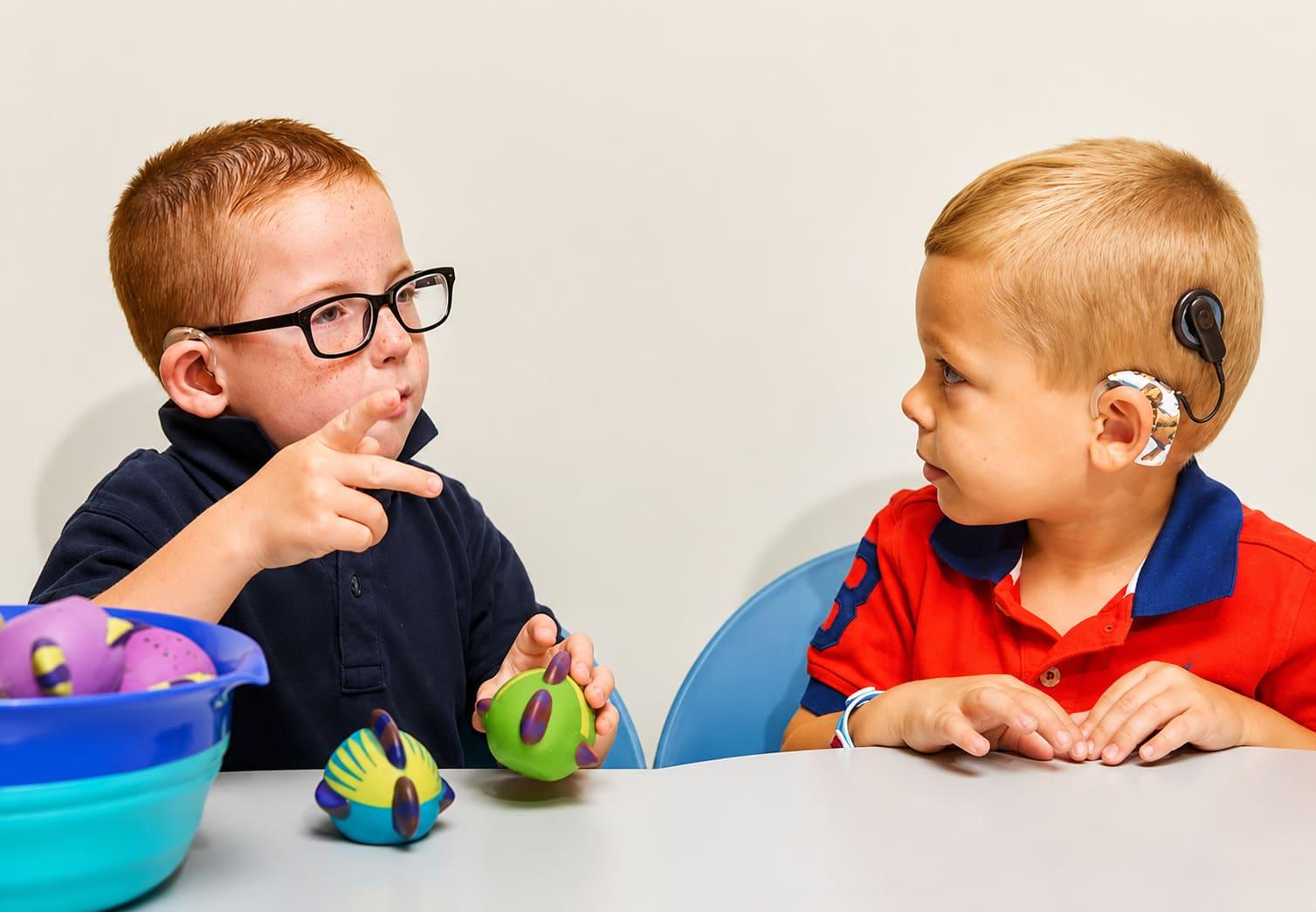
Some use spoken languages. Some use American Sign Language or another signed language. Some use both signed and spoken languages, AAC, visual supports, or several communication methods depending on the setting.
The central issue is language access comes first. A child needs meaningful, accessible opportunities to understand and communicate—not a rule that one family language must disappear because hearing loss has been identified.
Removing a home language can also remove easy communication with grandparents, extended family, siblings, or caregivers. That cost should be considered alongside any recommendation about school or intervention.
Bilingual Hearing Loss Support Must Follow the Whole Child
A recent Los Angeles program offers a useful example of how language, literacy, family, and school can be considered together. USC’s Come Read With Me summer program ran July 6–24, 2026, for children ages 5–10 with severe-to-profound hearing loss whose primary home language was Spanish and whose school instructional language was English.
The three-week program worked at the child, family, and educational levels: teachers received literacy training, children participated in small-group literacy instruction, and caregivers learned strategies they could carry into home routines.
The three-week literacy program is notable because it does not treat the child’s school language as the only relevant language environment.
That principle extends beyond one program. Assessment and planning should consider what the child can access and communicate in each language and modality, who uses those languages with the child, and what communication demands exist at home and school.
Literacy Can Move Between Home and School Languages
A family supporting Spanish at home does not have to recreate an English-language classroom after dinner. Home literacy can build comprehension, storytelling, background knowledge, enjoyment, and conversation in the language caregivers use comfortably.
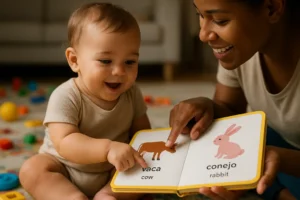
A parent can read a Spanish picture book, describe photographs, retell a family event, label objects while cooking, or discuss what happened at school. The child can participate through speech, signs, gestures, pictures, writing, AAC, or another accessible method.
English literacy support can then connect with what the child is learning at school. A child may discuss a concept in Spanish before encountering the English academic vocabulary, or explain an English book to a Spanish-speaking relative.
Home language remains an asset because literacy is not only pronunciation. It also involves vocabulary, narrative structure, meaning, background knowledge, and the ability to connect ideas.
For a child using sign language, professionals should remember that signed languages are full languages with their own structures. They should not be treated as word-for-word versions of spoken English or Spanish.
Build a Two-Setting Literacy Plan
Families can make the language plan clearer by identifying what each setting contributes instead of expecting every setting to provide everything.
| Setting | Possible language opportunity | Question to ask |
|---|---|---|
| Home | Stories, conversation, family vocabulary, shared reading | Can the child fully access family communication? |
| School | Academic language, peers, reading instruction | Are hearing and visual supports available consistently? |
| Therapy | Individual communication or literacy goals | Are goals appropriate for all languages used? |
| Community | Cultural events, relatives, libraries, Deaf peers | Does the child have meaningful language models? |
| Digital media | Captions, visual stories, bilingual content | Is the content accessible and interactive? |
This two-language literacy plan may also involve more than two languages or modalities. The point is to map access rather than impose a rigid language schedule.
A strong plan can change as the child’s hearing, technology, literacy level, communication preferences, and school demands change.
Keep the Home Language in the Child’s Communication Future
Professional guidance for deaf and hard-of-hearing children emphasizes individualized planning, family-centered decision making, appropriate assessment across languages and communication systems, and early access to complete language. It also recognizes that multilingual children may require culturally and linguistically appropriate assessment rather than being measured only through one school language.
Families can use the broader language guidance for DHH children to ask better questions of audiologists, SLPs, teachers of the deaf, interpreters, and school teams.
Those questions might include whether the evaluator understands the child’s Spanish exposure, whether an interpreter is needed, how listening access was confirmed before language testing, and how the child’s strongest communication modes were represented.
A low score in English cannot automatically tell professionals what the child knows in Spanish. Likewise, hearing technology does not guarantee complete access to spoken language in every environment. The whole communication profile matters.
Bilingual hearing loss support should therefore protect two things at once: access to language and access to relationships. Families should not be asked to sacrifice a fluent, meaningful home language simply because a child also needs specialized hearing or literacy support.
The better goal is coordinated access—so the child can communicate with family, learn at school, build literacy, and develop an identity that has room for every language and communication mode that genuinely belongs in the child’s life.
FAQ
Does bilingual exposure make hearing loss harder for a child?
Bilingualism does not cause hearing loss. Planning should focus on whether the child has accessible, meaningful language input and appropriate communication support across the languages and environments used in daily life.
Should parents stop speaking Spanish after a child receives hearing aids or cochlear implants?
Not automatically. Families should discuss language access with qualified hearing and communication professionals while preserving meaningful family interaction. Technology choices do not require every household to become English-only.
Should a bilingual deaf child’s language be tested only in English?
A complete assessment should consider the child’s linguistic experience, communication modes, access, and proficiency across relevant languages. Professionals may need interpreters or multilingual specialists to interpret results appropriately.