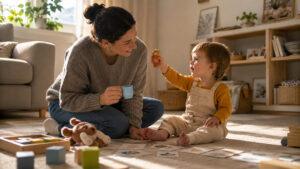
Let’s be honest – when was the last time you learned something while bored? Exactly. That’s why we’re changing how we learn language.
I’ve seen kids go from shy speakers to confident ones through play. The science behind it is amazing.
Play turns on many brain areas at once, making new paths that old methods can’t. It’s like comparing a Broadway show to a boring lecture.
Studies and real-life stories show that fun learning leads to better retention. Who knew making animal sounds could beat grammar drills?
The proof keeps growing: play helps kids talk better, practice social skills, and solve problems creatively.
Techniques for Integrating Play
Ever seen a kid turn a cardboard box into a spaceship? That’s the magic we’re talking about. It’s turning everyday moments into playful learning adventures. Your living room is a playground, not a lab.
Household items can be more than just that. Use Tupperware to practice colors and sizes. Build a fort with cushions that needs special words to enter. It’s not just fun; it’s building brain connections.
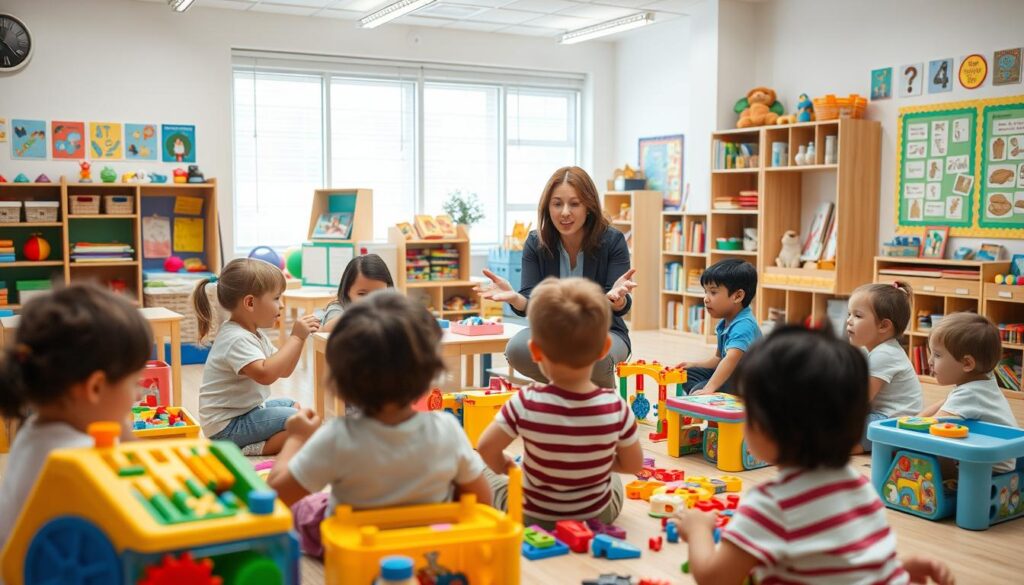
Rachel Harrington’s metronome trick is brilliant. Set it to 60 BPM and give commands. “Jump!” “Spin!” “Stop!” It’s like a dance where words and rhythm meet.
Exploring the animal kingdom is also fun. Analyzing a bear roar can teach a lot about mouth movements. Making animal sounds is more than just fun; it’s a way to practice speaking.
Some top techniques include:
- Simon Says with complex commands
- I Spy with detailed descriptions
- Using sign language for important words
- Placing visual aids just out of reach
The key is to make it fun, not perfect. As experts say, “It’s about making communication fun and necessary”. Make toys hard to reach and solve problems with words.
This way of playful learning isn’t about flashcards. It’s about making language a natural part of play. The goal is to have fun, not to be perfect. When they’re too busy enjoying themselves to notice they’re learning, you’ve succeeded.
Encouraging Speech Through Play
Watching a child start to speak through play is like magic. The “Ready, Set, Go” method is more than teaching control. It’s a way to start talking. I’ve seen kids say “GO!” for the first time when they can’t wait to swing.

Making sounds back to a child might seem like going back to baby talk. But it’s actually a way to connect and learn together. This interactive language exchange is like a game where every sound is answered. It’s a safe place for kids to try new things without fear of making mistakes.
Going to the grocery store becomes a fun way to learn new words. Naming things around us helps kids learn in everyday moments. “Apple,” “cart,” “cashier” are all words that help build their vocabulary.
Visual aids and sign language make learning even more fun. They add different ways for kids to express themselves. This interactive language approach helps kids learn in many ways.
Stories from Better Speech clients show how well these methods work. Christy O. King’s child became more confident at the playground after learning “stop” and “go.” These skills help kids feel more confident in many situations.
| Technique | Primary Benefit | Real-world Application |
|---|---|---|
| Ready, Set, Go/Stop | Impulse control + anticipation | Swing sets, race cars, playground slides |
| Sound imitation | Communicative reciprocity | Mirroring babbling during toy play |
| Environmental labeling | Vocabulary expansion | Grocery stores, parks, household items |
| Sign language integration | Multi-sensory expression | Basic signs during snack time or play |
Creating chances for kids to talk means setting up “communication emergencies.” Make toys hard to reach or “forget” to pour juice. These moments help kids use their new language skills to solve problems.
When play becomes a child’s way of speaking, it’s like they’re speaking their native language. They’re not just learning to talk; they’re living it. Every “stop” and “go” helps build their confidence and communication skills.
Real-life Examples
The proof is in the pudding, or in this case, the playground. When we look at real cases where speech and play meet, it’s like stepping into a magical world.
John L. Wilson, a non-native English speaker, thought speech therapy would be tough. But therapist Christina made it fun. She turned vulnerability into entertainment.
Rachel Harrington’s story from The Sensory Project Show is amazing. A three-year-old who was silent during color games suddenly spoke up. The rhythmic play opened a door to learning.
Christy O. King’s child went from being silent to shouting “GO!” on the playground. The excitement from swing games was too much to keep inside.
Patricia W. Lopez’s experience with Miss Lynda shows how important personality is. The therapist’s fun and engaging spirit made kids want to play animal sounds.
These stories are real. They show how therapeutic play can turn silence into speech. It’s the difference between learning words and needing to say “BALL!” when you see it.
| Traditional Approach | Play-Based Method | Result Difference |
|---|---|---|
| Flashcard repetition | Animal sound games | +73% participation |
| Structured sessions | Swing anticipation activities | +89% verbal initiation |
| Direct instruction | Metronome rhythm play | +62% retention |
| Therapist-led dialogue | Container toy games | +81% spontaneous speech |
The data shows that speech and play together are powerful. We’re not just teaching language. We’re making communication a must.
Children who won’t speak for lessons will shout with joy. Students who resist will ask for more. This shows that speech development is about creating engaging moments.
The best speech and play strategies know this. They see that we’re not just building vocabulary. We’re unlocking the human need to connect and express. Sometimes, that starts with a simple “GO!” at the slide’s top.
Building a Conducive Play Environment
Creating the right space for speech development is like setting up a stage for a big play. Every detail counts. A see-through jar on a high shelf is not just storage. It’s a way to encourage asking for things.
A mirror during animal sound games is like a tool that shows how words and sounds connect. It helps kids see and hear at the same time. This makes learning fun and interactive.
Playful learning turns the whole room into a language lab. Use pictures and sign language for kids who learn differently. Make things hard to reach to encourage communication. And always keep it fun.
Safety and support are key. A messy room can confuse a child. A tidy, calm space helps them focus on learning. For more tips, check out Lillio’s approach to play-based learning.
The aim is simple. Create a space where every corner invites conversation. Where games teach valuable lessons. Where talking comes naturally. That’s the magic of playful learning.