

Use Bilingual Development Resources to support home language, speech milestones, reading routines, and realistic progress checks for young children.
Jenna Brooks
Expressive Vocabulary Strategies for Bilingual Kids
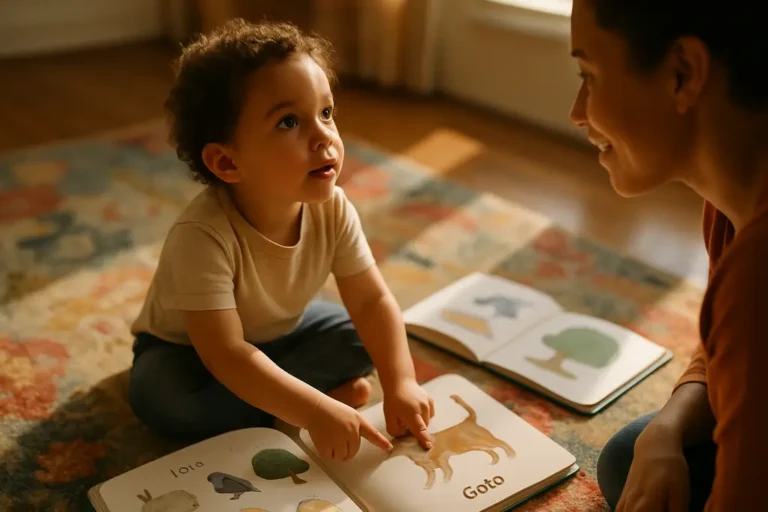
Support expressive vocabulary in young bilingual children with book reading, home-language input, practice, and realistic progress tracking.
Researchers Test a New Way to Help Autistic Children Communicate
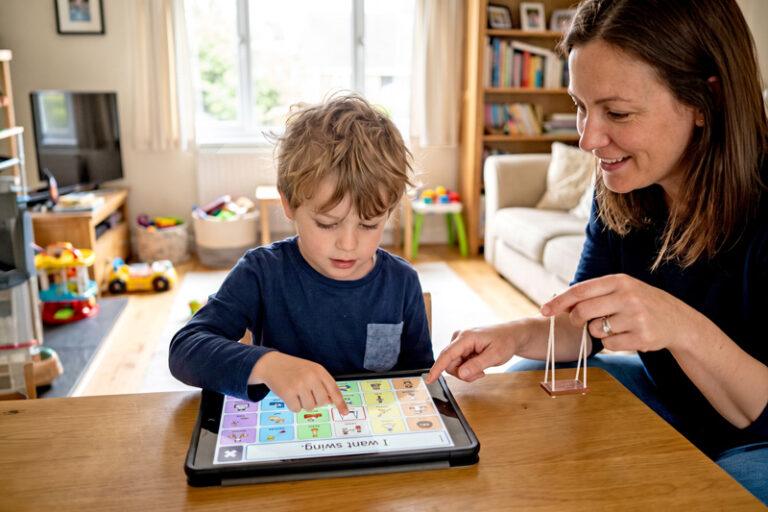
For a young autistic child, an AAC device can provide another way to communicate—but only if the system fits naturally into the interaction. New Nebraska research on visual scene display AAC asks whether familiar photographs can make communication support easier to weave into play instead of repeatedly pulling a child’s Continue Reading
Copy Your Baby’s Sounds Back: Why Timing May Matter More Than Talking More

A baby makes an “oooh,” squeals, or strings together a few playful sounds. What happens in the next few seconds may be more useful than filling the room with another minute of adult talk. Responding to baby babble can be as simple as copying the sound, smiling, and leaving enough Continue Reading
A Free Book in the Mail Helps Most When Families Talk About It
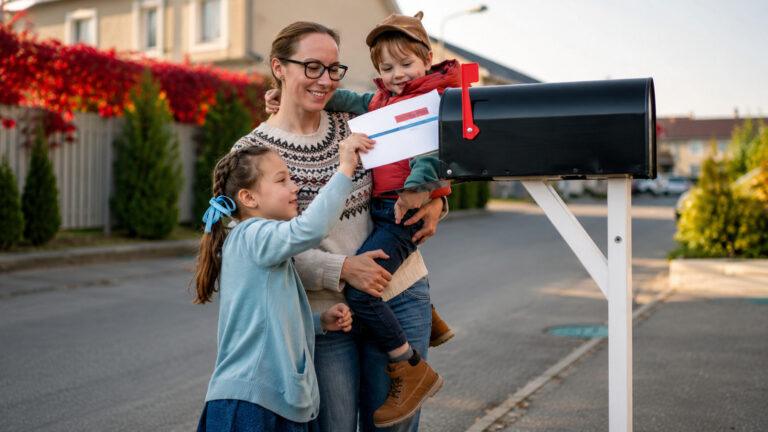
Interactive book sharing begins when a child and caregiver treat a book as something to talk about, point to, act out, and revisit—not just something to finish. A free book in the mail can open the door, but the language growth comes from what families do together on the pages. Continue Reading
AI Story Play for Kids Needs Human Turn-Taking

AI story play for kids is arriving fast, from story generators to talking characters and personalized reading tools. These tools may help children imagine new plots, but language learning still depends on something technology cannot fully supply: a real person who listens, responds, waits, and helps the child take another Continue Reading
Children Are Not Losing Communication Skills All at Once, They Are Missing Practice

Children’s communication skills are not built by hearing words float through the room. They grow when a child asks, waits, listens, explains, disagrees, repairs a misunderstanding, tells a tiny story, and gets a real response from another person. That is why the screen-time conversation is starting to sound less like Continue Reading
Family Photo Stories: Use Albums to Teach Past Tense, Pronouns, and Heritage Words

What if your most treasured memories could become your child’s most powerful language lesson? The albums on your shelf hold more than just pictures. They are a gateway to conversation, learning, and deeper connection. Flipping through these pages together naturally encourages specific language skills. Children describe what they see, using Continue Reading
Smart Co‑Viewing: If Screens Are On, Make Language the Star

Let’s change our view on screen time. It’s not just about watching. It’s a chance to connect and learn together. Assoc Prof Dr Mazlina Che Mustafa says it’s all about high-quality, interactive content. The key is to watch with your child. Prof Dr Azlina Mohd Kosnin agrees. She believes technology Continue Reading
Little Art Studio: Crafts that Teach Describing Words, Requests, and Sequencing

Imagine a place where creative projects do more than just look good. They help kids talk better. This happens when making things and learning words go hand in hand. Structured Literacy principles say using all senses is important. Touching clay, seeing colors mix, and hearing scissors cut paper helps words Continue Reading