Bilingual home language support is often mistaken for translation practice. Parents may feel they need to ask “How do you say this in English?” or create matching vocabulary lists in both languages.
That view is too small. Children build bilingual communication through routines, relationships, stories, songs, books, play, and everyday problem-solving. Families also need reassurance because home language myths can make parents question whether using more than one language is helping or hurting.
Bilingual Home Language Support Starts With Meaning
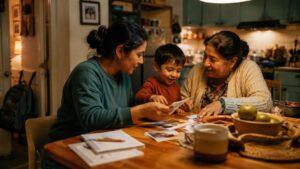
A home language is not only a set of labels. It carries affection, discipline, humor, food, prayer, stories, family names, and cultural memory.
When a child hears a grandparent tell a story, helps cook a family dish, or sings a familiar song, they are not only collecting words. They are learning how language works inside relationships.
A 2026 study of 523 parents in multilingual households examined how families supported preschool children’s early English literacy through everyday interactions and home resources. The study focused on children ages 4 to 6 and showed that family practices can play a role in multilingual home scaffolding.
That does not mean every family must copy one model. It means home routines deserve more respect.
Translation Is Useful, But It Is Not the Whole Plan
Translation can help children connect ideas across languages.
A parent might say, “Yes, that is a butterfly. Abuela says mariposa.” That is helpful because the child gets two labels connected to one idea.
The problem begins when translation becomes the main activity.
Repeated questions such as “Say it in English,” “Now say it in Spanish,” or “What is the other word?” can make conversation feel like a quiz. Some children enjoy translation games. Others become quiet.
A richer approach is to build the concept first.
Talk about where the butterfly flies, what color it is, how it moves, and where the child saw it. The second language label can come naturally.
Concepts carry across languages even when the exact word appears later.
Home Routines Build School-Ready Language
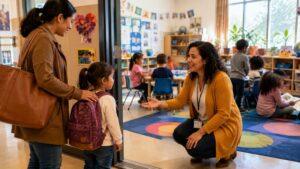
Children often learn different words in different places. School may bring words for line, scissors, circle, calendar, and clean-up. Home may bring words for relatives, meals, feelings, routines, and cultural practices.
Both matter.
| Home Routine | Language Children Can Hear | Skill Being Supported |
|---|---|---|
| Cooking | Mix, pour, hot, sweet, more, finished | Action words and sequencing |
| Getting dressed | Shirt, socks, tight, loose, first, next | Vocabulary and directions |
| Family calls | Hello, who, where, tell, remember | Conversation and narrative |
| Storytime | Character, problem, funny, scared, next | Listening and storytelling |
| Cleaning up | Put, under, beside, same, different | Location words and categories |
This language does not need to be in English to support learning. A child who understands the idea of “under” in one language can later connect that concept to another word at school.
Books and Songs Should Invite Conversation
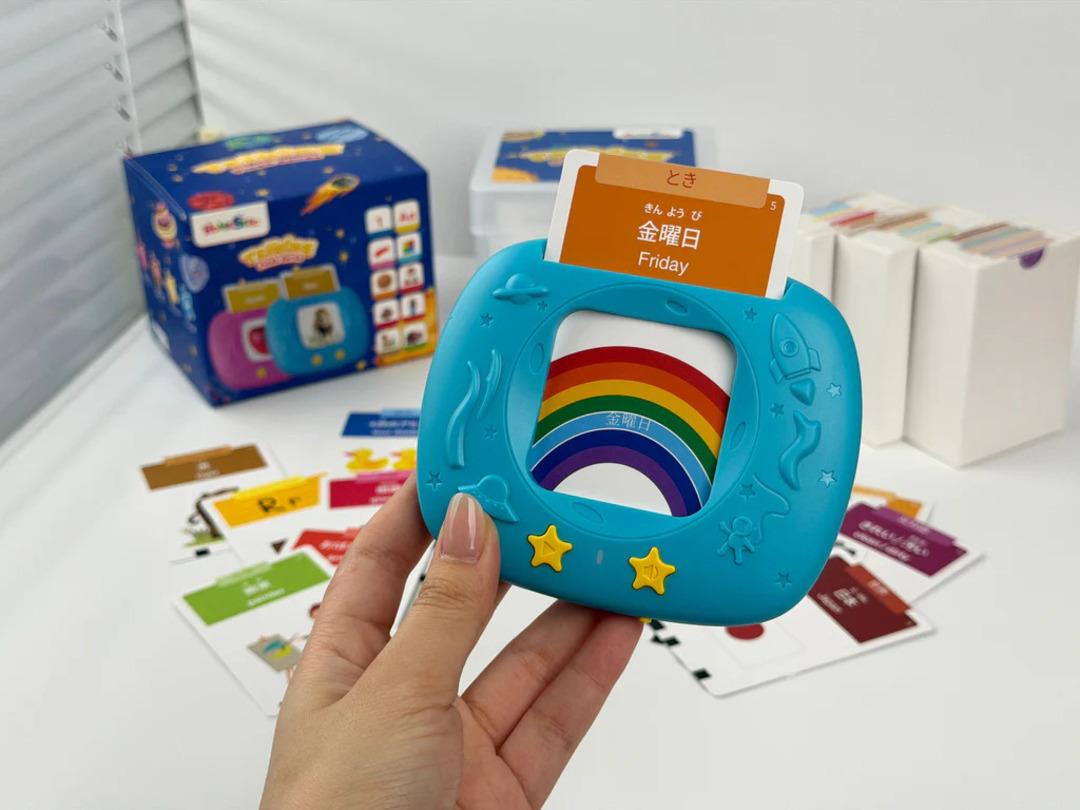
Bilingual books are helpful, but families do not need perfect materials.
A parent can read a book in one language and discuss pictures in another. A caregiver can retell a story from memory. A child can act out the story with toys.
Songs and rhymes offer repetition, rhythm, and participation. A child may sing a line before they use the same words in conversation.
Home language support becomes stronger when adults pause:
“What happened?”
“Who is hiding?”
“She looks surprised.”
“What do you think comes next?”
The child can answer in any language, with a gesture, or by pointing. The adult can expand the response gently.
Families Do Not Need Perfect Language Separation
Some bilingual families use one parent, one language. Others use one language at home and another in school. Many families switch naturally depending on the person, activity, place, or emotion.
The best plan is one adults can sustain warmly.
Head Start guidance for dual language learners emphasizes that supporting the home language builds an important foundation for English and later learning through dual language strategies.
That message matters because families sometimes reduce the home language out of fear. A less comfortable language may limit the adult’s storytelling, humor, patience, and emotional detail.
Children benefit from rich language, not from adults forcing a pattern that makes conversation thinner.
Warm interaction matters more than a perfect system.
Watch for Growth Across the Whole Child
Bilingual development can look uneven. A child may answer in English but understand the home language. They may know school vocabulary in one language and family vocabulary in another. They may mix languages in the same sentence.
That is not automatic confusion.
Families should watch the whole communication picture: understanding, gestures, vocabulary across languages, sentence growth, play, storytelling, social interaction, and hearing.
Support may be helpful if a child shows limited progress across all languages, rarely communicates intentionally, loses skills, struggles to understand familiar routines, or becomes very frustrated.
A professional evaluation should consider every language the child uses. Bilingualism does not cause a language disorder, and dropping a meaningful family language should not be the default response to concern.
The strongest bilingual home language support is not built from translation drills. It grows when children hear useful language from people who know them, in routines that matter, with enough warmth and repetition for words to become part of real life.
FAQ’s
Should parents translate every word for a bilingual child?
No. Natural translation can help, but constant translation is unnecessary. Rich conversation, play, stories, songs, and routines in each language build stronger understanding than matching every word.
What if my child understands the home language but answers in English?
That can happen when one language becomes easier to speak. Keep using the home language warmly in meaningful routines, and avoid turning every response into correction or pressure.
Does language mixing mean my child is confused?
No. Mixing languages can be a normal part of bilingual development. Concern rises when communication is limited across all languages or the child has difficulty understanding and interacting in familiar situations.