A bilingual child starting preschool may suddenly use more of the community language, speak less in class, or bring home words the family has never used together. These changes can feel unsettling, but they often reflect adaptation to a new language environment rather than rejection of the home language.
Preschool reorganizes where, why, and with whom each language is useful. Understanding broader bilingual development in children helps families interpret this shift without measuring both languages as though they should remain perfectly balanced.
A Bilingual Child Starting Preschool May Rebalance Both Languages
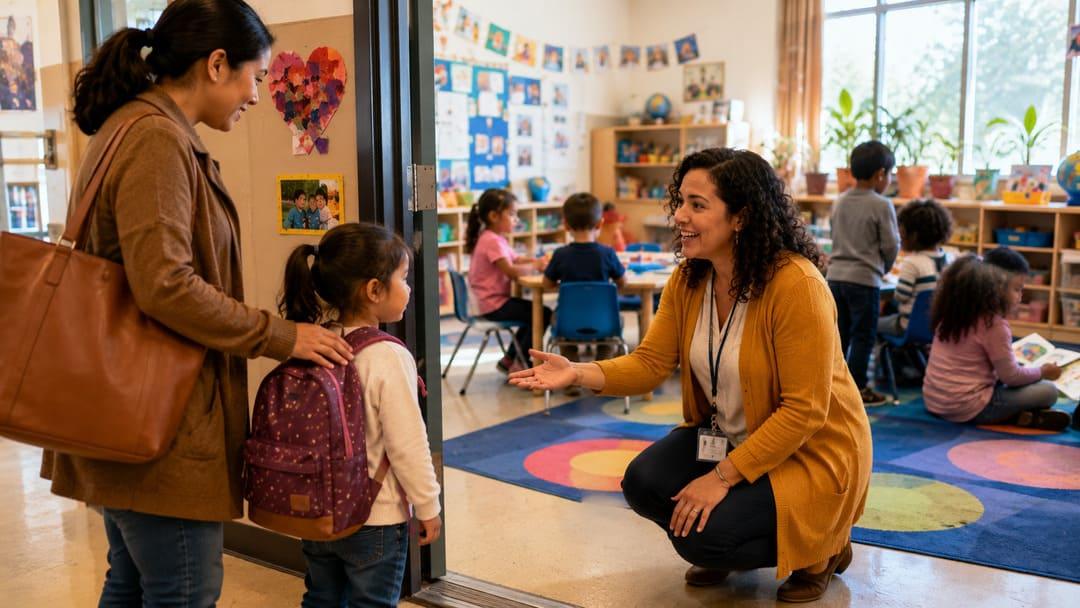
Before preschool, the home language may dominate meals, play, comfort, discipline, and family storytelling. Entering a classroom introduces a different communication network built around teachers, classmates, schedules, songs, materials, and group routines.
The community language may quickly become necessary for joining games, following classroom directions, requesting materials, and understanding what happens next. Children often learn the words that give them immediate access to people and activities.
This does not mean the new language has replaced the home language. It means language use follows opportunity and purpose. The language needed throughout the school day may become more available during play, while the home language remains stronger for family relationships and familiar routines.
Balance can shift again during vacations, family visits, changes in childcare, or increased contact with home-language speakers.
Temporary Silence Can Be Part of the Adjustment
Some children enter preschool talking freely from the first day. Others spend time observing before they speak much in the classroom language. They may follow routines, imitate movements, watch peers, and communicate through gestures while producing few spoken words.
This quiet period is sometimes called a silent or nonverbal period. It can provide time for the child to identify repeated phrases, classroom expectations, sound patterns, and the social rules of a new environment.
Silence does not mean nothing is being learned. A child may understand “sit down,” “wash hands,” or “your turn” well before using those phrases independently. The child may also remain highly verbal at home.
The preschool language-learning sequence can move back and forth between observation, short expressions, and more productive language use. Progress should be observed across settings, not judged only from classroom speech.
Participation Often Appears Before Confident Speech
A child may begin joining classroom life long before speaking in full phrases. Carrying out routines, choosing an activity, handing over materials, smiling at a peer, or moving with a song can all show that the child understands more than they can yet express.
Teachers may also notice small verbal steps before families hear detailed classroom stories. The child might copy a repeated word, whisper to one trusted peer, use a memorized phrase during snack time, or answer with a single familiar label.
Pressure can slow this process. Repeatedly asking the child to perform in the new language may increase hesitation, while predictable routines, visual support, patient pauses, and warm responses make participation feel safer.
Progress is often gradual rather than dramatic. Gestures may become short words, short words may become routine phrases, and those phrases may eventually expand into spontaneous conversation as the child gains familiarity and confidence.
School Vocabulary Can Grow Faster Than Family Vocabulary
Preschool supplies a concentrated set of repeated words. Children hear language connected with lining up, choosing centers, cleaning up, sharing materials, answering attendance, eating snacks, and moving between activities.
Because these words occur every day and lead to immediate results, they may be learned quickly. A child might begin using “circle time,” “my turn,” or classmates’ names in the community language while still preferring the home language for food, relatives, affection, and family stories.
| Preschool Change | What Families May Notice | Likely Explanation |
|---|---|---|
| More community-language words | New classroom labels and phrases appear at home | Daily repetition makes school vocabulary accessible |
| Less talking at school | The child watches, gestures, or gives brief answers | Listening and adjustment may precede confident speech |
| Language mixing | Words from both languages appear in one sentence | The child uses all available language resources |
| Home-language replies decrease | The child answers relatives in the community language | Retrieval is easier in the language used all day |
| Different skills by setting | School and home reports seem inconsistent | Each setting requires different vocabulary and interaction |
A child may understand a home-language question but answer in the community language. This receptive ability still matters, even when spoken use becomes uneven.
Language Mixing Can Increase During the Transition
Starting preschool may introduce words for concepts the child has not discussed at home. When describing the school day, the child may place a new classroom word inside a sentence spoken mainly in the home language.
For example, a child might use the community-language word for “easel,” “cubicle,” or “assembly” because that is where the concept was learned. The mixed sentence may be the most accurate way the child currently has to explain the experience.
Mixing can also increase when the child is tired or excited. Retrieving the quickest available word keeps the conversation moving and allows the child to share an idea before the moment passes.
Families can respond to the meaning and then offer a natural model. Criticizing the mixture or demanding immediate translation can make a successful communication attempt feel like a mistake. Mixed language can still carry organized meaning.
Preserving the Home Language Requires Active Use
Preschool can increase community-language exposure dramatically, while hours of home-language interaction may decrease. Maintaining the home language therefore depends on more than hoping the child will continue using it.
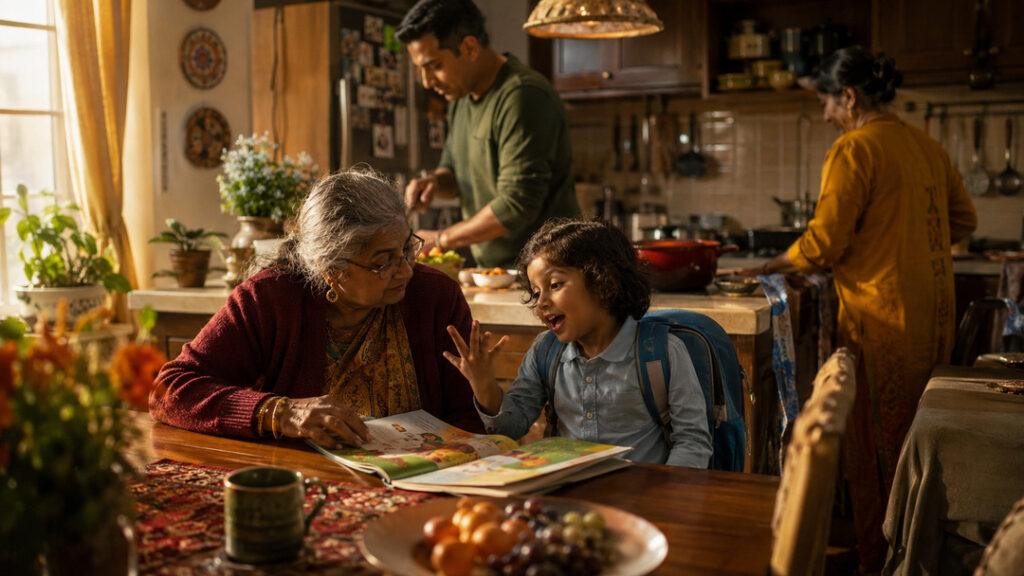
Families can protect meaningful opportunities through meals, stories, calls with relatives, songs, cultural activities, errands, and play. The strongest language experiences involve genuine interaction rather than vocabulary drills or passive media.
Adults should use the language in which they can tell detailed stories, explain feelings, joke naturally, and maintain close relationships. Switching to a less comfortable language may reduce the richness of what the child hears.
Federal early-learning guidance encourages families to provide words, conversations, songs, and stories in the language they speak most comfortably. These home-language support strategies treat the family language as a foundation for learning rather than an obstacle to community-language development.
The Pattern Around Silence and Language Loss Matters
A temporary reduction in classroom speech can be expected during adjustment, but silence should not automatically explain every concern. Teachers and families need to compare how the child communicates in both languages and across familiar and unfamiliar settings.
A child who talks actively at home, understands classroom routines, joins play, uses gestures, and gradually attempts new words presents a different pattern from a child who struggles to communicate everywhere.
Concern deserves closer attention when the child shows limited understanding in both languages, withdraws from interaction, stops using previously acquired skills, or makes little progress despite regular opportunities to participate.
Assessment should include family observations, classroom information, exposure history, and skills across languages. Evaluating only the community language can make a normal difference in experience appear to be a disorder.
A bilingual child starting preschool is not simply adding new vocabulary. The child is learning which language works with different people, places, emotions, and tasks. The central opportunity is to support community-language growth without allowing the home language to lose its place in family connection, identity, and everyday conversation.
FAQs
Is it normal for a bilingual child to speak less after starting preschool?
Yes, some children initially observe and communicate nonverbally while learning classroom language and routines. Progress in understanding, participation, gestures, and communication at home helps clarify whether the silence reflects adjustment.
What if a child answers the home language in English?
Continue speaking the home language naturally and respond to the child’s meaning. Understanding may remain strong even when the community language becomes easier to retrieve after hours of daily preschool exposure.
Can preschool cause a child to lose the home language?
Preschool does not automatically erase it, but reduced use can weaken spoken fluency. Regular conversations, stories, play, cultural routines, and relationships with home-language speakers help keep the language active.