Parents often start worrying about toddler speech at the exact moment daily life becomes loudest: meals, diapers, errands, meltdowns, bedtime. The best language activities for toddlers are not separate lessons squeezed into an already packed day; they are small shifts that turn ordinary moments into better conversations. That distinction matters because toddlers do not learn language from polished performances. They learn it from repeated, responsive exchanges.
TalkandPlay has already framed the heart of the issue well: the simple playtime shift that helps kids find their voice. The point is not to make parents more frantic, but more intentional. A toddler who feels noticed, answered, and invited back into the exchange has more reasons to communicate.
Language Activities for Toddlers Work Best When They Feel Ordinary
The most useful toddler language support rarely looks like a lesson. It looks like a parent slowing down long enough to name what the child is holding, waiting for a sound or gesture, and then adding one more word than the child used. That small step is powerful because it respects how toddlers learn: through attention, imitation, repetition, emotion, and shared meaning.
A child who says “ball” does not need a quiz. They need a response that gives the word somewhere to go: “Big ball,” “Roll ball,” or “Blue ball.” That is responsive repetition, and it turns a single word into a doorway. The parent is not correcting. The parent is expanding.
This matters now because parents are surrounded by pressure. Speech milestone charts, social media clips, preschool readiness conversations, and comparison with siblings can make normal language-building feel like a race. Activities help most when they lower that pressure, not when they turn play into a performance.
Everyday Routines Are Hiding The Best Practice
Toddlers do not need expensive toys to hear useful language. They need meaningful words attached to actions they already understand. Snack time, bath time, laundry, stroller walks, and cleanup all create natural reasons to listen and respond.
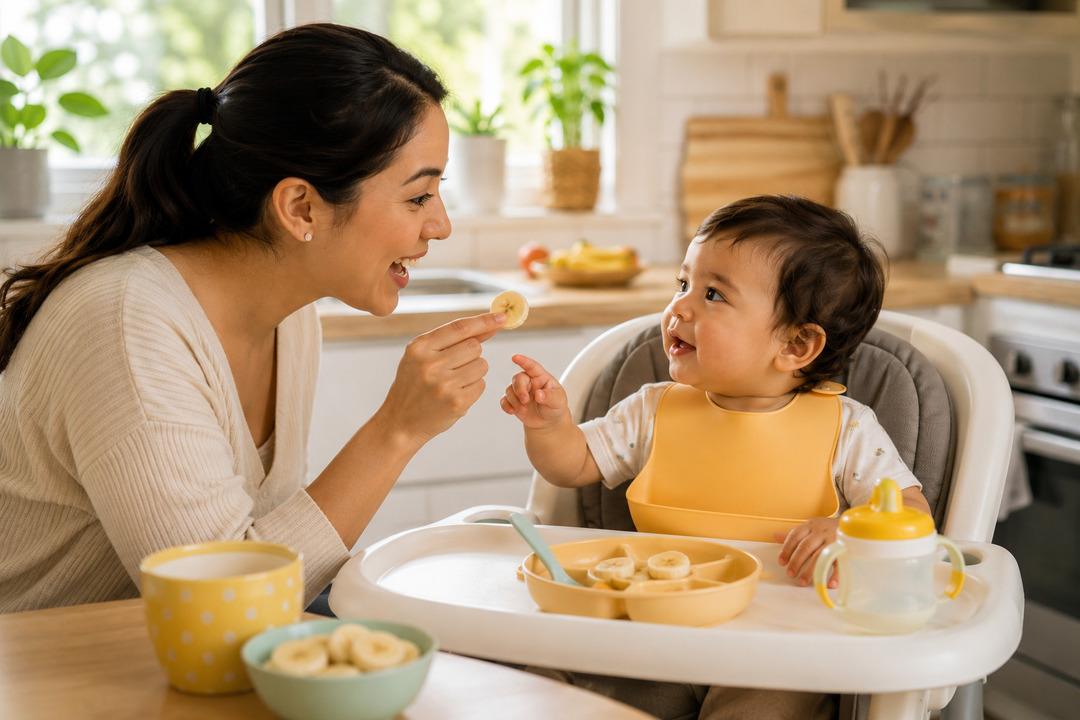
During snack time, a parent can offer choices: “Apple or cracker?” During bath time, they can narrate action: “Splash,” “Wash toes,” “Duck is wet.” During cleanup, they can turn directions into shared action: “Blocks in,” “One more car,” “All done.” These phrases are short enough for a toddler to process and useful enough to repeat.
The key is to talk with the child, not around the child. Long adult monologues can become background noise. Short, warm, repeated phrases create pressure-free practice because the toddler understands the situation and has a reason to participate.
| Daily Moment | Simple Language Activity | Parent Move | What To Avoid |
|---|---|---|---|
| Mealtime | Offer two choices | “Banana or toast?” | Asking too many test questions |
| Bath time | Name actions and body parts | “Wash hands,” “Pour water” | Talking too fast |
| Getting dressed | Use sequence words | “Sock on,” “Shoe next” | Rushing through every step |
| Walks outside | Label what the child notices | “Dog running,” “Big truck” | Forcing the child to repeat |
| Cleanup | Turn sorting into talk | “Blocks in box” | Correcting every unclear sound |
The table is not a script. It is a reminder that the best opportunities are already present. Parents do not need to add more tasks to the day. They need to make the existing tasks more conversational.
Reading Works Better When Toddlers Are Allowed To Interrupt
Books are one of the strongest tools for toddler language, but the goal is not perfect story time. Many toddlers wiggle, point, flip pages, skip ahead, or fixate on one picture. That is not failure. That is participation.
A parent can use a book like a conversation object. Instead of reading every word, they can point and say, “Dog sleeping,” “Baby crying,” or “Where is the moon?” If the toddler points, the parent can follow that interest. If the toddler babbles, the parent can answer as if the child has joined the conversation.
For families trying to understand whether language is broadly on track, the CDC’s developmental milestones for 2-year-olds can help parents compare daily observations with common skills at that age. Milestones should not turn reading into a checklist, but they can make concerns easier to describe when speaking with a pediatrician.
Reading also gives toddlers words they may not hear in normal household routines. Animals, weather, feelings, vehicles, family roles, and action words all appear naturally in picture books. A five-minute shared book can produce more useful language than a half-hour of background television because the child is part of the exchange.
Play Should Invite Speech, Not Demand It
The fastest way to drain a toddler’s interest is to turn every toy into a quiz. “What color is this?” “What shape is this?” “What sound does it make?” Those questions have their place, but too many of them make the adult the examiner and the child the performer.
Better play leaves space for the toddler to lead. If a child lines up toy cars, the parent might say, “Car, car, car,” then pause. If the child crashes the cars, the parent might add, “Crash!” and laugh. That pause is often where communication begins. A look, a sound, a point, or a repeated word all count as participation.
The strongest play routines have a serve-and-return rhythm. The child does something, the adult responds, and then the child gets another turn. Blocks, pretend food, dolls, animal toys, bubbles, and simple vehicles all work because they create actions worth naming. The toy matters less than the interaction it creates.
Parents should also resist the urge to make every unclear word perfect. Toddlers often approximate sounds before they pronounce words clearly. A child who says “wa-wa” for water is communicating. The adult can model “water” naturally without stopping the moment to demand a correction.
Milestones Matter Most When They Lead To Help, Not Panic
Parents should take language concerns seriously without treating every difference as a crisis. Toddlers develop at different speeds, and some understand far more than they say. Still, patterns matter: limited gestures, little response to name, loss of words, very few attempts to communicate, or frustration that seems tied to not being understood can be worth discussing with a professional.
The National Institute on Deafness and Other Communication Disorders offers a helpful overview of speech and language developmental milestones from early childhood through preschool years. Parents do not need to diagnose their child from a webpage. They need enough language to describe what they are seeing and ask better questions.
This is where everyday activities become useful evidence. A parent who has been watching how a toddler requests help, imitates words, follows simple directions, uses gestures, and responds during play can give a clearer picture than a parent who only says, “I’m worried they don’t talk enough.” Daily interaction creates small language invitations, but it also helps adults notice patterns.
The Next Signal Is Whether Communication Feels Easier
The most important sign is not whether a toddler suddenly says ten new words in one afternoon. It is whether communication begins to feel less stuck. Does the child point more often? Try more sounds? Bring objects to an adult? Laugh and repeat a familiar phrase? Use a gesture before melting down? Those changes matter.
Parents should pay attention to which activities create connection and which ones create resistance. If books become a battle, use songs. If songs do not interest the child, use snack choices. If sit-down play fails, try movement: “Jump,” “Stop,” “Go,” “Up,” “Down.” The right activity is the one that helps the child want to communicate again.
That is why language activities for toddlers should be simple, repeatable, and emotionally safe. The goal is progress over performance: more shared attention, more attempts, more back-and-forth, and more confidence. Parents do not need to become speech therapists at the kitchen table. They need to become better conversation partners in the moments their toddler already understands.