For bilingual preschoolers, instructional language is not just a scheduling choice. It shapes which words children hear, which sounds they practice, which books they discuss, and which language feels useful during learning. Research on Spanish-English early education suggests a clear pattern: supporting the home language can strengthen Spanish development, and it does not automatically weaken English growth. The evidence is promising, but it is not one-size-fits-all.
Most of the research available for this topic focuses on Spanish-speaking children learning English in preschool or early elementary settings. That means families and educators should be cautious about applying every finding to children who speak other language pairs. Still, the studies give practical clues for classrooms, home routines, and conversations with program leaders.
Understanding Instructional Language In Preschool
What Instructional Language Means
Instructional language refers to the language or languages adults use to teach, guide, read, explain, ask questions, and respond to children during the school day. In early education, it may appear as English-only teaching, Spanish-only segments, bilingual instruction, or English teaching with intentional Spanish support.
This is different from casual language exposure. A child may hear Spanish at drop-off or during play, but formal instruction includes planned teaching moments such as story reading, vocabulary lessons, letter-sound activities, counting, science talk, and teacher-child conversation. Those moments matter because young children build language through repeated, meaningful use with responsive adults.
A practical view of instructional language asks not only which language is used, but how it is used. A teacher who reads a book in Spanish and invites children to predict, explain, retell, and connect the story to their lives is offering a different language experience from a teacher who uses Spanish only to manage behavior or translate a direction quickly.
Why Home Language Support Matters
For many Spanish-English preschoolers, Spanish is the language tied to family stories, routines, feelings, cultural knowledge, and early vocabulary. When the classroom ignores that language, children may lose opportunities to show what they already know. When the classroom includes it with purpose, children can connect new learning to an existing language base.
This does not mean every bilingual child needs the same model. Some children are Spanish-dominant, some are English-dominant, and some are more balanced. Some families want strong maintenance of the home language, while others are most worried about access to English in school. Good communication between families and educators helps clarify those goals without assuming that one language must replace the other.
For more insights into language and literacy, parents might explore different educational resources. Interline Publishing provides a related site in the same network where similar topics are discussed.
What The Research Shows About Spanish-English Growth
Spanish Support Did Not Block English Growth
One experimental preschool study published in 2010 compared transitional bilingual education with English-only instruction for 31 Spanish-speaking preschoolers who were 38 to 48 months old. The study found that native-language instruction significantly increased growth in Spanish oral vocabulary and letter-word identification, without harming similar skill development in English, according to the ERIC record for the 2010 preschool literacy study.
That finding is especially useful for parents who worry that Spanish instruction may “take away” from English. The study was small, so it should not be treated as proof that every program will get the same results. It does, however, support a key idea seen across bilingual education research: early home-language instruction can support important language and literacy skills while children continue developing English.
Instructional Language And Early Literacy Measures
A 2021 analysis of 313 Spanish-English bilingual preschoolers in 81 classrooms reported that predominant Spanish and bilingual instruction produced growth as strong as English-only instruction on most early literacy measures. One exception was that growth in first sounds and sound identification lagged under bilingual instruction compared with English-only instruction, as described in the early literacy growth study.
This mixed pattern is useful because it avoids a simple “all bilingual instruction is better” message. The evidence suggests that instructional language can support bilingual growth, but specific early literacy skills may respond differently depending on classroom language use, teaching quality, and the child’s starting language profile.
For educators, that means Spanish support should not be symbolic. It should include intentional vocabulary building, oral language practice, book discussion, print awareness, and chances to hear and produce more complex language. For families, it means asking not only whether a program is bilingual, but what children actually do in each language during the week.
How Families And Educators Can Use The Evidence
Questions To Ask A Preschool Program
Parents do not need to become researchers to make thoughtful choices. A few direct questions can reveal whether a classroom’s language approach is planned, consistent, and responsive to children’s needs.
- Which language or languages are used for story reading, vocabulary, math talk, and small-group instruction?
- How do teachers support children who understand more in Spanish than they can say in English?
- How does the classroom build English while also valuing Spanish?
- Do teachers share language goals with families in clear, practical terms?
- How are children’s skills observed across both languages, rather than in English alone?
These questions are not meant to rank programs from best to worst. They help families understand whether the classroom has a clear language plan. A classroom labeled bilingual may still provide limited Spanish use. An English-focused classroom may offer meaningful home-language support if teachers are trained and intentional. Labels matter less than daily practice.
Home Routines That Support Both Languages
Families can support bilingual proficiency through ordinary talk, not formal lessons. Shared book reading, cooking, pretend play, family storytelling, songs, and conversations during errands can all create chances for children to hear and use language. The strongest home routines are usually the ones families can repeat with warmth and low pressure.
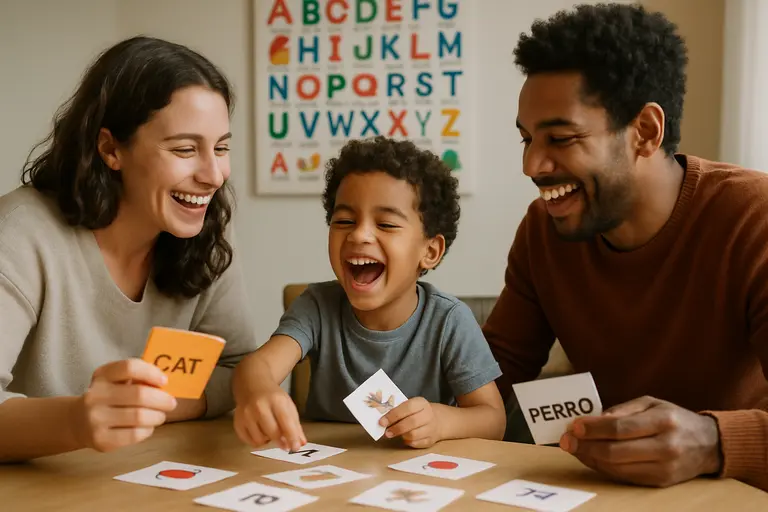
If a child answers in English during a Spanish conversation, parents do not need to treat it as failure. A supportive response might repeat the child’s idea in Spanish, add a little more language, and keep the conversation moving. For example, if the child says, “The dog is sleeping,” a parent might respond in Spanish: “Sí, el perro está durmiendo en la cama. Está muy cansado.” This keeps Spanish available without turning the moment into a test.
Educators can use a similar approach in the classroom. If a child uses one language to answer a question asked in another, the adult can acknowledge the meaning first, then model useful language. Children need to learn that communication works, not that every response leads to correction.
For a closer look at how academic talk can support bilingual preschoolers, families and teachers may find academic language instruction useful as a related topic.
Instructional Language And Bilingual Proficiency
Instructional language is closely connected to bilingual proficiency because children grow in the languages they hear, use, and need for real communication. The research available here supports a balanced message: Spanish instruction can strengthen Spanish skills, bilingual and Spanish-predominant instruction can support many early literacy outcomes, and English growth does not have to be sacrificed when the home language is included.
At the same time, the evidence has limits. Much of it centers on Spanish-English learners, and some studies have modest sample sizes or focus on specific skills. Early literacy outcomes can differ by measure, and classroom quality still matters. A bilingual model without strong teaching is not automatically better than an English-focused model with thoughtful supports.
The most helpful stance for adults is careful and practical. Children benefit when their full language experience is respected, when teachers plan language use rather than improvise it, and when families are invited to share what the child understands and says at home. The goal is not to protect children from English or from Spanish. The goal is to give them many meaningful chances to listen, speak, think, read, and connect across both languages.