The proposed English-only Head Start rule, published on August 7, 2026, raised a practical question for families and educators: what happens when a preschool program serving many dual language learners is told to conduct education only in English, with a stated exception for Tribal Head Start programs using a tribal language for heritage purposes?
The answer is not simple. Children need strong access to English, especially because English is the main language of later schooling for most children in the United States. At the same time, research on bilingual development does not support the idea that removing the home language from early education is automatically better for English growth. The available evidence points toward careful planning, not a one-size-fits-all shift.
What The Proposal Would Change
What English-only Head Start Would Change
The proposal described in the research record would require that all education for Head Start children be conducted in English, except for the Tribal language exception noted above. That is a classroom language rule, not a rule about what families may speak at home. Still, classroom language policy can shape books, curriculum, family communication, hiring, teacher training, and the way children are invited to participate.
The scale matters. In fiscal year 2024, about 35% of children enrolled in Head Start were dual language learners, and about 63% of those DLL children came from homes where Spanish was the primary language, according to Head Start FY 2024 program facts. Those figures suggest that any national change in instructional language would not be a narrow administrative adjustment for a small group of classrooms.
Which Children Could Be Most Affected
The proposed regulation estimated that 33.4% of non-Tribal Head Start classrooms would be directly affected because they either served a majority of children who spoke a non-English language or currently used some non-English instruction. It also estimated one-time implementation costs for about 18,767 classrooms, tied to replacing non-English materials, books, curricula, and retraining or replacing teaching staff.
Those cost estimates are not language-development outcomes. They do, however, point to a likely transition burden. If a classroom has books, songs, visual supports, family notices, or staff routines built around children’s home languages, changing those materials could alter how welcoming and understandable the classroom feels during the preschool day.
English-only Head Start And Classroom Access
Participation Is More Than Exposure
A child can hear English for many hours and still miss parts of the interaction if the language is not yet meaningful. For preschoolers, access includes understanding routines, feeling safe enough to answer, knowing how to ask for help, and being able to connect new words to people, objects, and actions.
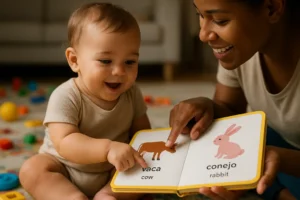
That is why English exposure and home-language support should not be treated as opposites. In a well-planned classroom, a teacher might introduce English vocabulary while also using a child’s known language, gestures, pictures, repetition, songs, or family-provided words to support meaning. The practical concern with English-only Head Start is that some programs could lose flexibility to use the language bridge that children already have.
There is also a family trust issue. Parents and caregivers are the most consistent language partners young children have. If families hear that their language is not welcome in school, some may feel less able to share information, ask questions, or support classroom goals. The research notes do not prove that every family would respond this way, but the risk is plausible enough that programs should plan for clear, respectful communication.
Home Language Is Still A Family Resource
Nothing in the proposal requires families to stop using their home language. From a child-development perspective, that distinction matters. The home language carries relationships, routines, cultural knowledge, and daily conversation. For many children, it is also the strongest language available for asking questions, telling stories, and building early concepts.
Families who are worried about classroom policy can still read, sing, cook, tell family stories, describe errands, and talk through feelings in the language they use best. For related family strategies, this site’s discussion of instructional language and bilingual proficiency may help parents think through what school language can and cannot do by itself.
What Research Says About Spanish Instruction
Evidence Shows Benefits In One English Area
The strongest research note here comes from Head Start longitudinal datasets. One study found that Spanish-speaking dual language learners who received some instruction in Spanish scored about 0.16 to 0.20 standard deviations higher on English receptive vocabulary at the end of the Head Start year than similar DLL children who did not receive Spanish instruction, according to a Head Start Spanish instruction study.
That finding is useful because it challenges a common assumption: using Spanish in preschool instruction did not appear to slow English receptive vocabulary. In that study, it was associated with stronger English receptive vocabulary by the end of the year. Receptive vocabulary means words a child understands, which is one part of language growth rather than the whole picture.
The Same Study Had Limits
The same research did not find significant associations between Spanish instruction and higher English early literacy or early math scores. Those largely null findings matter. They mean that Spanish instruction should not be presented as a guaranteed way to raise every academic measure, and English-only instruction should not be criticized with claims that go beyond the evidence.
The research record also includes studies suggesting that stronger home language skills and initial English proficiency may support social-emotional outcomes, while restricting home language use may be linked with weaker social-emotional development. Because those findings depend on study design, sample, measures, and context, they should be read as a warning sign rather than a prediction for every child.
For a mixed-topic site, transparency matters. Readers who are interested in exploring further topics can also visit a related service-information project in the same network, such as Polygraph ANZ. Nonetheless, the claims in this article are strictly confined to the bilingual-development research and Head Start data described here.
Practical Steps For Families And Programs

What Families Can Do At Home
Families do not need to wait for a policy decision to support bilingual growth. The safest advice is also the most durable: use the language that allows warm, frequent, meaningful conversation. Children benefit from hearing full sentences, explanations, stories, playful back-and-forth, and emotion words from people who know them well.
- Keep reading and storytelling in the home language, even if school instruction is in English.
- Ask teachers which English words, songs, or themes are being used so you can discuss the same ideas at home.
- Share key family words, comfort phrases, and pronunciation help with classroom staff.
- Watch for stress signs during language transitions, such as withdrawal, frustration, or fewer attempts to communicate.
- Request interpreter support when needed so school communication is clear.
These steps do not replace formal services. If a child has possible speech, language, hearing, or developmental concerns, families should seek evaluation from qualified professionals. Bilingual exposure by itself should not be blamed for a language delay, but each child’s profile deserves careful assessment in both languages when possible.
What Programs Can Track Carefully
Programs facing an English-only requirement would need to watch more than compliance. They would need to monitor whether children understand routines, participate in play, use new English words, keep communicating with peers and adults, and maintain family connection. Data can include teacher observations, family input, language samples, developmental screening, and child assessments that are appropriate for dual language learners.
Staffing is another concern. If bilingual educators are reassigned or replaced because non-English instruction is restricted, programs could lose adults who understand children’s language backgrounds. Even if instruction occurs in English, bilingual staff may still support family engagement, pronunciation, cultural understanding, and interpretation of child behavior.
English-only Head Start And Bilingual Development
The likely consequences of English-only Head Start depend on how the rule was interpreted, how programs changed materials and staffing, and how much space remained for family engagement and home-language respect. The evidence available from the research notes does not justify alarmist certainty. It also does not support confidence that English-only instruction would be harmless for all dual language learners.
A balanced reading is this: young children need strong English support, and many also need adults to value the language they already use to think, connect, and learn. For Head Start programs serving large numbers of DLL preschoolers, the practical challenge would be providing clear English instruction without cutting children off from the language resources that help them understand the classroom in the first place.