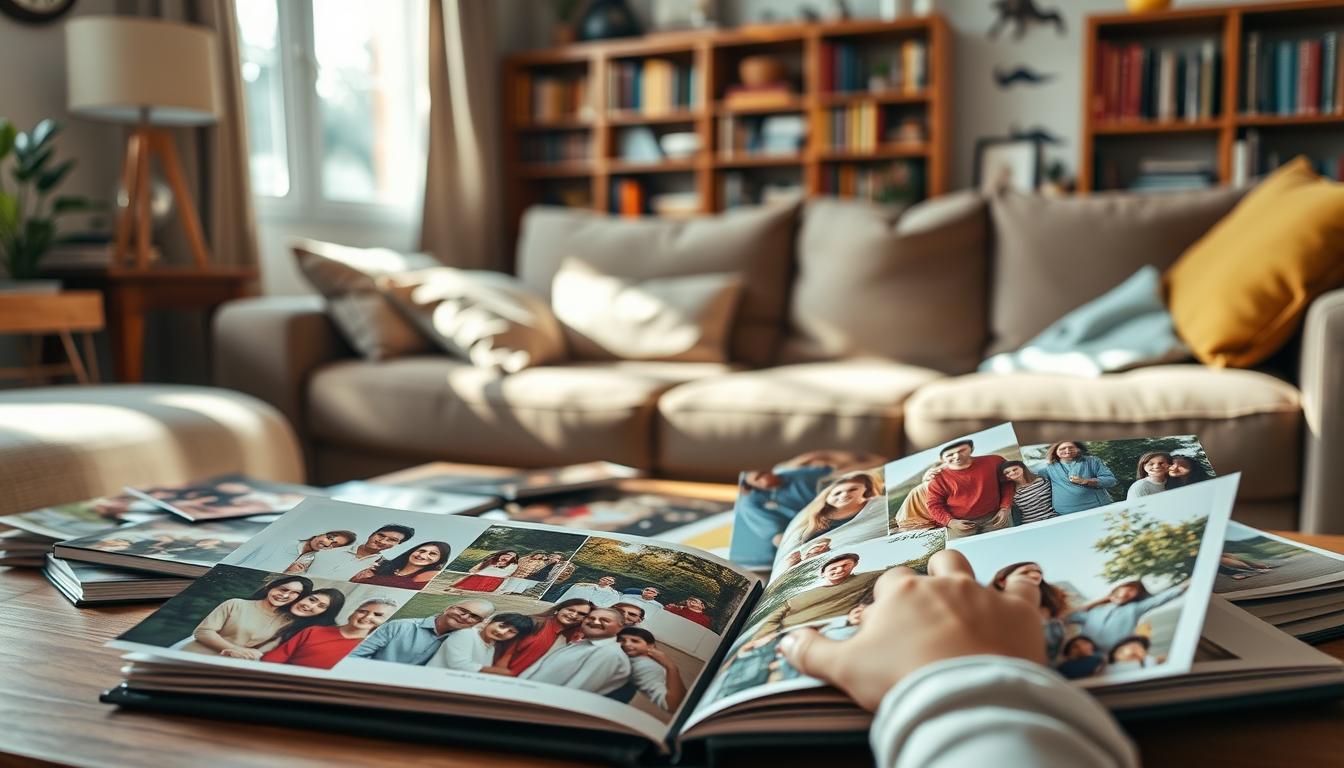
What if your most treasured memories could become your child’s most powerful language lesson? The albums on your shelf hold more than just pictures. They are a gateway to conversation, learning, and deeper connection.
Flipping through these pages together naturally encourages specific language skills. Children describe what they see, using past tense verbs like “visited” or “played.” They point and identify people, practicing pronouns such as “he,” “she,” and “we.”
Special names for cultural items, foods, or places from your roots become part of the chat. This builds a rich family vocabulary that honors your heritage.
The benefit is beautifully dual. You are actively boosting your little one’s language development. At the same time, you are preserving precious stories for generations to come.
This practice of photo storytelling turns a simple activity into a meaningful ritual. It fosters bonding and creates a love for both learning and family history. Start with just a few pictures today and watch the magic unfold.
Why photos unlock memory and narrative skills
Have you ever noticed how a single picture can spark a flood of stories and questions from a young child? That moment is more than just cute. It is a window into how our brains use visuals to organize the past and build language.
Photographs act as powerful cognitive anchors. They give a child’s mind a concrete place to start. Instead of trying to remember a vague feeling, they see a face, a place, or an object. This visual cue triggers specific memories and details that might be lost.
This process is key for developing narrative skills. When a child looks at a photo, they naturally try to sequence events. What happened first? What happened next? This practice in ordering thoughts is the foundation of storytelling. It builds confidence as they realize they have a story worth telling.
The emotional connection is just as important. Family photos reinforce a child’s sense of identity and belonging. Seeing themselves as part of a family history answers the fundamental question, “Where do I come from?” This emotional security provides a safe space for language to flourish.
Regular photo discussions offer practical benefits. They turn passive vocabulary into active use. A child learns to name emotions, describe actions, and ask questions. This improves both language fluency and emotional intelligence. It is learning wrapped in love and connection.
Think about platforms like Instagram. Their success is built on this very idea. A shared photo instantly prompts conversation, memories, and social interaction. It proves that visual media is a universal trigger for human connection and recall.
The table below summarizes the key areas where family photo storytelling makes a direct impact:
| Skill Area | How Photos Help | Real-World Example |
|---|---|---|
| Memory Recall | Visual cues provide concrete anchors, retrieving specific details and sensory information. | A child sees a birthday cake in a photo and remembers the taste of frosting and the sound of singing. |
| Narrative Sequencing | Images encourage ordering events (first, next, last), building logical storytelling structure. | Using a series of vacation pictures, a child explains the trip from packing the car to swimming at the beach. |
| Identity Formation | Seeing oneself in family history reinforces personal identity and cultural belonging. | A child points to grandparents in an old photo and learns heritage words for “grandma” and “grandpa.” |
Every family album is a treasure chest of learning opportunities. You are not just looking at smiles from last summer. You are unlocking your child’s ability to remember, sequence, and connect. You are helping them build their own story, one picture at a time.
This powerful blend of science and emotion is what makes photo storytelling so effective. It turns simple reminiscing into a tool for cognitive and emotional growth. The next time you flip through pictures together, know that you are doing much more than sharing a memory. You are building a foundation for confident communication and a strong sense of self.
Selecting Ten Pictures That Invite Talk (People, Places, Celebrations)
You don’t need hundreds of pictures to start conversations. Just ten well-chosen photos can do the trick. This small set is great for focused practice without feeling too much.
Look for photos that naturally lead to questions and stories. Choose images where something interesting is happening. For example, a smiling person invites the question, “Why is she happy?” A vacation scene asks for the story of “What did we do there?”
Start by picking three to four photos of important people. Include family, grandparents, cousins, or close friends. Choose pictures where the person is doing something fun, like cooking or playing ball. These images are perfect for practicing names and pronouns like “he,” “she,” and “they.”
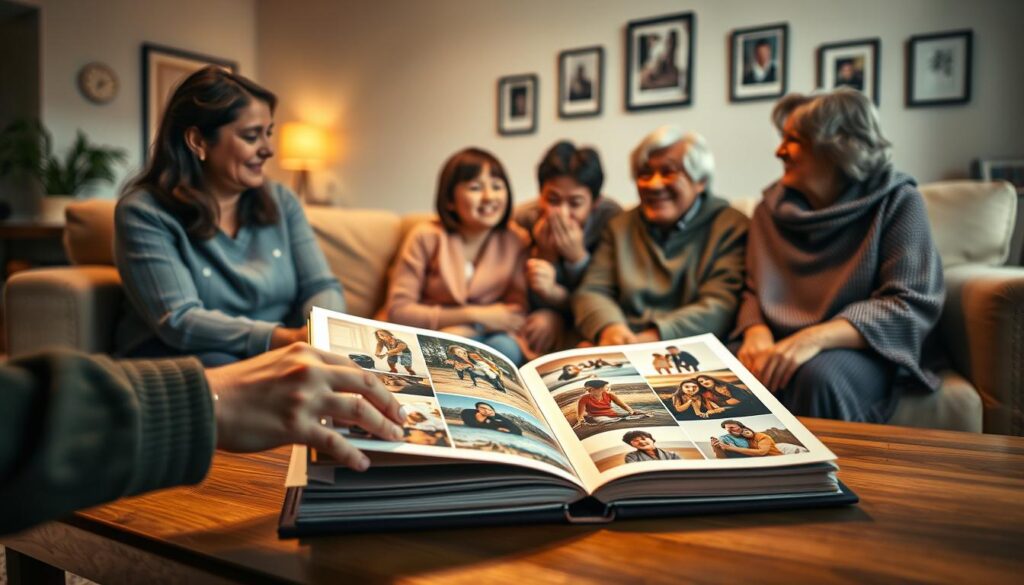
Next, select three photos of memorable places. Think about your last beach trip, a visit to a city park, or your own backyard. Scenes with clear landmarks or activities help children describe where things happened. They encourage the use of location words like “at the beach,” “on the swing,” or “next to the big tree.”
Lastly, choose three photos from family celebrations. Holidays, birthdays, and cultural festivals are full of details. A Thanksgiving picture shows foods and family gathered. A birthday photo captures cakes, presents, and decorations. These images are packed with specific vocabulary and emotions.
When curating these ten photos, involve your child in the process. Ask, “Which picture of our camping trip should we use?” or “Do you remember this birthday?” This makes them more invested in the photo storytelling activity later.
Remember, the best photos for building family vocabulary are not always the most perfect. A slightly blurry picture of a laughing sibling can be more talk-provoking than a stiff, formal portrait. Choose images that make you both want to say something.
This simple collection becomes a powerful tool. It turns your album into a dynamic launchpad for dialogue. With just ten pictures, you have everything you need for engaging, educational photo storytelling that strengthens language and connection.
Language goals: names/pronouns, past tense verbs, where/when words
Every photo in your collection is a chance to make learning fun. By setting simple language goals, you turn story time into skill time. This way, you focus on connection, not correction.
Let’s look at three key targets for your past tense practice sessions.
Names and Pronouns: Start by identifying who is in the picture. This builds a personal connection and improves grammar. Say, “That’s Uncle David. He is holding you.” Then ask, “Who is she?” to get “Grandma” or “Mom.”
This is a great time to use your heritage language. Use special names for family members from your culture. Call grandma “Abuela,” “Nonna,” or “Halmoni.” It teaches identity and vocabulary.
Past Tense Verbs: Photos show moments that have passed. Use them to practice verbs that change form. Describe what happened: “We visited the beach. You built a sandcastle. We celebrated your birthday.”
Model the correct form gently. If your child says, “We eat cake,” you can say, “Yes! We ate the cake.” This feedback helps grammar stick.
Where and When Words: These words add context. Ask simple questions to bring them out. “Where was this? Was it at the park or at home? When was it? Was it during summer or on your birthday?”
Answers like “at the zoo,” “in the kitchen,” “last year,” or “in the morning” are great. They add detail to the story.
Here’s a simple guide. It matches each language goal with a prompt and a way to include your family’s culture.
| Language Goal | Sample Photo Prompt | Heritage Language Twist |
|---|---|---|
| Names & Pronouns | “Who is this? Is she your sister?” | Use the cultural title for “aunt” or “grandfather.” |
| Past Tense Verbs | “What did we do at the lake? Did we swim?” | Describe a traditional activity: “We prepared the Seder plate.” |
| Where/When Words | “Where is everyone sitting? When did this festival happen?” | Name the hometown or holiday in your heritage language. |
You’re not giving a grammar lesson. You’re chatting about a happy memory. Skills build naturally through fun and repetition. Every “what did we do” question is valuable past tense practice.
Every special family word you use honors your heritage language. Keep it light, follow your child’s lead, and celebrate your stories together.
Heritage corner: foods, places, traditions in multiple languages
A heritage corner turns photos into a lively celebration of family history. It’s more than just an album. It’s like an interactive museum of your family’s story.
It’s a great way to teach heritage language and build cultural identity. Kids get to see and touch their roots. They learn words that connect them to their ancestors.
Begin by collecting pictures that tell your family’s story. Focus on three main areas:
- Family Foods: Photos of special dishes, holiday meals, or cooking together.
- Ancestral Places: Images of hometowns, landmarks, or old family homes.
- Cultural Traditions: Snapshots of festivals, clothing, dances, or ceremonies.
Label each photo in multiple languages. Write the name of the dish, town, or tradition in English and your family’s heritage language. This simple act strengthens bilingual skills. It shows children that both languages are valuable.
Say the words out loud together. “This is sarma. We also call it stuffed cabbage leaves.” This practice builds vocabulary and pride.
Make your collection engaging. A digital slideshow is great for tech-savvy families. You can add voice recordings of grandparents saying the words. A physical bulletin board or shadow box lets kids rearrange the pictures.
Accessibility is key so every relative can join in. If you create a digital album, use high-contrast colors for text. This helps grandparents with vision changes. Ensure keyboard navigation works for family members who cannot use a mouse.
Always add descriptive text for screen readers. A phrase like “Photo of Grandma Maria making tamales” allows blind relatives to participate fully. Making your heritage corner inclusive makes the experience richer for everyone.
Follow these steps to build your corner:
- Choose 5-7 powerful photos from each category (foods, places, traditions).
- Write simple, descriptive labels in two or more languages.
- Decide on a format: digital slideshow or physical display.
- Incorporate accessibility features from the start.
- Place the corner in a common area where the family gathers.
Encourage your child to be the tour guide. Let them explain the photos to visitors. This reinforces their learning and boosts confidence. They are not just learning history; they are becoming storytellers of their own identity.
Celebrating diversity through this project sends a clear message. Your family’s culture is a source of strength and joy. The heritage corner makes abstract concepts like “roots” tangible and real. It’s a living lesson in language, history, and belonging that grows with your child.
Making a child‑narrated mini album
Ready to turn photos into stories? Making a child-narrated mini album is a fun way to learn new words. It makes looking at photos an interactive language lesson.
You’ll need just a few things: photos, a small album or blank book, and crayons or stickers. This project is all about being creative and bonding, not about being perfect.
Here’s how to make a special keepsake:
- Choose a Simple Theme: Pick a theme like “Family Fun Day” or “Visiting Grandma.” A clear theme helps your child organize their thoughts and learn new family vocabulary.
- Print and Gather Photos: Choose 5-8 photos that fit your theme. Let your child pick them. Photos are easier for little hands to handle.
- Record Your Child’s Voice: This is the core of photo storytelling. For each photo, ask “What’s happening here?” Write down their exact words or record a short clip. Their unique descriptions are key.
- Assemble the Album Together: Glue the photos onto the pages. Add the written descriptions or note that an audio version exists. Let your child decorate the pages with drawings or stickers.
- Share and Celebrate: Display the album in a special spot. Make it a routine to “read” it together, using your child’s words to remember the memory.
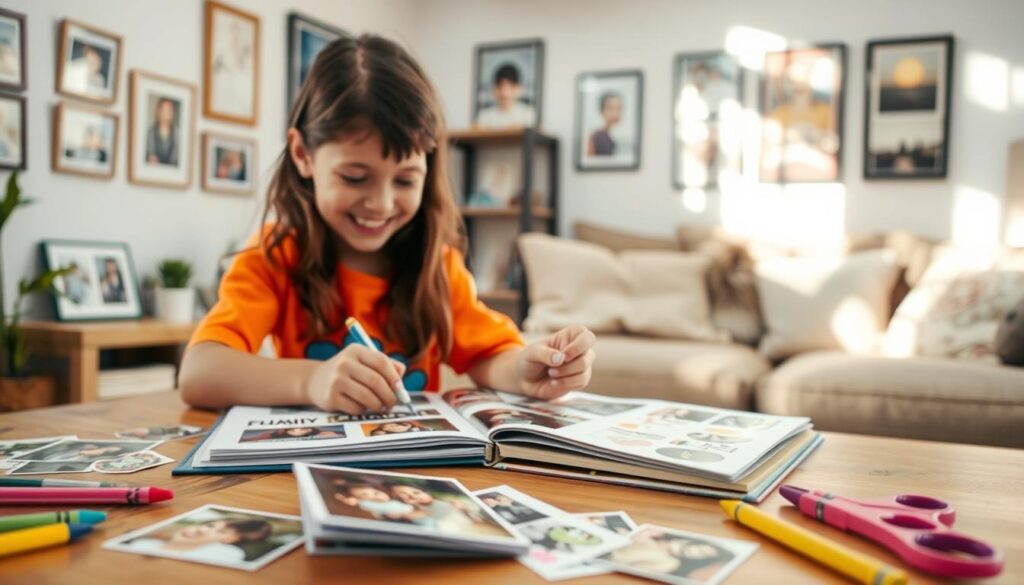
This project works for all ages. Toddlers might just point out people and objects. Preschoolers can start forming short sentences. Older kids can tell detailed stories.
The finished album boosts your child’s sense of pride and ownership. It’s a real record of their growing communication skills. Watching the stories they create is also a great way to track speech and language development over time.
Sharing with relatives using call prompts
Sharing a family photo story makes it even more special. It strengthens your child’s sense of belonging and family identity.
Sharing these stories with relatives turns simple facts into living history. It builds a richer, shared family vocabulary that everyone contributes to.
Guided video calls are a great way to share. Schedule a short chat with a relative and let your child be the presenter. Give them a few “call prompts” or prepared questions to ask.
This structure helps shy children and gives the conversation a fun direction. Relatives love having a role beyond just listening.
For relatives who can’t join a live call, create a digital album to share. A private Instagram post or a shared cloud photo folder works perfectly. Add short captions in your child’s voice to each picture.
Remember to make this digital share accessible. Adding alt text descriptions to images helps relatives using screen readers. Choosing platforms with good keyboard navigation ensures everyone can enjoy the story.
Here are some powerful call prompts to get those family conversations flowing:
- “Grandma, do you remember this day? What was your favorite part?”
- “Uncle Joe, this is the park where we played. What was your favorite game when you were my age?”
- “This is a picture of us making dumplings. Can you tell me the name of this tool in our heritage language?” (This directly builds family vocabulary).
- “I said this picture makes me feel happy. What feeling does it give you?”
These prompts do more than fill silence. They invite personal stories, comparisons, and emotional connections. They transform a show-and-tell into a two-way exchange of memories.
This practice powerfully reinforces your child’s understanding of their place in a larger story. It makes abstract concepts like heritage and lineage tangible. The collective memory becomes a cornerstone of their personal identity.
Consider using a service like Storyworth to preserve these beautiful, expanded stories that come from sharing with relatives. It’s a wonderful way to capture the new chapters your family writes together.
Try sharing one photo story this week. You might be surprised by the new connections and stories that bloom from a simple, guided conversation.
Templates for photo stories and word banks
Ready-made templates and word lists can make any family album a great language lesson. They make your photo storytelling easier. You get to spend more time talking with your child.
Use a story frame for different photo types. For people photos, start with: “This is a picture of ___. We were at ___. They felt ___.” For place photos, ask: “Where did we go? What did we see?” These prompts help your child tell their story.
Word banks help with specific language goals. Make a list of common past tense verbs like ‘visited’, ‘played’, or ‘celebrated’. Include pronouns like ‘he’, ‘she’, and ‘they’ to practice correct usage. Add heritage words for foods, places, or traditions from your family’s culture.
Keep these resources close during your album time. Point to words in the bank as your child speaks. This visual aid helps build vocabulary without stress. The structure from a template gives shy children confidence to start a sentence.
Using these aids regularly shows clear progress. Your child will remember events better and use fuller sentences. Family stories become richer and more connected. Start your next photo storytelling session with a simple template. Open your album, pick a picture, and let the conversation begin.