Our home design often comes from Instagram, not science. We dream of the perfect kitchen but forget about good conversation spaces.
Once, I tried to have a deep talk in a cold, echoey hallway. It was a mess. This taught me that our home’s layout is like a script for conversations.
Environmental psychology reveals that our home’s design affects everything. It influences from toddler tantrums to teenage secrets. It’s called the “third teacher.”
Creating a space for language isn’t about buying more. It’s about making the most of what you have. Think of it as Feng Shui for meaningful talk.
This guide goes beyond just looking at pretty pictures. We’ll explore how to make each room a place for real conversation. It’s all about valuing each person in your home. Your design should show that loudly.
Kitchen Conversation Corners
The modern kitchen can be more than just a place to cook. It can be a place where we have meaningful conversations. It’s not about having the latest appliances. It’s about creating moments where we can talk and learn from each other.
Think about snack time. It’s a chance to practice asking for things. Instead of giving everything at once, try placing snacks just out of reach. This encourages kids to ask for more, which helps them learn to communicate.
The open-concept kitchen can actually make it harder to talk. The TV can be too loud, making it hard to hear each other. To fix this, turn off the TV during meals. This makes it easier to focus on the conversation.
Setting the table is more than just a task. It’s a chance to teach vocabulary. Saying “fork, spoon, napkin” helps kids learn new words. Waiting for the microwave is also a chance to chat.
The stool in the kitchen is a great tool. It lets kids sit and watch while you cook. This makes them feel included and encourages them to ask questions.
Feeding time is special. It’s a chance to connect with your child. Talk to them while you feed them. This helps them learn to communicate and builds a strong bond.
Our goal is to make the kitchen a place of connection. We can do this by changing how we use the space. Every moment in the kitchen can be a chance to talk and learn.
| Kitchen Zone / Routine | Missed Communication Opportunity | Simple, High-Impact Adjustment |
|---|---|---|
| Snack & Meal Prep | Pre-plating everything, eliminating the need to ask. | Provide smaller portions or place items just out of reach to naturally prompt requests. |
| Background Atmosphere | Constant TV or radio noise creating competing auditory streams. | Designate “quiet talk” times by muting screens to reduce background noise and aid focus. |
| The Prep Island Counter | A no-kid zone, creating a barrier between adult and child. | Add a “confessional stool” to invite observation and turn passive watching into active commentary. |
| Waiting Moments (Kettle, Microwave) | Dead time filled with scrolling on a phone. | Treat the wait as a scheduled micro-check-in, a standing appointment for a brief chat. |
| Care Routines (Feeding) | Silent or distracted feeding, treating it as purely functional. | Use the one-on-one proximity for focused, narrated communication, building connection. |
Creating a language-rich kitchen doesn’t need a big renovation. It’s about making small changes that make a big difference. It’s about finding moments to talk and learn in everyday activities. You’re not just improving your kitchen. You’re making your home a better place, one conversation at a time.
Living Room Discussion Zones
Let’s take a closer look at the typical living room layout. It’s set up with the sofa facing the TV, like an audience waiting for a silent show. This design is perfect for watching, not for talking. It’s time to say goodbye to this setup for real conversations.
Your goal is to make a space where people talk more and scroll less. Start by placing furniture in a way that encourages talking. Arrange chairs so they face each other, not the TV. This simple change makes people more important than screens.
Think of your living room as a social map. An L-shaped sofa can create a cozy spot for deep talks. A pair of armchairs by a window is perfect for lively discussions. The science shows that being close and facing each other helps conversations flow.
Now, let’s make a space that invites conversation. A cozy book corner is more than just a spot to read. Fill it with interesting books and leave them open. They’re great conversation starters, better than a remote control.
The feel of your home environment is key. It should be a safe, welcoming place for everyone. No devices should interrupt a story. Use warm lighting and comfy textures to show, “You’re safe to be yourself here.”
Open-ended resources are your secret to sparking conversations. A basket of dress-up clothes, building blocks, or conversation cards can start amazing stories. You’re not just building a fort; you’re creating a story together.
The Parisian salon was a place for sharing ideas. Today, we have the “scrollarium,” a room for watching screens alone. Your living room can be a place for sharing thoughts again.
Changing your living room takes purpose. Use the table below to check your space and plan your new discussion zones.
| Element | Traditional Living Room Setup | Discussion Zone Design | Primary Communication Impact |
|---|---|---|---|
| Focal Point | Television or blank wall | Another person or a shared activity (books, game) | Shifts focus from passive reception to active engagement. |
| Seating Arrangement | All seating faces forward, in rows. | Chairs and sofas arranged in circles, squares, or facing pairs. | Encourages eye contact and makes conversation the path of least resistance. |
| Resource Accessibility | Remote controls, charging cables. | Open books, board games, art supplies within easy reach. | Provides tangible prompts for interaction and collaborative play. |
| Ambiance & Safety | Often bright overhead lighting, formal feel. | Warm, layered lighting with soft textiles and personal touches. | Creates a psychologically safe home environment that lowers barriers to speech. |
With these changes, your living room becomes the go-to spot for fun, stories, and laughter. It’s no longer just a place for watching TV. It’s where your family’s best conversations happen. The remote control is optional, but connection is not.
Bedroom Quiet Talk Spaces
The modern bedroom is now a sleep sanctuary, where talking is rare. We’ve made it dark and quiet, removing all clutter. But in doing so, we’ve lost a key home environment for meaningful conversations.
Talking on a made bed feels like a formal event. It’s stiff and uncomfortable. We aim to create a special within the bedroom—a place where the rules are different.
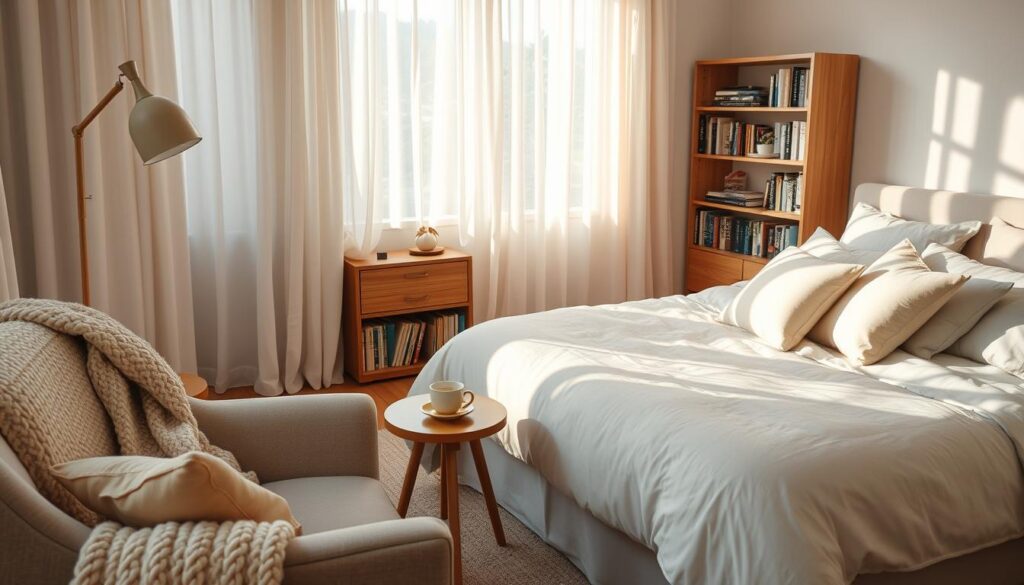
The “talk nook” is a genius idea. It’s a cozy spot in the corner, under a desk, or by a window. This area is for deep thoughts, not sleep. It helps kids and adults focus and listen better.
Creating these language-rich spaces is about making a safe place. It’s where we share big thoughts and worries. A dedicated nook makes sharing feelings feel safe and welcome.
To turn a bedroom into a place for talking, focus on the details.
| Design Element | Sleep-Only Zone | Conversation Sanctuary |
|---|---|---|
| Primary Signal | Rest, Silence, Separation | Intimacy, Reflection, Connection |
| Lighting Strategy | Pitch black or harsh overhead | Warm, dimmable lamp or string lights |
| Object Curation | Minimal, everything in its place | Textural pillows, a shared blanket, a “question jar” |
| Sensory Input | Zero auditory/visual distraction | Optional soft background music or white noise |
| Conversation Style | Rushed, functional (“Go to sleep”) | Meandering, confidential, exploratory |
The table shows the main change. It’s not about adding more stuff. It’s about creating a space with purpose. The most important rule? No screens allowed. They disrupt sleep and conversations.
Try a “question jar” instead. Leave paper and a pen out. It invites questions on any topic. This simple tool makes your home a part of your family’s talks.
Changing your bedroom doesn’t need a big renovation. It just needs a new way of thinking:
- Claim a corner. One armchair with a throw blanket can be your embassy.
- Ditch the overhead light. A small, warm lamp changes everything.
- Institute a screen amnesty 30 minutes before bed. Replace it with quiet talk time.
- Add a shared journal or question jar to the nightstand.
A bedroom that encourages quiet talk is the best language-rich space. It’s where we learn to express our feelings and listen well. We’ve optimized our homes for work and sleep. Now, let’s make them places for connection too.
Car Communication Tactics
We often see car rides as a waste of time, filled with podcasts or silence. But this is a big mistake. The family sedan is like a moving conference room, where everyone is close together.
Side-by-side seating makes talking easier than face-to-face. You’re both facing the same direction, like allies. And with no escape, you have a perfect communication setup for deep talks.
The car’s sound is key. The engine’s hum helps conversations flow smoothly. The first rule? Don’t play podcasts. Instead, use music or silence to spark talks.
Try audio prompts. Play a song that brings up memories. After the first chorus, ask, “What does this make you think of?” It’s not a quiz, but a way to share experiences.
For longer trips, play games that are fun, not quizzes. Play “Twenty Questions” about a made-up character. Or the “Alphabet Game” where each letter is something personal. The goal is to keep the conversation going.
The question, “are we there yet?”, shows boredom. But what if the journey itself was the goal? Mastering car talks turns rides into meaningful moments. The road becomes the focus, and the end of the trip is just a pause in the conversation.
Visual Support Systems
Think of your home as an interactive infographic designed for talk. Words are just one way to communicate. The most effective language-rich spaces use pictures, symbols, and print to speak.
Forget the “Live, Laugh, Love” clichés. We’re building a visual grammar. This system helps conversations flow, turning daily tasks into dialogue. It makes life predictable and opens up endless ways to interact.
Your communication setup should include several key visual supports:
- Labels & Word Walls: Nouns and verbs in plain sight, on bins, shelves, and doors.
- Visual Schedules: Photo or icon sequences for routines, reducing nagging.
- The Family Command Center: A hub for calendars and chore charts that prompt negotiation.
- Symbols & Gestures: Simple pictures and even your own facial expressions as cues.
The command center is key. It’s not just a calendar and to-do list. It’s a place for negotiation. A chore chart starts conversations about fairness and teamwork.
A family calendar sparks excitement. “What’s happening on Saturday?” becomes a daily question. This turns logistics into language practice.
Labels are your stealth vocabulary builders. Label the cereal cabinet and laundry basket. Write it in your home language. Suddenly, your environment is teaching. This is a core principle of using visuals to support communication. Print in the environment builds literacy from the ground up.
The visual schedule is your secret weapon against morning chaos. A photo sequence for getting dressed—socks, shirt, pants—provides predictability. It turns your directives from barks (“Put your shoes on!”) into collaborative review (“What’s next in our picture story?”). This reduces conflict and increases independent dialogue.
This visual grammar also reflects your family’s culture. Display words from a heritage language on your word wall. Use symbols that have meaning in your household. Even a raised eyebrow or a thumbs-up is a visual support. These non-verbal cues are part of your home’s unique dialect.
The goal is coherence. Your labels, schedule, and command center should work together. They form a unified system that supports your spoken language. This turns your house into a true language-rich space. It’s a communication setup that works quietly, but speaks volumes.
Low-Cost High-Impact Changes
Let’s be honest, making conversations better at home is more about being smart with what you have. You don’t need to spend a lot to make your home environment rich. The best things are often free, hidden in your daily life and old stuff.
The key is being intentional. Choose to put interesting things out, like a basket of stones or a box of old hats. These aren’t just decorations; they start conversations. A weird rock can be a spaceship, a treasure, or a pet, sparking stories.

Compare this to a too-perfect playroom. It looks nice but doesn’t encourage talking. The real magic is in open-ended materials like fabric scraps, cardboard boxes, and wooden blocks. Junk modelling is a great way to talk more. It’s about working together, solving problems, and making up stories.
Repetition is also key for learning new words. We learn through fun repetition. Instead of flashcards, create fun rituals. Try a “word of the week” on the fridge. Use it in silly songs or when you turn on a special lamp for stories. These small signals help us learn new words in a fun way.
Everyday moments are your best chance to talk. Waiting for dinner, car rides, or cleaning up are perfect times. Ask questions about the clouds or where a spoon might be. This isn’t just small talk; it’s making your home a place where talking is natural.
So, what can you do? Here are some easy, impactful changes:
- Curate a “Prop Box”: Change out odd items (like pinecones, mismatched mittens, or a magnifying glass) to spark curiosity.
- Embrace Mundane Moments: Tell stories while cooking or folding laundry. Turn everyday tasks into conversations.
- Create a Communication Corner: Use a simple cushion and a basket of books. It’s a sign to have a quiet chat.
- Leverage Ritual: Use a special lamp or a weekly word to create anticipation and focus.
The main idea? The best language-rich spaces aren’t expensive. They’re made with attention, questions, and a clear kitchen table. Your focus is the most valuable thing. Use it wisely, and your home environment will become the most interesting place in your house, without costing a thing.
Sensory Considerations
Your home’s sensory landscape is a key player in every conversation. If it’s filled with loud TVs, buzzing lights, and clutter, it’s not setting the stage for deep talks. It’s more like a loud party. Creating language-rich spaces means cutting down on distractions, not just adding more words.
Start with an audit. Hardwood floors and bare walls can make your home echoey. This makes simple requests sound like they’re coming from another room. To fix this, add rugs and curtains. They can help your family talk more smoothly than therapy.
Think of a fancy restaurant’s sound. It’s calm, with soft music and quiet plates. Now, compare that to a loud family dinner. Which one is better for talking about your day? Your home’s design should help conversations flow.
The table below shows common distractions and how to beat them:
| Room Zone | Sensory Offender (Problem) | Communication Impact | Simple Ally (Solution) |
|---|---|---|---|
| Living Area | Hard, reflective surfaces (floors, walls) | Creates echo and auditory fatigue; words get lost. | Area rugs, fabric wall hangings, upholstered furniture. |
| Kitchen | Loud appliances (blender, dishwasher) running during talk time. | Masks speech sounds; forces shouting, breaks concentration. | Schedule noisy chores for non-conversation hours. Use them as a signal for “quiet time” ending. |
| Child’s Bedroom | Overstimulating clutter and busy patterns on walls/bedding. | Divides attention; makes it hard to focus on verbal interaction. | Designated tidy spaces, calm color palettes. Creates a visual “quiet zone” for talk. |
| Whole Home | Constant background TV or radio as “filler” noise. | Teaches the brain to tune out auditory input, including human voices. | Designated media-free hours. Embrace the quiet; it makes speech the primary sound. |
Designing for senses isn’t just about blocking out noise. It’s also about adding good vibes. Music and rhythm help kids learn about sounds in words. Singing in the car or clapping syllables can be fun and language-building.
So, be your home’s DJ and designer. Lower the noise and add soft textures. Use rhythm wisely. This isn’t about making your home sterile. It’s about making it sensory-friendly for calm and clear conversations. When you do, your words will be heard more clearly.
Cultural Representation
A monocultural home environment misses out on a big conversation. Your bookshelf and wall art are more than just decorations. They show which stories are important to you.
Having a living room that only shows one culture sends a message. It says we’re only interested in certain things. Families teach children first, so it’s important to involve them in learning about different languages and interests.
Your communication setup gets better when you see different views. A home filled with many stories is perfect for this.
To change from a single story to a mix of cultures, start with real representation. Don’t just add things for show.
- Audit Your Artifacts: Check if your books, music, and art show just one story. Add books from different cultures to learn and grow.
- Display Words & Symbols: Show symbols, scripts, or objects from your family’s cultures. It makes your walls interesting.
- Weave Heritage into Daily Life: Cook a family recipe and talk about where it comes from. Play music from other places. These actions make culture a part of your home environment.
- Respect Family Beliefs: True inclusion means respecting different views on talking. Some cultures value listening more. Show this respect in your communication setup.
This approach helps children feel valued and learn about differences. Your home becomes a place where many cultures meet.
The aim is not a perfect, empty space. It’s a home environment full of curiosity. A good communication setup includes many voices, starting in your living room.
Assessment Tools
You’ve set up the kitchen and living room for better talks. But does your home really encourage more conversation?
Don’t rely on hope alone. You need facts. Start a communication audit. For a week, track where the best chats happen.
Use a post-it note or a quick video to note these moments. Think about what you’ve seen. Which space is the favorite for talking?
It’s like giving your home a Nielsen rating. Make a simple scorecard for dinner talks. Ask about each child’s communication that day. Have a monthly check-in to improve media literacy, inspired by the Erikson Institute.
This approach turns feelings into a clear plan. You’re not just building a home. You’re creating a living, talking space. Use these tools to see how well you’re doing and make it even better.