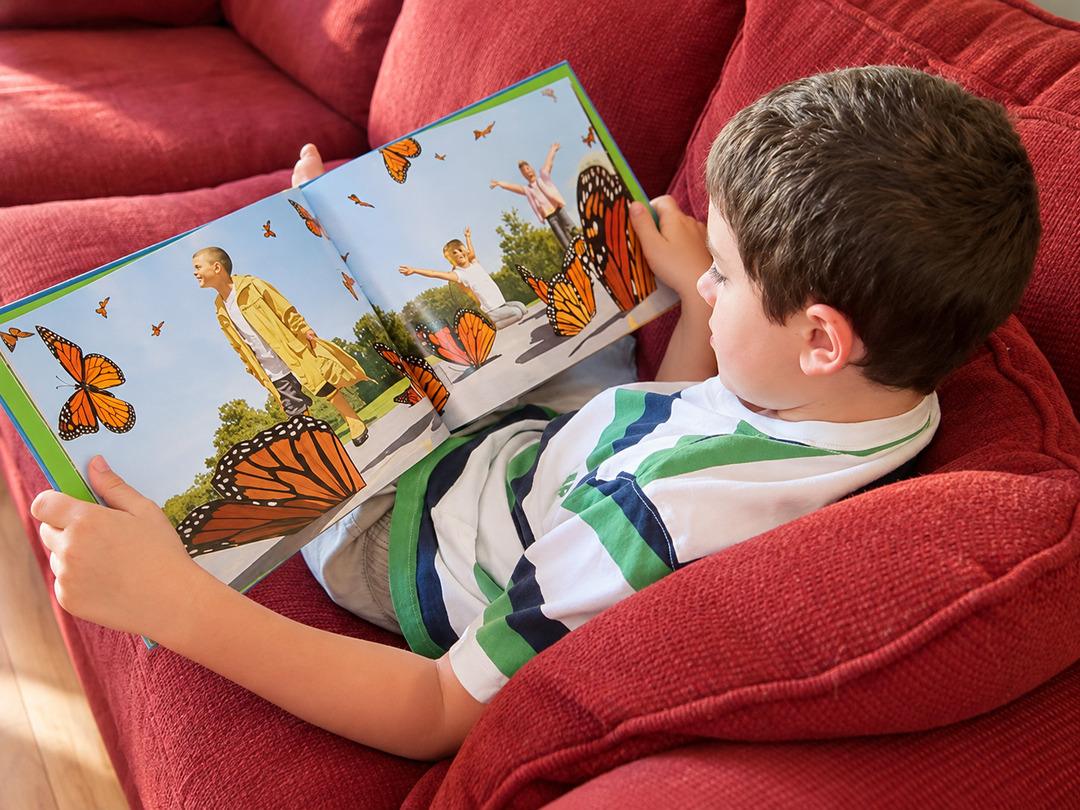

A picture book does not need written sentences to create a meaningful conversation. When children look at illustrations and help decide what happens, they can practice describing events, explaining feelings, making predictions, and connecting ideas.
Wordless picture books offer preschoolers a chance to become storytellers rather than simply listen to someone else’s words.
They can be particularly useful for children who are beginning to tell longer stories, families who use more than one language, and caregivers who want a relaxed alternative to repeatedly asking children to identify objects.
However, research does not show that wordless books are always better than traditional picture books. Each format creates different opportunities for conversation and language learning.
For parents and educators working with children around ages 3–5, the best approach is to use both formats and adapt the conversation to the child’s interests and communication abilities.
What Makes Wordless Picture Books Different?
A wordless picture book tells its story primarily through illustrations. Some contain no written words at all, while others include a title or a few short phrases.
The pictures introduce characters, settings, actions, problems, and possible solutions.
Instead of reading a fixed sentence, the adult and child decide how to describe what they see.
Imagine a book showing a small dog chasing a butterfly.
The first picture shows the dog watching the butterfly. On the next page, the butterfly flies over a puddle. The dog jumps after it and gets wet.
A caregiver might say:
“The dog wants to catch the butterfly.”
The child might respond:
“He fell!”
The caregiver could continue:
“Yes, he jumped into the puddle. Now he’s all wet!”
The conversation develops around the child’s observation.
On another day, the child might notice the butterfly first or invent a different explanation for the dog’s behavior.
There is no single required narration.
That flexibility is what makes wordless storytelling distinctive.
What Research Says About Wordless Books and Language Development
Research suggests that wordless books can encourage certain kinds of parent-child conversation. However, their advantages depend on what researchers measure.
A study by Sandra Mathers and colleagues, published online in 2024 and appearing in the March 2025 issue of the Journal of Child Language, compared three activities involving parents and their preschoolers.
Twenty-two parent-child pairs completed wordless-book reading, traditional picture-book reading, and imaginative toy play.
According to the University of Oxford researchers’ published study, parents used open-ended questions and added information related to children’s ideas more often during wordless-book reading than during the other activities.
Wordless books also encouraged adults to discuss what characters were doing, thinking, or feeling.
For example, a child looking at a picture of someone hiding behind a tree might hear:
“Maybe she’s hiding because she wants to surprise her friend.”
This type of explanation moves beyond naming visible objects. It introduces possible reasons for a character’s actions.
However, the researchers also found that traditional books encouraged different kinds of adult language, including explanations and definitions.
The study had limitations. It involved a small sample of families, and each activity was observed only once.
Most importantly, the researchers measured patterns of interaction. They did not establish that wordless-book reading produces larger long-term language gains than other activities.
More Conversation Does Not Always Mean Richer Language
Another study provides an important comparison.
Researchers Abigail Petrie, Robert Mayr, Fei Zhao, and Simona Montanari examined parent-child conversations using wordless narrative books and books containing written text.
The study involved 36 parents and children aged approximately 3½–5½ years.
The researchers found that wordless books encouraged more interaction, including greater child participation and more frequent adult prompts.
However, traditional text-based books prompted more varied vocabulary and more complex grammatical structures during adult narration.
The published research comparing the two book formats suggests that neither format offers every possible language benefit.
This distinction has practical value.
Wordless books create space for children to contribute ideas. Traditional books expose children to vocabulary and sentence structures they might not otherwise hear.
Families do not need to choose one over the other.
A balanced reading routine can include familiar stories with written text alongside books that encourage children to construct the narrative themselves.
How to Read a Wordless Book With Your Preschooler
Reading without written sentences can initially feel unfamiliar to adults.
Some parents worry they must invent an entertaining story on every page.
That is unnecessary.
The goal is to share attention, notice details, and create opportunities for meaningful interaction.
The following routine is a practical suggestion rather than a standardized language intervention.
Begin by Looking at the Pictures
Before inventing a story, look through the illustrations together.
Notice the characters and setting.
For example:
“There’s a little rabbit.”
“He’s carrying a basket.”
“Look at those dark clouds!”
Allow the child to point, comment, or simply observe.
The first reading does not need to include a complete beginning, middle, and ending.
Some children prefer exploring the pictures before discussing the story.
Others immediately start creating dialogue for the characters.
Follow the child’s interest.
Let the Child Contribute the First Idea
Once the child recognizes what is happening, invite a contribution.
Instead of asking a series of questions with predetermined answers, try:
“What do you think is happening?”
“Where might the rabbit be going?”
“What do you notice?”
If the child says, “Rabbit shopping,” the adult can respond:
“Yes, the rabbit is going shopping. Maybe he’s buying carrots.”
This demonstrates a longer sentence while preserving the child’s original idea.
There is no need to ask the child to repeat the expanded sentence.
The purpose is to build a shared story, not correct grammar during every interaction.
Move Beyond Naming Objects
Young children often begin by pointing to familiar objects.
“Dog.”
“Tree.”
“Ball.”
Adults can acknowledge these observations and gradually introduce relationships between events.
For example:
“The dog is running toward the tree.”
“The ball rolled under the bench.”
“Maybe the girl feels disappointed because she can’t find it.”
These additions introduce action words, location words, emotions, and explanations.
Older preschoolers may enjoy discussing why something happened or predicting what comes next.
Younger children may prefer simpler observations and sound effects.
Both are reasonable ways to participate.
Allow the Story to Change
When reading the same wordless book again, the child may tell a different story.
Perhaps the rabbit is visiting a friend rather than going shopping.
That is not necessarily a mistake.
A wordless book allows readers to interpret characters’ intentions and connect events in different ways.
However, adults can still help children attend to what the illustrations show.
If a child says the rabbit is flying while the picture clearly shows it walking, the caregiver could respond:
“That would be funny if the rabbit could fly! In this picture, I see him walking down the road.”
This distinguishes imaginative additions from information shown in the illustration without discouraging creativity.
Helping Children Build a Beginning, Middle, and End
A preschooler may describe several pictures without explaining how the events connect.
For example:
“Dog running. Water. Butterfly gone.”
An adult can gently demonstrate how those details form a story.
“First, the dog saw a butterfly. Then he chased it and jumped into the water. At the end, the butterfly flew away.”
This introduces the idea that events happen in a sequence.
For a child ready for more complex storytelling, add a problem and solution.
“The dog wanted to catch the butterfly, but it flew across the puddle. He tried to follow it and got wet.”
The child does not need to retell the entire story perfectly.
They might contribute one event, gesture toward another, or describe the ending.
As children become more comfortable, adults can gradually leave more of the storytelling to them.
Try a Three-Picture Story
Families can also create a simple wordless sequence without purchasing a book.
Draw or print three original pictures showing a familiar event.
For example:
- A child plants a seed.
- The child waters the soil.
- A small plant begins to grow.
Place the pictures in order.
Tell a simple story together, then invite the child to explain what happened.
The adult might introduce words such as “first,” “next,” and “later” when they fit naturally.
For children who prefer familiar experiences, real family photographs offer another option.
Our guide to using family photos for language development explains how pictures from everyday life can encourage children to describe events and share memories.
A three-picture activity is a suggested storytelling game, not a validated assessment of narrative development.
Wordless Books Can Support Multilingual Family Storytelling
A major advantage of wordless books is that the illustrations do not require families to read a particular written language.
A caregiver might describe the pictures in Spanish, another family member might tell the story in English, and a grandparent might contribute in a different home language.
The story remains accessible through the images.
Colorín Colorado, an educational project supporting multilingual learners and families, recommends using wordless books to encourage children to create stories in English or their home languages.
Its collection of wordless picture books for multilingual learners includes titles suited to different ages and reading experiences.
For example, The Lion & the Mouse, illustrated by Jerry Pinkney, is listed for children ages 3–6.
The book’s visual storytelling provides opportunities to discuss characters, actions, and relationships without relying on extensive printed narration.
Parents do not need to translate every sentence into both languages.
One caregiver might tell the story in the language they use most comfortably. Another might discuss it differently during a later reading.
Children may also combine words from their languages while telling a story.
This does not automatically indicate confusion or a language disorder.
Families interested in developing storytelling across languages can explore Talk and Play’s bilingual narrative resources for parents.
Support Understanding in the Child’s Strongest Language
When children are learning two or more languages, storytelling should not become an English-only performance.
A child who can explain a character’s feelings in their home language is demonstrating meaningful story understanding.
The United States Head Start program provides professional guidance on interactive reading with dual language learners, including recommendations for meaningful interaction and the use of children’s home languages.
Although this resource addresses interactive reading more broadly rather than wordless books specifically, its principles can inform multilingual storytelling.
Families can encourage children to describe what they see in the language they know best.
English vocabulary can be introduced naturally when useful.
The central goal is understanding and participation, not requiring a child to use one language exclusively.
What About Children Who Are Not Speaking Yet?
A wordless book can still be enjoyable when a child does not use spoken sentences.
A toddler might point to a character, make an animal sound, turn a page, or laugh at an illustration.
A child using augmentative and alternative communication (AAC) might select messages such as “look,” “go,” “funny,” or “again.”
Adults should treat these responses as meaningful participation.
For example:
Child: Points to the dog.
Adult: “You found the dog! He’s chasing the ball.”
Child: Turns the page.
Adult: “Let’s see where he goes next.”
The child is helping direct the story even without spoken narration.
For children with visual impairments, a printed visual book may not be independently accessible. Tactile materials, audio description, adapted books, or other individualized supports may be more appropriate.
The activity should fit the child’s communication and sensory needs.
Wordless books can be useful tools, but they are not automatically suitable for every child.
How to Choose a Useful Wordless Picture Book
Not every wordless book is equally accessible to preschoolers.
Some contain simple scenes with familiar actions.
Others use complex illustrations, unusual perspectives, or several events happening at once.
For younger preschoolers, look for stories with recognizable characters, clear changes between pictures, and events that are relatively easy to follow.
A child may enjoy watching an animal search for food, a family prepare a meal, or a character solve a simple problem.
Older preschoolers might enjoy stories with more complicated relationships, surprises, or multiple possible interpretations.
The most useful book is one that invites the child to notice details and contribute ideas.
It does not need to be expensive.
Public libraries often have wordless picture books, and librarians may be able to recommend age-appropriate options.
Families can also create simple visual stories using drawings or photographs.
Avoid Turning Storytelling Into a Question-and-Answer Test
Wordless books often encourage adults to ask more questions.
Research suggests this can increase opportunities for interaction, but more questions are not automatically better.
If every page becomes a series of demands, children may lose interest.
Instead of asking:
“What is this?”
“What color is that?”
“What happens next?”
“Why is he sad?”
Try combining comments, questions, and quiet observation.
“The fox looks surprised.”
Pause.
“I wonder what he found.”
Allow the child to respond if they wish.
If the child changes the subject or wants to revisit an earlier picture, follow that interest when practical.
Children also benefit from hearing adults model storytelling.
A caregiver can describe part of the action and then invite the child to contribute.
There is no need to make the child responsible for inventing every sentence.
When Extra Language Support May Be Helpful
Children develop storytelling skills at different rates.
Some preschoolers enjoy explaining detailed imaginary events. Others prefer short descriptions or communicate primarily through gestures, signs, pictures, or AAC.
Difficulty producing a complete story does not automatically indicate a language disorder.
However, parents should seek professional guidance when a child has persistent difficulties understanding everyday language, expressing basic needs, or participating in communication.
A speech-language pathologist can assess the child’s broader communication abilities and recommend appropriate support.
Families should also request timely advice if a child loses previously acquired communication skills or has concerns involving hearing.
For multilingual children, an evaluation should consider all the languages the child understands and uses.
Wordless picture books can provide useful opportunities for interaction, but they are not a diagnostic tool or a replacement for individualized intervention.
The Best Story Is One the Child Can Help Tell
Wordless picture books offer a different kind of reading experience.
Without a fixed text, adults and children can decide together what characters are doing, why events happen, and how a story might end.
Research suggests this format can encourage child participation, open-ended questions, and conversations about actions and feelings.
Traditional books remain equally valuable for other reasons, including exposing children to varied vocabulary and more complex sentence structures.
Families can make room for both.
A child who points to one picture, invents a short explanation, or tells a completely different version of a familiar story is participating in the storytelling process.
The goal is not to produce a perfect narrative.
It is to create an enjoyable interaction in which the child’s ideas help move the story forward.