
Puerto Rico Bilingual Classrooms are under new pressure because a federal English-only proposal for Head Start has raised questions about how young children, families, and educators would be supported if classroom language rules changed. As of October 20, 2026, the research provided confirms that the proposal was made in August 2026, but it does not confirm that the rule had become final. That distinction matters for families: a proposal can still influence planning, staffing concerns, and public debate, but it should not be treated as settled policy unless a final rule is documented.
For bilingual development, the issue is not whether English matters. English can open academic and social opportunities. The concern is whether young children are asked to learn through a language they do not yet understand well, while the language they use with caregivers is reduced in the classroom. In early childhood settings, communication quality, adult responsiveness, and meaningful interaction are central to language growth. A sudden shift in instructional language may affect how much children understand, how much they participate, and how confidently families communicate with teachers.
Why Puerto Rico Bilingual Classrooms Face Pressure
What Puerto Rico Bilingual Classrooms Need From Adults
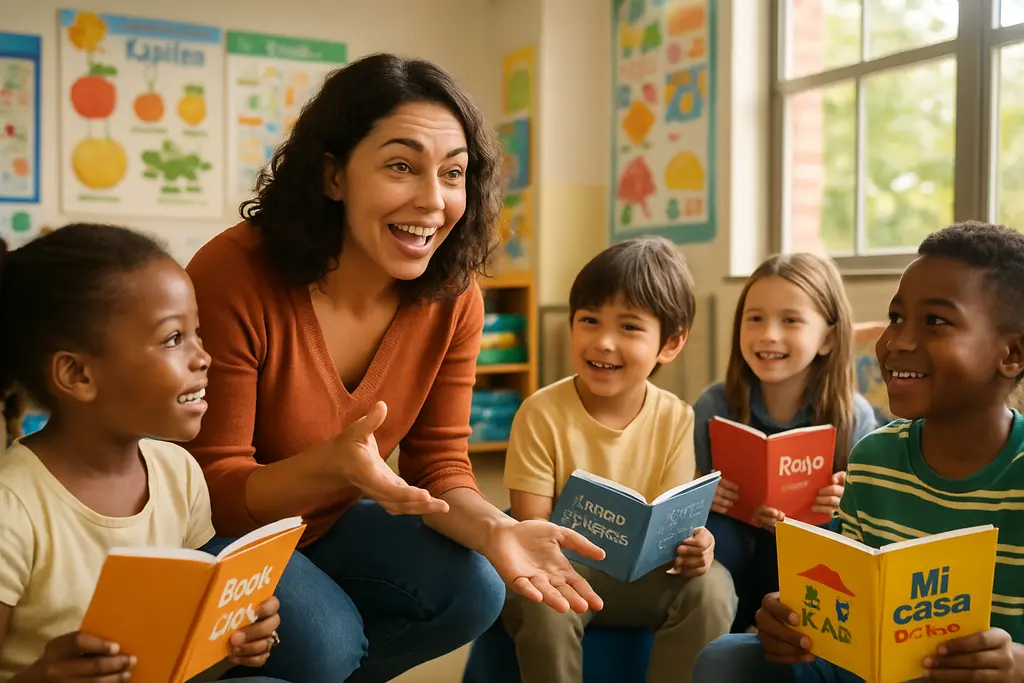
Young bilingual children need adults who can make meaning clear. That can include gestures, repetition, visuals, shared book reading, play-based talk, and careful use of both languages. The goal is not simply to expose children to English words. Children benefit when adults connect new language to familiar routines, relationships, and ideas they already understand.
For Puerto Rico Bilingual Classrooms, the practical question is whether programs can keep instruction understandable while meeting policy demands. The August 2026 federal proposal described by the Associated Press would have required Head Start centers to prescribe classroom instruction exclusively in English. The same report said Puerto Rico had 701 Head Start centers serving about 25,000 children, many from Spanish-language or bilingual homes, and reported that less than 10% of Head Start teachers in Puerto Rico were fluent in English, according to AP coverage of Head Start language policy.
Those facts point to more than a curriculum change. If many teachers cannot meet an English fluency expectation, staffing could be affected. The research notes also state that some teachers, especially in rural areas, might resign or retire if they could not meet the language requirement. That is a risk statement, not a confirmed outcome. Still, it is a realistic concern because early childhood programs depend on stable relationships between children and educators.
A Policy Threat Centered On Head Start
Head Start serves young children, so the language of instruction reaches children during a period when communication habits, classroom confidence, and caregiver-school trust are still forming. An English-only rule could reduce teachers’ ability to explain routines, comfort children, and connect classroom learning to home experiences if children and educators are more comfortable in Spanish.
That does not mean every bilingual classroom must use the same model. Some classrooms may use Spanish as a bridge to English. Others may aim for planned development in both Spanish and English. Some may emphasize English immersion with careful supports. What families should ask is whether the language plan is clear, whether teachers are prepared, and whether children are able to participate meaningfully rather than sitting through language they cannot yet access.
What The Law Supports And What Capacity Limits
Charter Requirements And Departmental Schools
Puerto Rico’s own education framework already treats bilingual instruction as a policy goal in some settings. The Puerto Rico Educational Reform Law, Law 85-2018 as amended, states that charter, or “Alianza,” public schools must promote bilingual teaching of Spanish and English and prioritize STEM or STEAM. For existing departmental public schools, bilingual teaching is described as recommended when capacity is demonstrated, according to the Puerto Rico legal framework.
This difference between a requirement and a recommendation is significant. A school system can support bilingual education in principle while still facing limits in staffing, training, materials, scheduling, and local implementation. A program name alone does not tell families how much Spanish or English is used, how teachers support comprehension, or whether children are building academic language in both languages.
The research notes also describe a July 2026 circular and guide for bilingual education in public schools. Because the provided source for that item is not among the approved citation sources for this article, I am treating it cautiously here. The broader point is still supported: policy language is developing, but families need classroom-level clarity about what teachers are expected to do each day.
The Evidence Gap Families Should Recognize
There are limits to what can be concluded from the available information. The research notes describe threats, policy moves, and capacity concerns, but they do not provide a current verified count of how many classrooms use sustained dual-language instruction, how many are transitional, or how many rely mainly on English exposure. Without that information, it would be misleading to claim that one model is working everywhere or failing everywhere.
For families comparing programs, a practical starting point is to ask simple, concrete questions: Which language is used for math, stories, classroom routines, and family communication? How are children supported when they do not understand a lesson? How do teachers build vocabulary in Spanish and English? How is progress described to caregivers in a language they understand?
Related discussion of instructional language and Spanish-English preschool growth is available in this site’s article on instructional language and bilingual proficiency. Families looking for related community resources in the same network may also visit the informative platform provided by AGHEIRO.
Classroom Language Choices Affect Daily Talk
Children Need Comprehensible Interaction
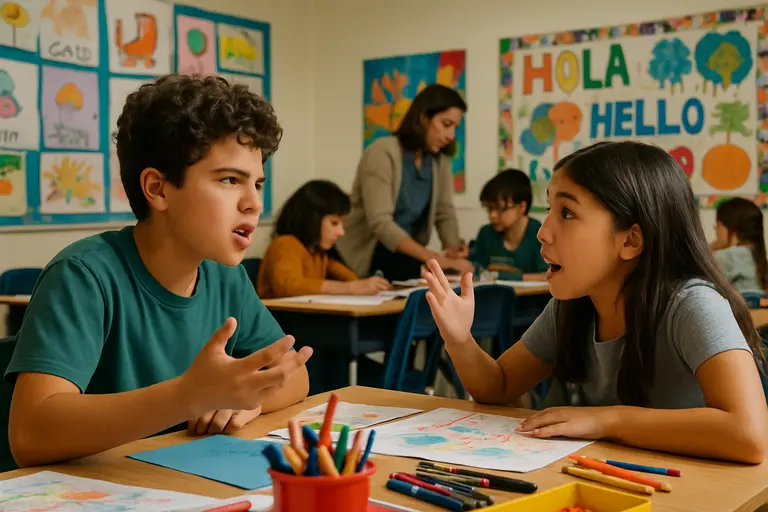
From a language-development perspective, the key issue is not whether a child hears English. Children also need interaction they can understand and use. In a preschool classroom, this can mean naming objects during play, asking open questions, expanding a child’s short phrase, and connecting new vocabulary to familiar experiences.
If instruction moves too quickly into a language children do not understand, some children may speak less, rely on guessing, or appear quiet even when they have strong ideas. That quietness should not be mistaken for lack of ability. It may reflect limited access to the classroom language. Teachers can reduce that risk by using planned language supports, including visual cues, predictable routines, peer talk, songs, movement, and strategic use of the child’s stronger language.
For Puerto Rico Bilingual Classrooms, the most helpful language policy is one that can be carried out by real teachers with real children. A policy that ignores teacher language proficiency, rural staffing concerns, or family communication may create pressure without improving children’s language outcomes.
Adults Can Protect Both Languages
Families sometimes worry that supporting Spanish will delay English. The research provided for this article does not include a specific study testing that question in Puerto Rico’s current classrooms, so I will not overstate the evidence here. What can be said with confidence is that children need frequent, meaningful opportunities to communicate. If Spanish is the language that allows a child to tell a story, ask for help, explain feelings, or participate in pretend play, then Spanish remains part of the child’s communication system.
At home, caregivers can keep conversations strong in the language they use best. This may include shared reading, storytelling, singing, cooking together, and explaining daily routines. A parent does not need to switch to weaker English to support school success. Clear, warm, frequent talk in a strong home language gives children more chances to practice ideas, sentence structure, and vocabulary.
- Ask the program how Spanish and English are used during play, literacy, and routines.
- Request family updates in a language caregivers can understand.
- Watch whether children can answer, ask, protest, comment, and tell stories in at least one language.
- Share home words, songs, and routines with teachers when the program invites that collaboration.
Bilingual Instruction In Puerto Rico
A Practical Stance For Families And Educators
The current debate should not be reduced to English versus Spanish. The more useful question is how children can gain English while keeping access to meaning, relationships, and participation. English-only instruction may sound simple as a policy phrase, but early language development is not simple in practice. A child’s classroom language experience depends on teacher skill, child understanding, family connection, and consistent opportunities to use language for real purposes.
School leaders can support educators by being specific. If the goal is bilingual development, teachers need training, planning time, suitable materials, and realistic expectations. If the goal is English growth, teachers still need ways to make instruction understandable. If families speak mainly Spanish, schools need communication practices that respect that reality.
The most protective stance for Puerto Rico Bilingual Classrooms is careful, child-centered planning. That means treating English as a valuable goal without making Spanish a barrier to participation. It also means being honest about what is not yet known: the research provided does not prove how every proposed rule would be implemented, how many teachers would leave, or which classrooms would be most affected. Families and educators can still prepare by asking for clarity, documenting children’s communication needs, and keeping both languages connected to learning.