Raising bilingual kids today is like running a marathon while everyone else is just jogging. The pressure is real, and feeling guilty when you use English instead of Spanish is common.
But here’s a surprising fact. You’re not just teaching words. You’re building your child’s brain. Learning multiple languages increases grey matter, boosting their thinking power. It also strengthens white matter, the brain’s communication network.
It’s like upgrading your brain’s roads from two lanes to a high-speed interstate. Studies show this can even delay Alzheimer’s and improve switching between tasks. The benefits are real, not just about being culturally savvy.
Forget about being perfect. This journey is about smart language exposure in the midst of soccer, screens, and shopping. Let’s stop worrying and focus on making bilingualism fit our real lives, not just Pinterest dreams.
The aim isn’t to create language geniuses. It’s to grow adaptable, flexible minds through regular, meaningful language exposure. Your family’s unique pace is the best place to start.
Choosing Your Approach
Choosing a bilingual approach is like picking a political party. You need to find one you can live with every day. The One Parent, One Language (OPOL) method is popular, like the well-known candidate. It means one parent speaks one language, and the other speaks another.
This method is simple but requires a lot of effort. Both parents must use their assigned language with the child. If one parent speaks more, it’s not truly bilingual.
Think of OPOL as a framework, not a strict rule. Your goal is to give both languages enough time. Sometimes, you might use the wrong language when you’re tired. That’s okay.
The Minority Language at Home (ML@H) strategy is another option. You use the less common language at home. This helps keep the minority language strong.
The Time and Place method is flexible. You can choose specific times or places for a certain language. This works well with routines like weekends or dinner times.
The best advice is to choose something you can keep up with. A method that’s easy to maintain is better than one that’s perfect but hard to follow. Consistency is key, not strict rules.
Look at your family’s life and what works for you. Choose a method that fits your family’s needs. The most successful bilingual families are flexible and adjust as needed.
The key to bilingual parenting is not just the method. It’s how you use it every day. Make language a part of your routines like greetings, meals, and bedtime stories. This helps your child become fluent.
Home Language Strategies
Forget language apps; the most effective way to raise bilingual kids is to redesign your home. Your home is more than a place to eat and sleep. It’s where raising bilingual kids happens. Every item in your home can teach a second language.
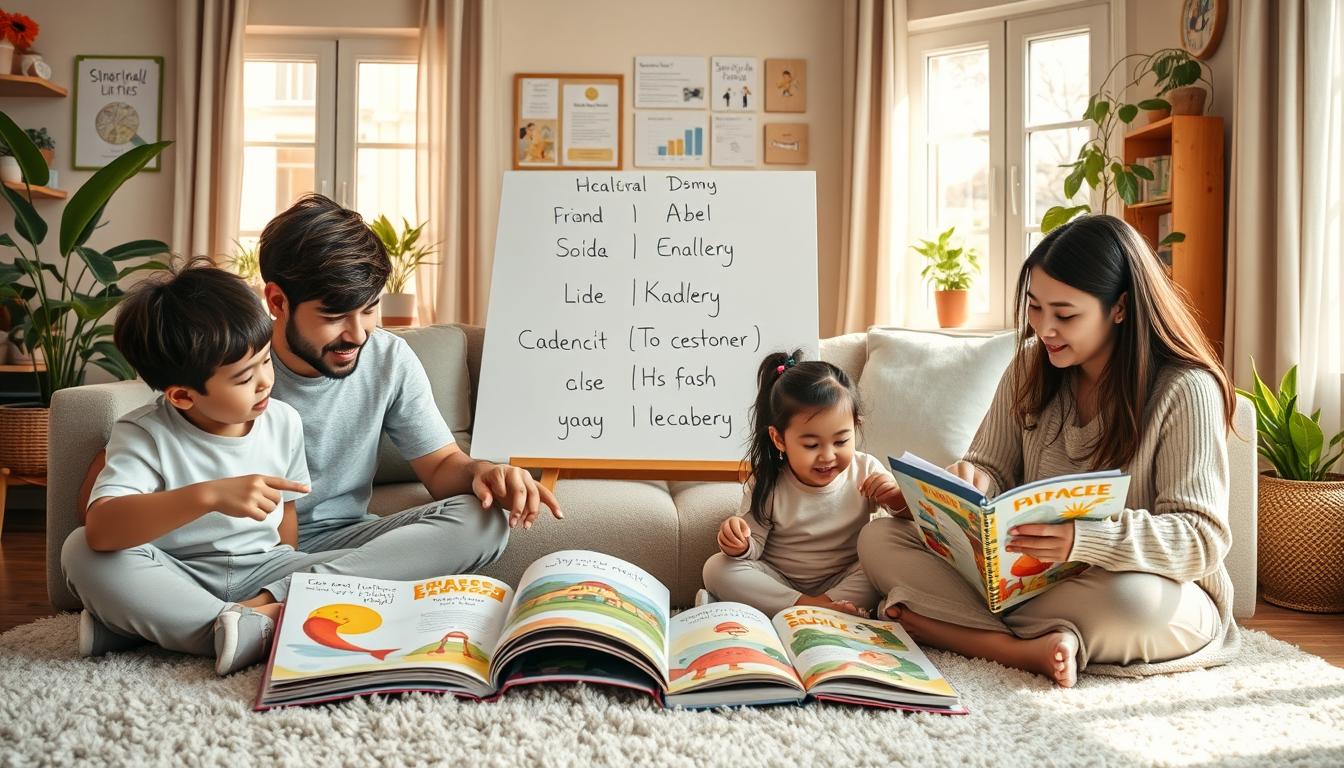
Start with “guerrilla labeling.” It’s not just about sticky notes. It’s about making your home a living dictionary. Label your washing machine in Spanish and your ceiling fan in French. The goal is to make learning fun and playful.
Think about where your child spends most of their time at home. Place bilingual books at their eye level. This is like placing their favorite toy next to a book in their second language.
The founders of Habbi Habbi call these “linguistic touchpoints.” Your coffee table should have a bilingual book. Toys that speak the second language are also important. This way, bilingualism is woven into every part of your home.
Ambient language beats scheduled lessons. When the second language is everywhere, your child absorbs it naturally. They learn while playing with Legos or looking for snacks.
This approach makes raising bilingual kids easier. Each labeled object and book helps teach the second language. Together, they create a home where both languages thrive.
Your child will see the second language as a part of their home’s story. It’s like a friendly ghost in the pantry. This constant exposure helps build their brain while they play.
Remember, you’re not creating a classroom. You’re creating an experience. The goal is to make the second language as natural as the smell of breakfast. When you succeed, you’ve not just taught vocabulary. You’ve created a world where bilingualism is normal.
Everyday Bilingual Activities
Forget the flashcards and grammar drills. The real magic of bilingual parenting happens in everyday moments. It’s not about scheduling “language time.” It’s about making language a part of your family’s life.
Your day is filled with chances to use two languages. Your routines are perfect for this. It’s not about adding more, but making what you do already more meaningful.
Morning chaos can be a chance to practice Spanish. Singing “Head, Shoulders, Knees, and Toes” in Spanish can be fun. It turns resistance into rhythm.
Bath time is a great time to learn new words. The goal is to have fun, not to be perfect. Your kid’s laughter is a better reward than any gold star.
The kitchen is a place where you can learn new words. Cooking with the target language makes learning fun. “We need una taza of flour” is more memorable than any textbook phrase.
Meal times become vocabulary feasts. Name the foods, describe the textures, and negotiate in your second language. It’s a fun way to learn.
The car is a great place to listen to audiobooks in the target language. Even better, keep bilingual books in the backseat. Let them tap words as you drive.
This approach to bilingual parenting is about curation, not cramming. You’re not a teacher with a lesson plan. You’re a DJ mixing two languages into the soundtrack of home.
Bedtime stories become passport stamps to another culture. Goodnight Moon becomes Buenas Noches, Luna, and suddenly the moon has two names.
The most powerful routines are the ones you barely notice. Asking for the milk in Mandarin at breakfast. Counting the stairs in German on the way up to bed.
Your home isn’t a classroom. It’s an ecosystem. When language lives in the soil of your daily life—it grows naturally. You’re not raising a bilingual child. You’re building a bilingual life, one mundane, magical moment at a time.
Overcoming Challenges
The school bell rings, and suddenly your home language becomes the linguistic equivalent of broccoli at a candy convention. Your child, once happily chattering in both tongues, now looks at you with confusion—or worse, defiance—when you speak the minority language. This isn’t a plot twist. It’s the second act of raising bilingual kids.
Let’s be brutally honest. There are days when you’re too tired to conjugate a verb, let alone maintain the immersive environment you promised. The Third Source nailed it: parental exhaustion is real. Speaking the minority language after a long day can feel like performing Shakespeare in a hurricane. Then comes the “school switch.” English becomes the gravitational center of their social universe. Friends, teachers, cartoons—it all pulls them toward the community language.
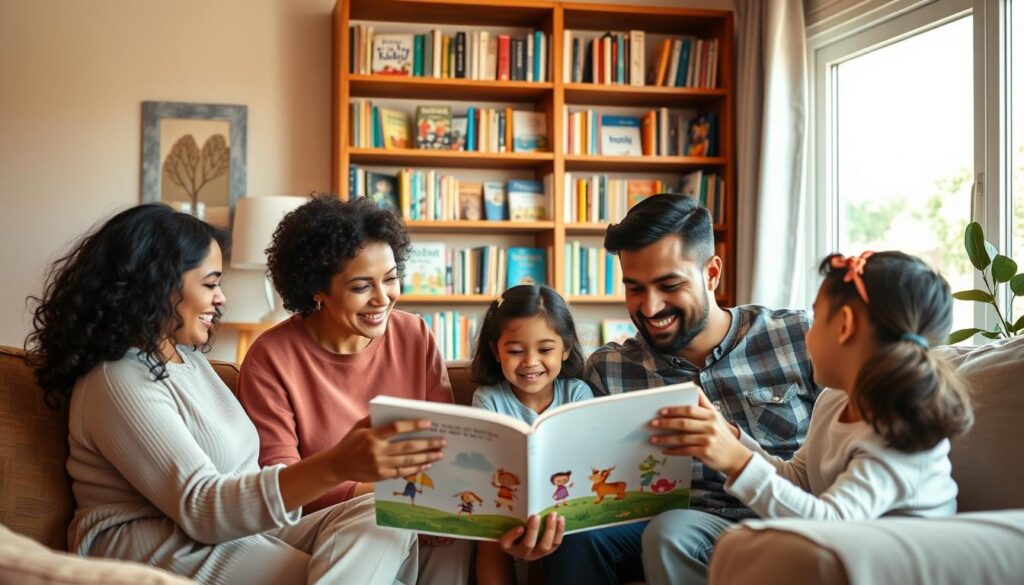
Here’s my analytical take. This pushback isn’t failure. It’s data. Your child’s resistance tells you the community language is working perfectly as the dominant social glue. Your job isn’t to wage war against English. It’s to fortify the value of the other language. Think of it as a marketing campaign for a niche product.
When met with resistance, get creative, not confrontational. Become the “keeper of the fun secrets.” Maybe weekend pancake recipes are only shared in the home language. Perhaps bedtime stories involve whispered adventures that English never hears. The goal is to make the minority language feel special, not mandatory.
What practical steps can you take?
- Double down on joy: Connect the language to activities your child loves. Music, cooking, or silly games work wonders.
- Find their tribe: Seek out other kids who speak the language. Peer pressure, but the good kind.
- Embrace the mix: Don’t panic over code-switching. It’s a natural part of bilingual development.
- Lower the bar: Some language exposure is better than none. A tired, simple conversation is worth it.
On the hardest days, return to your “why.” Is it family heritage? Cognitive benefits? Future opportunities? That core reason is your North Star. Write it down. Stick it on the fridge. When motivation dips, that “why” will pull you through.
Remember, raising bilingual kids is a marathon, not a sprint. Stumbling is part of the race. The days they “just refuse” are data points, not defeats. Adjust your strategy. Find new ways to create meaningful language exposure. The path isn’t linear, but every challenging phase teaches you something about your child’s linguistic world.
This journey transforms you as much as it shapes them. You learn patience, creativity, and resilience. The challenges become stories you’ll tell later—proof that you didn’t just teach a language. You built a bridge between worlds.
Integrating Culture
Raising a bilingual kid who doesn’t connect with the culture is like training a chef who only knows how to read recipes but never tastes the food. You get technical competence, but you miss the entire point. Language is the code; culture is the operating system that gives that code meaning, humor, and soul.
This is where your bilingual parenting moves from the classroom to the living world. As the founders of Habbi Habbi highlight, Chinese isn’t just a subject—it’s a heritage, a billion-person conversation, and the gateway to an artist like Jay Chou. Your target language must become the key to something your child genuinely wants.
| Aspect | The Language-Only Approach | The Language + Culture Approach |
|---|---|---|
| Primary Goal | Linguistic proficiency, vocabulary acquisition. | Bicultural identity and contextual understanding. |
| Method | Flashcards, grammar drills, structured lessons. | Stories, food, media, festivals, and family narratives. |
| Child Engagement | Often task-oriented, can feel like homework. | Intrinsically motivated, driven by curiosity and enjoyment. |
| Long-Term Outcome | A bilingual speaker. | A bicultural citizen who can effortlessly shift accents and cultural codes. |
| Parent’s Role | Teacher or tutor. | Cultural guide and co-explorer. |
To install this cultural operating system, weave it into your family’s routines. Cook a traditional dish together, with the recipe in your target language. Have a “foreign film night” with subtitles. The language becomes the tool to access the experience.
Think of culture as a multi-channel stream. Music and pop culture are powerful currents. Is your kid into anime? That’s a backdoor into Japanese. Obsessed with a global soccer star? That’s motivation for Spanish or Portuguese. This is visceral connection—learning because it matters to their world.
Then, layer in the deep heritage. Share family stories from “abuela” or “lǎo lao.” Celebrate festivals, even in a small way. Travel, if possible, is the ultimate immersion, but local cultural events work wonders. The goal is to surround them with the “why” behind the words.
This integration transforms your routines. Saturday morning isn’t just cartoons; it’s cartoons from another country. Bedtime isn’t just a story; it’s a folktale from the homeland. You’re building more than a vocabulary list; you’re nurturing a flexible, empathetic global citizen. That ability to navigate different cultural contexts—that’s the real superpower of true bilingual parenting.
Tracking Progress
Forget about standardized tests. Tracking bilingual progress is more like anthropology than schoolwork. It’s about the silent connections in the brain, not just answers on a page.
Researchers found that bilingual kids are great at switching tasks. It’s not just about being able to do many things at once. It’s about being flexible in their thinking. Their brains learn to switch between languages, showing a lot of creativity.
So, how do you know if you’re doing well in raising bilingual kids? It’s not about tests. Look for the small moments, not just big achievements.
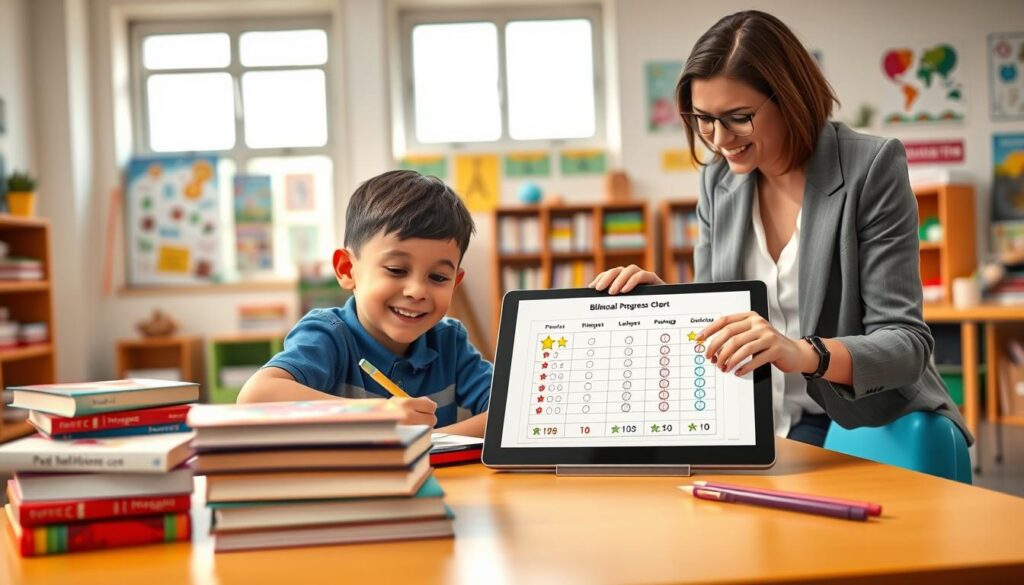
The first time they correct your pronunciation with a smile. The day they make a joke in their second language. The moment they use a new word to comfort their sibling. These are the signs of progress.
Progress shows when they understand cultural things you didn’t teach them. It’s about building a strong brain through everyday talk. This mental strength, built through speaking two languages, is very valuable.
Your tracking sheet should look like an anthropologist’s notes. Watch how they naturally mix their languages. See if they are patient when talking gets hard.
Skills like empathy, adaptability, and quick thinking are key. They show that language has become a part of who they are. For more on how to raise bilingual kids, check out our guide on raising a bilingual child.
Remember, regular language exposure builds these brain paths. Aim for integration, not perfection. Look for the spark when they understand something new in one language but not the other. That’s the real measure.
In the end, raising bilingual kids is like planting a forest. It’s about creating a world where they can explore and find meaning in both languages.
Resources for Parents
Your bilingual parenting journey needs more than good intentions. It requires a carefully curated arsenal of resources. These resources transform daily routines into language labs. Think of yourself as the director of a cultural production, not just a parent.
You’re assembling the cast, scouting locations, and gathering props for this multilingual show. The quality of your resources determines whether your child’s second language becomes background noise or a living, breathing part of their world.
Let’s start with people—the ultimate resource. Family members who speak the target language are gold. A bilingual nanny or babysitter turns ordinary afternoons into immersion sessions. But don’t stop there.
Can you build a bilingual community? Playgroups, language meetups, or even finding one other family committed to the same language creates a micro-ecosystem. Your child needs peers who validate that speaking differently is cool, not strange.
Next, consider places. Enrolling your child in a bilingual school is the immersion power-up. It’s like putting their brain in language boot camp five days a week. But what if that’s not feasible?
Weekend language programs at cultural centers offer fantastic supplements. Regular visits to neighborhoods where the language thrives work too. The grocery store, the park, the library—any place can become a language destination with the right intention.
Now for things: the tangible tools. Books like Habbi Habbi’s wand-activated ones make reading interactive. Music playlists in the target language transform car rides into concerts. Apps and shows provide screen time that actually builds vocabulary.
Here’s the sage’s twist though. The most powerful resource in your bilingual parenting toolkit is you. Yes, even if you’re a non-native speaker. Your participation signals that this language matters.
Ask how to say something new. Try to sing along to that song. Attempt to read that simple book together. Your effort, not your perfection, becomes the inspiration. As language expert Naomi from Ninos & Nature puts it, you have a lifetime to perfect pronunciation, but a small window to expose their brain to multilingualism.
This transforms your daily routines. Breakfast becomes a vocabulary game. Bedtime stories become cultural journeys. Weekend outings become exploration missions. The language stops being a subject and starts being a lens through which your family sees the world.
So arm yourself strategically. Build that community. Gather those tools. Most importantly, bring that “let’s try this” energy to every interaction. Your curated ecosystem of people, places, and things will make bilingual parenting not just sustainable, but genuinely joyful.
Your child’s language journey isn’t a solo expedition. It’s a family adventure with you as the guide. The resources you choose today shape the bilingual adult they become tomorrow. Start curating.
Conclusion
So, what’s the final score in this game of raising bilingual kids? Think less about instant fluency and more about wiring a brain for life. This isn’t a weekend project. It’s building cognitive architecture.
Those daily routines—the songs, the books, the stubborn insistence on a second language at dinner—they forge neural pathways. Studies show these paths lead to real advantages. Bilingual children often outperform monolingual peers academically. Their brains get better at switching tasks and holding attention.
The payoff extends beyond test scores. It’s a passport. Speaking multiple languages makes travel richer and career doors swing open. A PIQE report notes that 90% of U.S. employers need staff who speak languages other than English. You’re not just teaching words. You’re building market resilience.
This journey is a marathon, not a sprint. Some days the routine feels like a grind. That’s when you remember the “why.” You’re giving a child a broader world to navigate and a better brain to navigate it with. The finish line isn’t perfection. It’s a mind equipped for complexity and a heart open to cultural nuance.
The investment is steep. The returns, though, are a lifetime of cognitive dividends and cultural capital. That’s a legacy worth the daily effort.