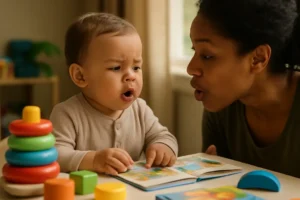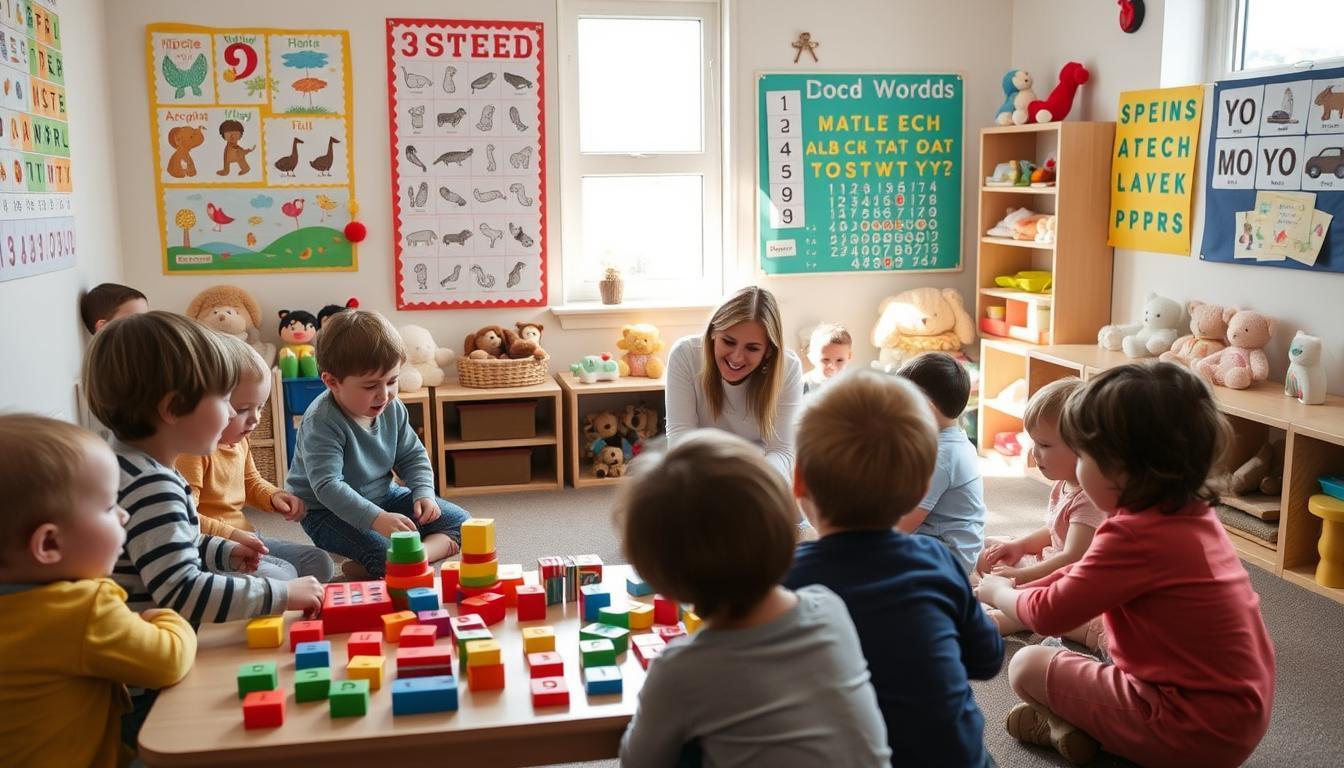
Your toddler’s babbling is more than just cute sounds. It’s their way of sharing thoughts and feelings. It’s the start of how we connect with each other.
Studies show that play is better for learning than sitting in a classroom. Making animal sounds and playing peek-a-boo are more than fun. They help build the brain’s language skills.
Let’s look at how early sounds relate to growing up. Different cries mean different things. It’s like a secret language that adults should pay more attention to.
Interactive Storytelling
Why use streaming services when you can act out Oscar-worthy scenes with just a picture book and your voice? It’s not just reading; it’s acting for the young ones.
Your acting kit should have the triple threat of engagement. This means using faces that could rival Jim Carrey, voices that span wide ranges, and sound effects that Foley artists would envy. Why? Because over-the-top acting creates new brain paths faster than soft narration.
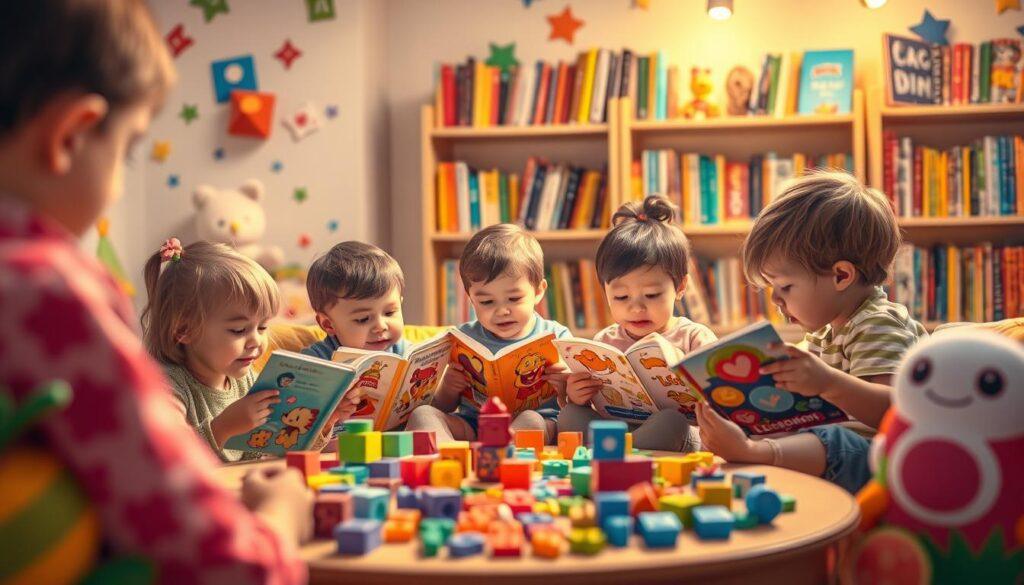
Vocal acrobatics are key. The big bad wolf doesn’t just blow – he H U F F S and P U F F S loudly. And that pause before turning the page? It’s suspense, but also teaching kids to wait and recognize patterns.
Puppets are more than cute friends; they’re teaching tools. When Mr. Bear puppet asks “What color is the ball?” and waits, he’s teaching kids to take turns. Plus, kids share secrets with puppets they wouldn’t with adults – it’s like having a tiny, furry therapist.
Interactive rhymes like “Itsy Bitsy Spider” become more than songs. They become full-body experiences with finger movements and rain gestures. You’re not just singing; you’re making memories that help kids remember words.
When kids start acting like you, it’s magic. They do voices during play and use gestures to tell stories. You’ve not just read a book; you’ve given them communication software for life.
These language games do more than entertain. They help kids understand emotions, stories, and how to interact with others. And you get to be the coolest parent at the playground.
Using Songs and Rhymes
Ever wonder why your toddler remembers “Baby Shark” but forgets their shoes? Science says music makes strong neural paths, unlike speech. It’s like music is a superhighway and speech is a dirt path.
Nursery rhymes are like the Top 100 hits for preschoolers. They’re catchy and often nonsensical, like pop music. But they’re key for learning language.
The rhythm and melody help build language patterns. It’s like a framework for words to settle in. This is why you remember jingles but not what you had for lunch.
Your bad singing voice is actually good for your toddler. They love it because it’s real and relatable. Nothing beats toddler engagement like singing badly.
“Music gives a soul to the universe, wings to the mind, flight to the imagination and life to everything.”
Make daily routines musical. Turn diaper changes into operas and car rides into symphonies. Use mealtimes to sing about veggies.
The magic comes from three things:
- Voice inflections that highlight emotional tones
- Repetition that reinforces new vocabulary
- Facial expressions that provide visual context
Even traditional rhymes can be educational. “This Little Piggie” can teach numbers. Each pig can represent a different number.
For more ideas, check out this resource. It has great ways to make music learning fun. The right songs can make listening active.
The goal isn’t to make your toddler a Mozart. It’s to use music to make learning language easy. Music builds strong communication skills.
So, sing about broccoli and make raps about shoes. Your bad singing might help your toddler learn and engage.
Success Stories
Did you know 60-65% of communication is nonverbal? But nothing beats the moment a toddler speaks their mind. It’s like a political debate where someone answers the question, shocking and satisfying.
Maya, for example, went from grunting to saying “more waffle, please” in two weeks. Her parents used big facial expressions during meals. This turned breakfast into “emotional intelligence theater.” Studies show mimicking expressions helps build language and emotional skills.
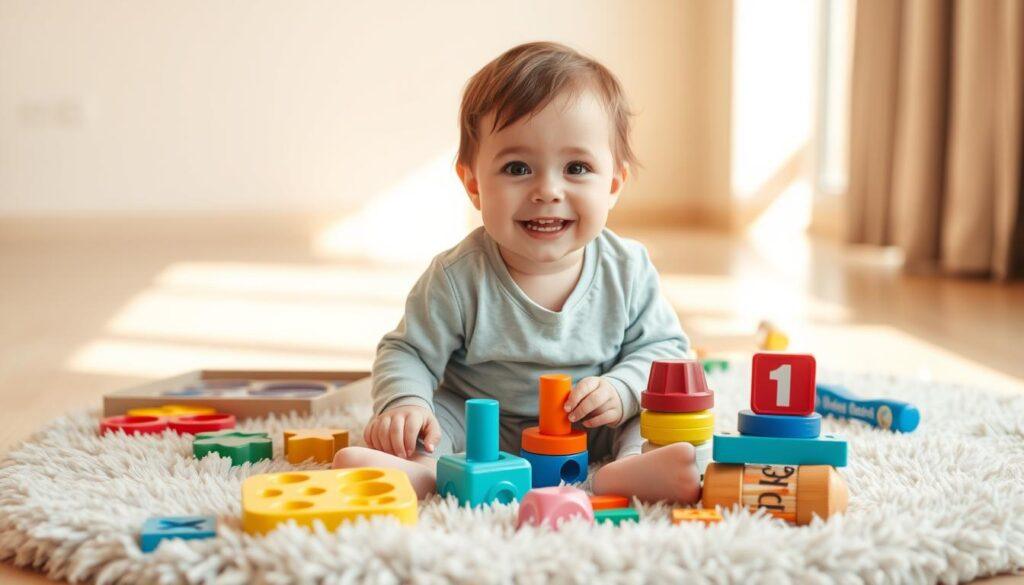
Liam’s mom used a copy cat game to improve his attention. After three weeks of mirroring, he started making eye contact. Research shows kids who do this reach name recognition milestones 3-4 weeks early.
Laundry sorting was a game-changer for one parent. They turned sock matching into a way to learn new words. In a month, their 22-month-old could say “daddy’s blue socks” and “soft yellow blanket.” It shows you don’t need fancy stuff to help your child speak.
Most kids hit speech milestones between 18-24 months. But the right activities can speed up progress by up to 30%. The key is activities that mix verbal, visual, and tactile inputs.
The best speech activities are fun, not work. When you’re laughing too hard to keep going, that’s when the magic happens.
These success stories are not rare. They come from using proven methods. The common thread? Parents who enjoy the journey, celebrate small wins, and find magic in everyday moments.
Tips for Choosing the Right Activities
Choosing the right language games is like being a DJ for a toddler rave. You need the perfect song at the right time. After trying interactive storytelling and musical fun, strategy becomes key.
Timing is everything. Pick these games when your little one is well-rested and happy. Avoid the grumpy pre-nap time. The post-snack calm is perfect.
Keep activities short, 10 to 30 minutes. This keeps your child engaged without getting overwhelmed. Focus on one or two skills at a time, like vowel sounds or decoding emotions.
Be ready to change plans if needed. If a game doesn’t work, switch it up fast. Watch for signs like glazed eyes. The best games adapt quickly, turning everyday moments into learning opportunities.