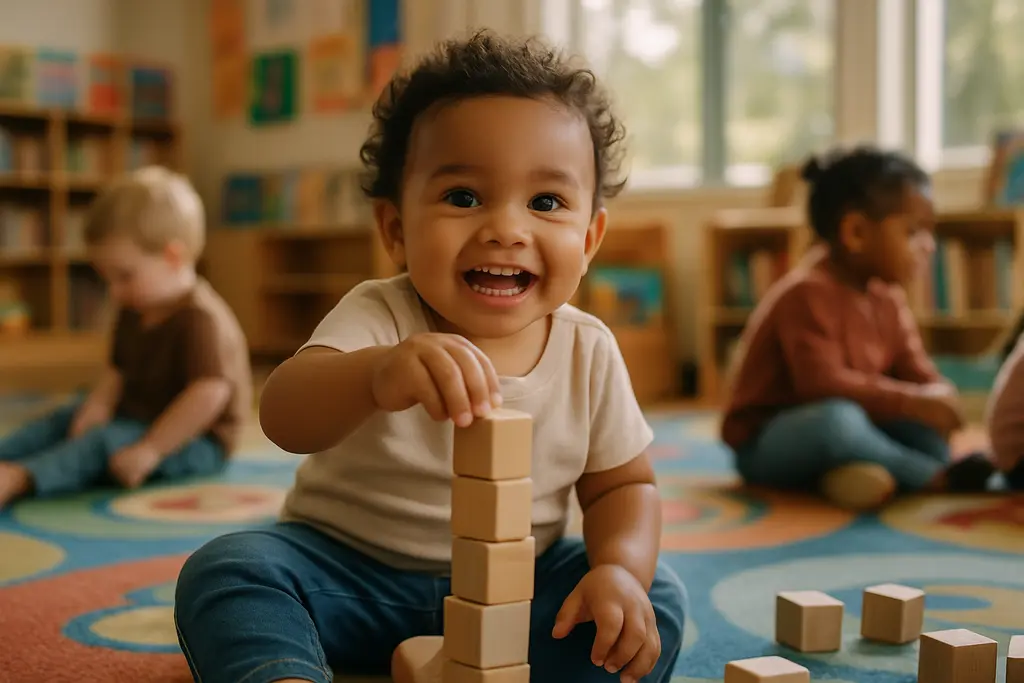

For parents and preschool educators, Bilingual Speech Milestones can be reassuring and confusing at the same time. A child may use one language at home, another in early education, and different skills in each setting. That does not automatically mean delay. It does mean adults need to look at both languages, the child’s daily exposure, and how communication works across real routines.
Research summarized for early bilingual development shows a consistent theme: many early milestones are broadly similar to those of monolingual peers, but performance can look uneven if adults judge only one language. A child may appear quiet in English while communicating more freely in Spanish, or may understand a home language well while speaking more in the classroom language. The practical goal is not to force equal skills at every age. It is to notice whether the child is growing, connecting, understanding, and using communication for real purposes.
What Early Milestones Can Look Like
Babbling And First Words Around The First Birthday
Research notes on bilingual children report that canonical babbling and first words often appear around the first birthday, roughly 12 months, similar to patterns seen in monolingual children. For a bilingual baby, those first words may come from either language. A word should not be dismissed because it is not in the school language or because only one parent understands it.
At this stage, families can watch for more than spoken words. Does the child look toward familiar people? Reach, point, vocalize, or gesture to request? Respond to songs, names, or daily routines? These early communication behaviors give adults a wider view than a simple word count.
Combining Words In The Toddler Years
Combining words into short phrases often appears during the second and third years of life. In research on Spanish-English bilingual children, word combination in English occurred on average around 22 to 30 months and was about three months later than monolingual English comparison patterns. Yet when researchers considered each child’s stronger language, bilingual children met the milestone at a similar age to monolingual children, as described in this bilingual development review.
That finding matters in early education. A toddler who says “más juice,” “mommy ven,” or a two-word phrase in the home language is showing phrase-building ability. Mixed-language phrases are not, by themselves, evidence of confusion. They can reflect the child’s available words, the listener, and the language pattern used by people around them.
Reading Bilingual Speech Milestones Across Two Languages
Why Bilingual Speech Milestones Need Two-Language Context
Looking at Bilingual Speech Milestones through only one language can create a misleading picture. A child may know a concept in one language but not yet have the matching word in the other. For example, a preschooler may name foods, relatives, and routines in the home language while using English mainly for classroom materials and peer play.
This unevenness is not a flaw in bilingual development. It often reflects input and use. Children tend to build the words, sounds, and sentence patterns they need most often. A classroom that values both languages can gather a fuller picture by asking families which words the child uses at home, what directions the child follows, and how the child communicates with siblings or caregivers.
A Practical Milestone Snapshot
| Approximate Age | What Adults May Notice | Bilingual Interpretation |
|---|---|---|
| Around 12 months | Babbling and first words may appear. | Words may come from either language and still count. |
| 22 to 30 months | Short word combinations begin to appear. | Judge phrase-building across the stronger language, not English alone. |
| Ages 3½ to 4½ | Speech sounds and longer utterances often show visible growth. | Progress may differ by language because sound systems and exposure differ. |
| Preschool to early school years | Grammar and vocabulary may shift toward the classroom language. | Home-language skills still need attention when judging growth. |
The table should be read as a general reference, not a diagnostic checklist. Individual children vary, and bilingual children vary in how much they hear, need, and use each language. For families who want a related age-based discussion, this article on early bilingual growth may be a helpful companion.
What Educators Should Watch In Preschool
Sounds, Grammar, And Classroom Language
Preschool teachers often notice pronunciation, sentence length, and participation first. Research notes describe Spanish-English bilingual preschoolers making gains in consonant accuracy between about age 3 years 7 months and 4 years 7 months, including growth in cluster accuracy. Other research summarized in the notes found that between ages 3 years 6 months and 4 years 5 months, some dual language learners moved from stronger Spanish measures toward more balanced English and Spanish measures in mean length of utterance and number of unique words.
These patterns suggest that a short classroom sample may not be enough. A child who gives one-word answers at circle time may tell longer stories during dramatic play or at home. A child may pronounce a sound differently because the two languages use different sound patterns. Teachers can listen for progress over time, not just comparison with monolingual classmates.
When A Concern Deserves Follow-Up
Some concerns should not be brushed aside with the phrase “they are just bilingual.” If a child shows limited understanding and limited expression across both languages, loses skills, rarely communicates needs, or struggles to participate even with familiar routines, adults should discuss the concern with the family and appropriate school support staff. A speech-language pathologist with experience in bilingual assessment can help interpret the pattern.
A 2023 longitudinal study of about 100 bilingual children, starting at an average age of 5 years 11 months, found that English morphosyntactic standardized scores increased over two years while Spanish scores decreased, regardless of whether children had developmental language disorder. The study is indexed in ERIC as a longitudinal bilingual morphosyntax study. This does not mean every child will show the same pattern. It does remind educators that school-language growth and home-language change can happen at the same time.
Home And Classroom Support That Respects Both Languages
Keep Each Language Useful
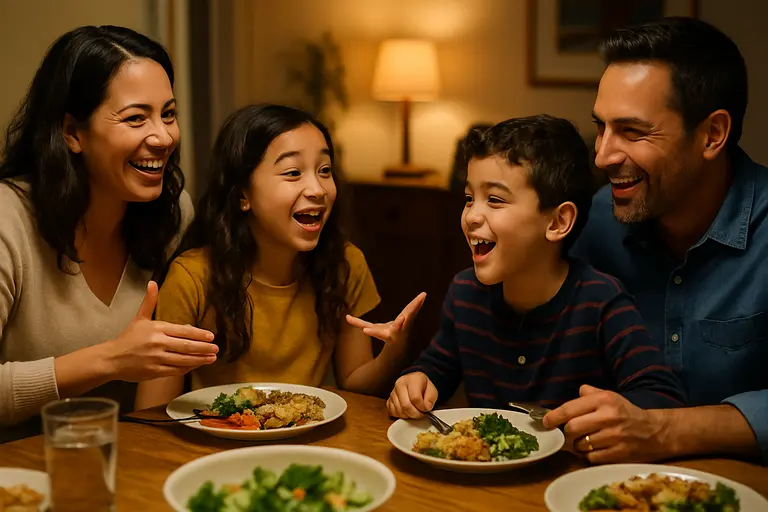
Children need reasons to use each language. At home, that may mean telling stories with grandparents, helping with cooking routines, singing familiar songs, or naming feelings during daily care. In preschool, it may mean welcoming home-language words, inviting families to share key vocabulary, and letting children show understanding through gestures, pointing, drawing, or play before expecting full verbal answers in English.
Adults do not need to translate every sentence perfectly. They can model clear language, expand what the child says, and keep the exchange natural. If a child says “dog run,” an adult might respond, “Yes, the dog is running fast,” or use the same idea in the home language if that is the shared language. The aim is to give the child a slightly richer model without turning every conversation into a test.
Use Books, Play, And Real Talk
Shared reading and play are practical ways to support language because they give children repeated chances to hear words in meaningful settings. During book reading, adults can pause, label pictures, connect the story to family life, and accept responses in either language. During play, adults can comment before questioning: “The truck is stuck,” “You made a big tower,” or “La muñeca está durmiendo.”
- Ask families which language the child uses most for comfort, play, routines, and storytelling.
- Count meaningful words across both languages when discussing early vocabulary.
- Notice whether the child follows familiar directions in either language.
- Watch for progress over weeks and months rather than judging one quiet day.
- Refer for support when concerns appear across both languages or affect participation.
Families selecting storybooks, writing prompts, or child-friendly reading materials can also browse Leap Year Publishing for related publishing resources. The best materials for a bilingual child are not always the most formal ones. Often, they are the books and stories adults are willing to read, discuss, repeat, and connect to the child’s life.
Bilingual Speech Milestones In Early Education
What Parents Can Take From The Evidence
The most useful message for early education is balanced: bilingualism does not automatically cause delay, and bilingual children can still have speech or language disorders. Adults should avoid both extremes. It is not helpful to panic because a child uses different words in different languages. It is also not helpful to wait too long if a child has broad communication difficulties across settings.
Tracking Bilingual Speech Milestones works best when parents and educators share observations. A parent may know that the child tells long stories at home. A teacher may know that the child understands classroom routines but avoids peer conversation. Together, those observations give a clearer picture than either setting alone.
A Careful Way To Track Progress
A simple progress record can include the child’s new words in each language, examples of two-word and longer phrases, sounds that are becoming clearer, directions the child understands, and social uses of language such as greeting, protesting, pretending, asking for help, or telling about an event. The record does not need to be formal to be useful. It only needs to capture real examples over time.
For young children, communication growth is not a race toward English-only performance. It is a developing set of skills across people, places, and languages. When adults respect both languages and look closely at function, Bilingual Speech Milestones become less about comparing children and more about understanding how each child is learning to connect.