
Bilingual language activities work best when they are planned around real communication: naming, explaining, retelling, asking, comparing, and connecting with family life. Current research does not support a single script for every child, but it does give parents and educators several careful principles: protect the home language, provide meaningful exposure, teach words clearly, and keep adults responsive during play and reading.
The evidence base also has limits. Recent studies differ by country, language pair, age group, and program design. A finding from Portuguese-speaking children in Luxembourg or Spanish-English children in the United States should not be copied without considering the child’s setting, family goals, and classroom language demands. Still, across the research notes, a consistent message appears: bilingual children benefit when both languages are treated as useful tools for learning, not as competing problems to remove.
What Current Research Says About Bilingual Language Activities
Planning Bilingual Language Activities With Clear Targets
A useful activity starts with a clear language target. The target might be new vocabulary, a story sequence, sound awareness, letter-sound knowledge, or more confident conversation with an adult. Recent intervention findings point in this direction. A controlled trial published online on 26 September 2025 with 186 dual-language learners from Portuguese-speaking immigrant families in Luxembourg reported gains in Portuguese vocabulary, narrative skills, phonemic awareness, and letter-sound knowledge after a heritage-language intervention. Some gains in expressive vocabulary and phonemic awareness were still reported nine months later, and improvements were also observed in Luxembourgish receptive vocabulary and phonemic awareness.
That pattern matters because it challenges a common fear: that time spent on the heritage language automatically takes away from the school language. The research notes do not prove that every program will show the same effects, but they support the practical choice to include the child’s stronger family language in early literacy and oral-language work.
Exposure Is Not The Same As Pressure
Exposure needs to be meaningful, not just frequent. In a July-August 2024 study of 584 preschoolers aged 2 to 4 in Dutch-English early childhood education and care in the Netherlands, greater exposure to English, the non-majority language in that setting, was linked to growth in both expressive and receptive English vocabulary. Exposure to Dutch at the center did not significantly affect Dutch vocabulary growth in that study. One reasonable interpretation is that children may need more intentional support for the language they hear less often in the wider community.
In the United States, language access is not a small issue. As of October 2026, reporting on Head Start noted that about one third of children in the program, which enrolls approximately 700,000 low-income children, speak a language other than English at home; the same report described research support for bilingual or dual-language approaches that do not undermine English acquisition Head Start language reporting. For families and teachers, that means bilingual planning is not a niche concern. It is part of ordinary early-childhood communication support.
Turn Research Findings Into Daily Practice
Use Single-Language Moments For New Words
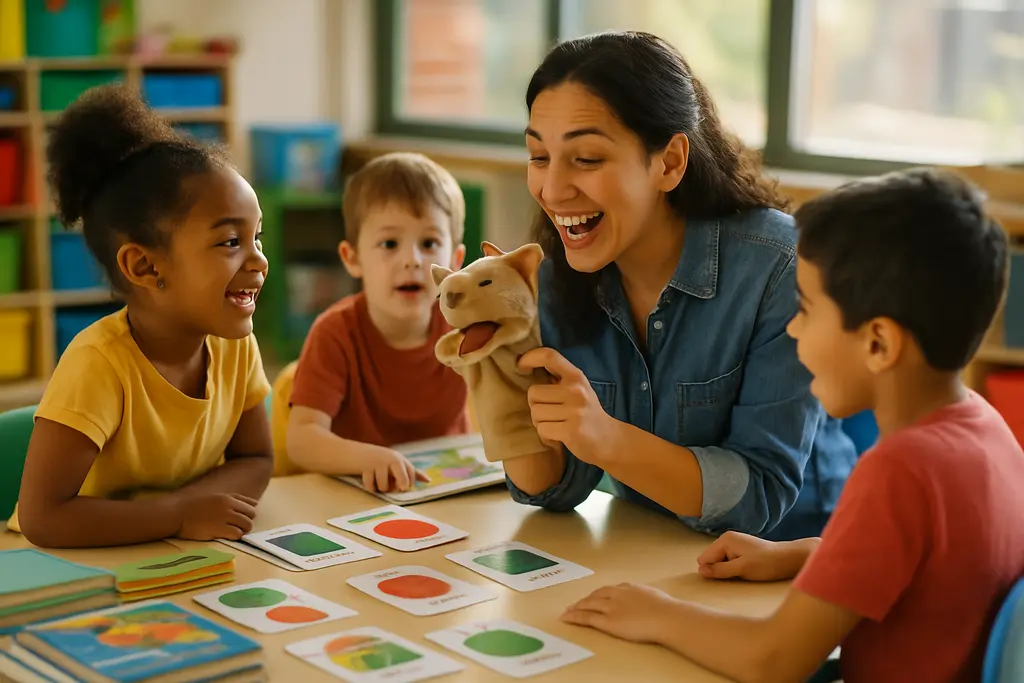
One 2024 experimental study with 4- and 5-year-old Spanish-English bilingual children found that children learned novel words better in single-language input than in dual-language input when both languages were used to label objects. Tagging speakers by language, sometimes called a one-person-one-language strategy, did not remove that advantage in the experiment word-learning experiment. This does not mean adults should avoid bilingual interaction. It does suggest that, when teaching a brand-new label, a short single-language teaching moment may reduce confusion.
For example, during a science activity, an adult might introduce three new words in Spanish first: semilla, tallo, raíz. The child can touch, draw, sort, and use those words in sentences. Later, the adult can connect the same concepts to English: seed, stem, root. The sequence can also work in the other direction, depending on the child’s goals and the language of instruction. The point is not to separate languages all day. The point is to make the first learning moment clear, then help the child build cross-language connections.
Repeat Shared Reading Across Several Days
Shared reading remains one of the most practical ways to support bilingual development, but the research notes suggest that effects may differ by skill and may fade without continued practice. In a shared-reading intervention with 464 dual-language learners in Norway, immediate gains were reported in vocabulary, grammar, and perspective-taking. Seven months later, grammar effects had faded, vocabulary and perspective-taking showed only tendencies, while narrative skills showed lasting emergence.
That finding supports a simple planning habit: return to the same book for different purposes. On the first reading, focus on enjoyment and a few key words. On the second, ask children to retell what happened first, next, and last. On the third, invite them to explain what a character knows, wants, or feels. On the fourth, connect the story to the home language. A repeated book is not a failure to provide variety; it gives children more chances to use language with increasing independence.
For families looking for related activity examples, this site’s article on bilingual language activities offers practical ways to connect reading, routines, and conversation without turning every interaction into a quiz.
Use Home Language As A Learning Asset
Translanguaging Can Reflect Real Family Communication
Home language use often looks flexible. A June 2025 home-school translanguaging literacy study of Latine emergent bilinguals in South Texas found that children and families shifted among Spanish variants and English during home literacy activities. The research notes describe these practices as supporting biliteracy development and helping bridge home-school divides.
For educators, this means family language should not be treated as messy or incorrect simply because it moves across languages. A child might describe a picture in English, repeat a grandmother’s phrase in Spanish, and then use both languages to explain a joke. That exchange can still show vocabulary knowledge, narrative skill, and social understanding. The adult’s job is to listen for meaning, model fuller language when useful, and avoid shaming the child’s language choices.
Caregiver Talk Deserves Direct Support
A study published on 23 December 2025 in Frontiers in Education focused on bilingual English-Spanish children with developmental language disorders, ages 4 to 6. In the research notes, four school-based workshops with mothers were associated with improved quality of maternal communication strategies and improved oral communicative competence in children. The details should not be stretched beyond that study, but the direction is useful: caregivers benefit from concrete, practice-based support.
Helpful adult strategies can be simple. Wait after asking a question. Expand what the child says. Offer choices. Repeat a word in a natural sentence. Respond to gestures as communication. Ask fewer test-style questions and make more comments. These strategies are not limited to one language. Families can use them in the language they speak most comfortably, which often makes interaction more natural for the child.
Community organizations can support this work by making family communication feel welcome in shared spaces. Related youth and community sites, such as Stuyvesant Youth Community, demonstrate the importance of creating family-friendly resources alongside wider community support.
Watch What Changes And What Does Not
Track Progress Without Turning Play Into Testing
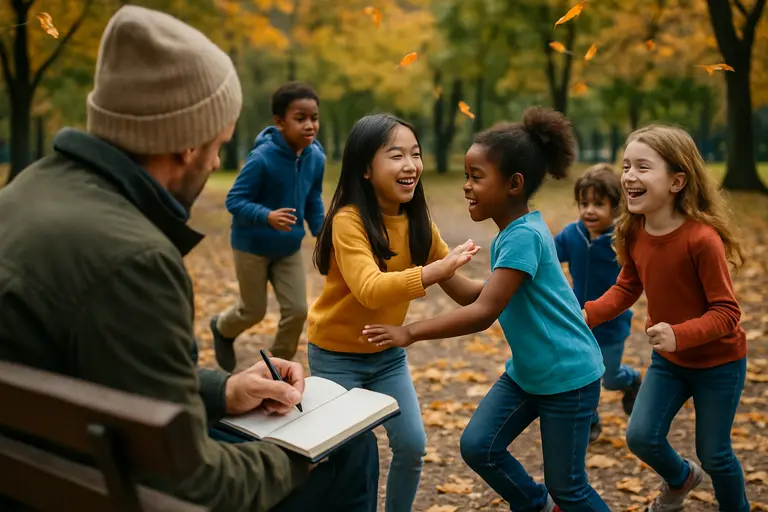
Progress in bilingual children may appear uneven because skills are spread across two languages. A child may know animal names in one language, feelings words in another, and family routines in both. Counting only English words, or only home-language words, can underestimate what the child understands and can express.
A practical tracking plan can stay simple:
- Choose three to five target words or phrases for one activity cycle.
- Record whether the child understands, repeats, uses, or explains each word.
- Note which language the child used and whether gestures or drawings helped.
- Repeat the same activity later to see whether the child uses language with less adult support.
This type of observation respects the research finding that some effects are immediate while others need time. It also avoids a common problem: treating bilingual development as a race toward English only. English growth matters for school access in many settings, but the research notes support the value of heritage-language growth as well.
Match The Activity To The Skill
Different activities support different outcomes. Naming games may help vocabulary. Story retells may support narrative organization. Rhyming and sound sorting may support phonemic awareness. Letter hunts may support letter-sound knowledge. Pretend play may support conversation, perspective-taking, and flexible language use.
The 2025 systematic review described in the research notes found evidence that dual-language education supports academic skills, including language, literacy, and mathematics, while also noting that mathematics has been studied far less than language and literacy in young bilingual children. That limitation should keep claims modest. Educators can include math talk in both languages, but they should not assume that every language activity automatically improves math. A stronger approach is to name the learning target and observe what the child actually does.
Bilingual Language Activities For Young Children
Bilingual language activities should be clear enough to support learning and flexible enough to honor real family communication. A teacher might introduce new vocabulary in one language, read the same book across several days, invite retelling in either language, and ask families how the topic appears at home. A parent might cook with a child while naming actions, comparing ingredients, and telling a short family story in the home language.
The strongest practical message from the current research is not that one method solves every problem. It is that bilingual children need repeated, meaningful chances to use both languages with attentive adults. Some skills may grow quickly. Some may fade without follow-up. Some children, including children with language disorders, may need more direct support from speech-language professionals and coordinated school-family planning.
Used thoughtfully, bilingual language activities can help children build vocabulary, tell clearer stories, understand print and sounds, and stay connected to the language of their families. The work should remain evidence-aware, child-specific, and honest about what research can and cannot yet tell us.