
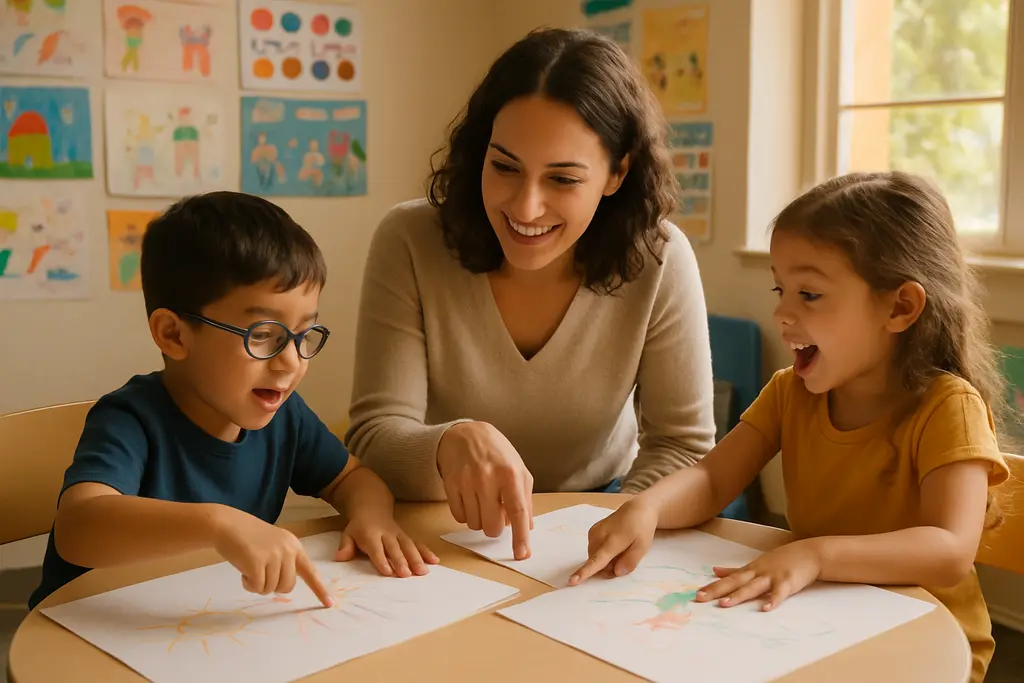
Bilingual language activities work best when they are purposeful, responsive, and connected to the child’s real communication needs. Recent research from 2023 through 2025 points toward a balanced approach: explicit teaching for specific skills, shared reading that invites children to talk, flexible use of both languages, and play-based routines that respect family language practices. The evidence is promising, but it is not one-size-fits-all. Some studies included small samples, and children differ in exposure, age, developmental profile, and opportunities to use each language.
For families, educators, and speech-language professionals, the practical question is not whether a child should be pushed toward one language. The better question is how adults can create repeated, meaningful chances to listen, speak, gesture, read, tell stories, and make choices across the languages the child uses. Families who want more activity ideas for this age range may also find the related bilingual vocabulary activities useful when planning home or classroom practice.
Bilingual Language Activities Need Clear Goals
Strong activity planning begins with a small target. A goal such as “build language” is too broad to guide a useful routine. A goal such as “name three action words during pretend cooking” or “answer one who question during a familiar story” is easier to observe and repeat.
Start With One Observable Skill
Choose one skill that can be heard, seen, or recorded. For a preschool child, that might include pointing to a pictured object, using a two-word phrase, retelling one event from a story, naming a letter, answering a question, or using a past-tense verb during play. The adult can then decide what kind of support fits the moment: modeling, giving a choice, repeating a key word, expanding the child’s phrase, or waiting longer before helping.
Recent findings support both explicit and interaction-based approaches. A 2025 experimental study in the research notes found that systematic alphabet instruction improved lowercase letter knowledge for emergent bilingual and monolingual English learners. That does not mean every literacy activity should become direct instruction. It does suggest that some early skills benefit from clear teaching, repeated practice, and a predictable sequence.
Use Both Languages As Learning Assets
Children do not leave one language behind when they use another. Translanguaging approaches allow children to use their full language resources while learning. In practice, a child might hear a story in English, comment in Spanish, point to a picture, and then repeat a new English word after an adult model. The goal is communication and learning, not forcing every response into one language.
Adults can make this visible by accepting responses in either language, naming connections across languages when appropriate, and inviting family vocabulary into the activity. This approach is especially helpful when home words, cultural routines, food names, family roles, or community experiences are central to the child’s daily life.
Shared Reading And Talk-Rich Picturebooks
Shared reading remains one of the most practical ways to support early language because it combines pictures, predictable routines, adult modeling, and child participation. A 2025 scoping review in the research notes identified bilingual interactions, strategies that elicit children’s talk, and thoughtful adult language choices as key elements in picturebook reading for preschool multilingual children.
Bilingual Language Activities During Shared Reading
Bilingual language activities during book reading should invite children to do more than listen quietly. Adults can pause before turning the page, ask open questions, connect the story to the child’s life, and repeat the child’s message with a slightly longer phrase. If the child says “dog,” the adult might say, “Yes, the dog is running,” or offer the same idea in the home language if that supports understanding.
One useful pattern is “comment, wait, respond.” The adult comments on the picture, waits to see how the child communicates, and then responds meaningfully. A response might be spoken words, a gesture, a sound, a look, or a phrase in another language. Treating those responses as communication helps keep the book routine interactive rather than quiz-like.
Adult Language Choices Should Be Responsive
There is no single rule that adults must use only one language per book. Some children benefit from previewing key ideas in the home language before hearing the book in English. Others may enjoy repeated readings where each language is used at different points. The adult’s choice should depend on the child’s comprehension, comfort, and participation.
The 2025 article “Creating Inclusive Multilingual Spaces” described a summer literacy program for emergent bilingual children ages 4 to 8 that combined interactive read-alouds, culturally relevant small-group re-engagements, and hands-on explorations with bilingual and translanguaging picturebooks. The article emphasized sensory-rich, play-based experiences and celebrating bilingualism as part of literacy support inclusive multilingual spaces.
Explicit Teaching Without Turning Play Into A Drill
Explicit teaching can be useful, especially for letters, grammar forms, and vocabulary that children may not learn from exposure alone. The key is to keep instruction brief, clear, and connected to use. A child should have a reason to say the word, mark the sound, choose the letter, or use the sentence form inside a meaningful routine.
Alphabet And Grammar Targets
For alphabet learning, adults can introduce a small set of letters, say the letter name and sound, trace it, find it in a name or book title, and use it again in a later activity. Multisensory options may help some children stay engaged, but the research notes indicate that visual-auditory instruction also produced gains in one 2025 study. The supported point is not that one format works for every child, but that systematic practice can matter.
Grammar work can also be explicit. A 2025 study of three bilingual children ages 4 to 8 with developmental language disorder targeted past and present tense in English and examined transfer to Spanish. The findings suggested that explicit grammatical intervention may support targeted forms, even when clinicians are monolingual, but the very small sample means the results should be applied cautiously explicit grammatical intervention.
Scaffolding That Changes With The Child
Scaffolding means adjusting support based on what the child does in the moment. If a child cannot answer, the adult might offer two choices. If the child answers with one word, the adult might expand it. If the child gives a full response, the adult can ask a follow-up question or invite the child to explain.
A 2023 review in the research notes found that contingency, or adapting support in response to student performance, was often absent in bilingual secondary education settings despite being central in wider scaffolding literature. For younger children, this is a useful reminder. The adult should not keep repeating the same prompt if it is not helping. Support should shift as the child shows readiness, confusion, fatigue, or independence.
Family Routines, Culture, And Sensory Play
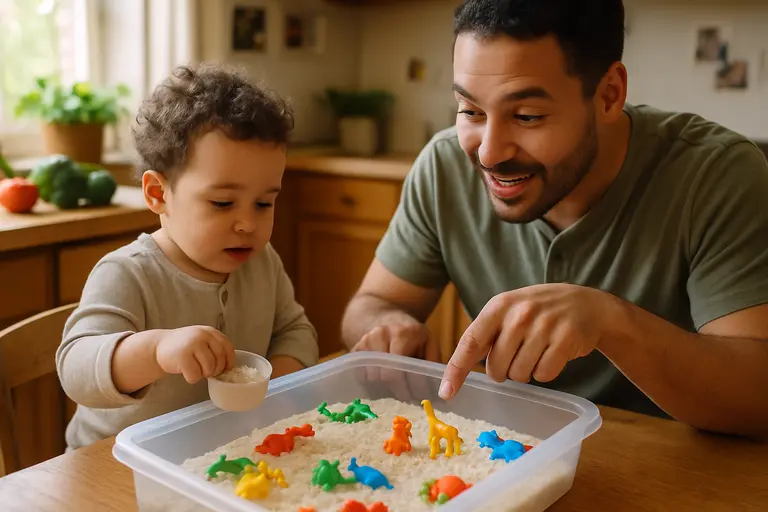
Language practice does not need to be limited to therapy rooms or classrooms. Family routines often provide the most meaningful repetition: meals, dressing, bath time, clean-up, outdoor play, cooking, music, faith or community gatherings, and bedtime stories. For families connected with local child and community programs, related resources in the same network may be explored through Bethel NC UMC.
Caregiver Practice In Everyday Moments
Caregivers can use a simple set of strategies across the day:
- Model: Say the word or phrase the child may need, without requiring immediate imitation.
- Expand: Add one or two words to what the child already said.
- Offer choices: Ask whether the child wants “apple or banana,” using either language as needed.
- Wait: Pause long enough for the child to gesture, look, vocalize, or speak.
- Repeat across routines: Use the same target words during play, reading, and daily care.
These steps are simple, but consistency matters. A child who hears and uses a word during snack, then sees it in a picturebook, then acts it out during pretend play has several chances to connect sound, meaning, and use.
Culturally Relevant Small-Group Activities
Small-group activities can include food play, sorting family photos, acting out familiar routines, singing songs from home, drawing neighborhood places, or using story props. The activity should reflect children’s lives rather than relying only on generic vocabulary. This matters for bilingual children because meaningful words often come from family practices, cultural events, and relationships.
Research notes from 2025 on family literacy practices in Texas also described translanguaging not only between English and Spanish, but among varieties and registers of Spanish. That finding cautions adults against treating a home language as a single uniform form. Families may use regional words, formal and informal registers, and mixed-language patterns that carry real meaning.
Bilingual Language Activities In Daily Routines
Bilingual language activities are most useful when adults track small changes without overinterpreting them. A child may show progress by using more gestures, joining book reading for longer, trying a new word, answering in the home language, combining two ideas, or asking for help. Progress may look different across languages because exposure and opportunities are rarely identical.
How To Track Progress Carefully
Use brief notes rather than pressure-filled testing. Write down the date, activity, language used, adult support, and what the child did independently. Over several weeks, patterns may become clearer. For example, a child may answer story questions more easily after hearing key words in the home language first, or may use more action words during movement play than during seated tasks.
Tracking should include both languages whenever possible. Looking only at English can underestimate what a bilingual child knows and can do. At the same time, adults should avoid assuming that every delay is caused by bilingualism. If concerns persist across languages or daily communication feels unusually hard for the child, a qualified speech-language professional can help interpret the pattern.
When To Ask For More Support
Families may want extra guidance if a child rarely attempts to communicate, loses skills, shows frustration across many routines, has difficulty understanding familiar directions in both languages, or is not making expected progress with supportive practice. These signs do not identify a diagnosis on their own, but they can justify a closer look.
The strongest plan is usually collaborative. Families bring knowledge of home language, routines, and culture. Educators bring classroom observation and curriculum goals. Speech-language professionals can help identify communication targets and supports. Used in that shared way, bilingual language activities can build practical speech and language opportunities while honoring the child’s full communication system.


