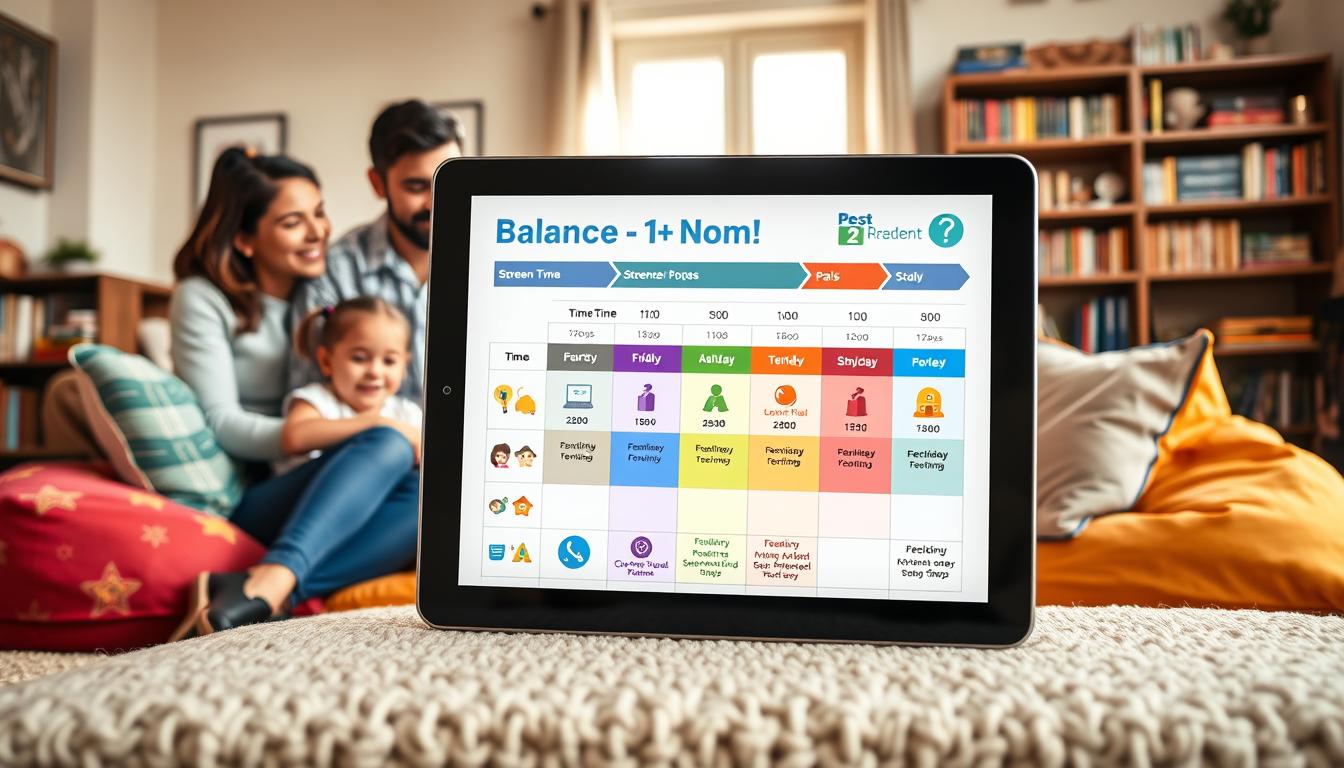
Imagine a child bringing a drawing to the kitchen table while a parent finishes a message. The child starts explaining, the phone lights up again, and the story loses its audience. Rather than treating this as another parenting failure, use it as a reason to protect a few everyday conversations. When messages become muddled, TalkAndPlay’s guide to helping children repair communication misunderstandings offers ways to keep the exchange moving.
Family screen-time boundaries can start with those ordinary moments rather than an ambitious household overhaul. The American Academy of Pediatrics’ family media planning guidance recommends creating rules around family routines, protecting screen-free spaces, and including adults in the plan. The practical question is not simply how to switch devices off, but what your family wants to make room for when they are off.
Protect One Everyday Conversation
Choose one repeatable part of the day for an uninterrupted exchange: breakfast, the walk home, or a few minutes of play before dinner. Keep the commitment manageable. “We put entertainment screens away while we share our snack” gives everyone a specific routine to follow.
Turn off media that nobody is actively using, and silence nonessential notifications during that window. These changes reflect the AAP’s recommendations to reduce competing screens and prevent media from crowding out reading, play, and family activities.
Then offer something to talk about without demanding a performance. You might describe a funny thing you noticed, wonder aloud where a toy animal should sleep, or invite your child to choose a book. Leave space for quiet participation, too. The routine should feel like time together, not another task to complete.
Make Adult Device Habits Part of the Plan
A household rule should explain what adults will do, not only what children must stop doing. The AAP encourages parents to consider their own media habits and explain necessary device use when it happens around the family.
For example, say, “I’m checking the message about tomorrow’s school pickup. Then I’m putting my phone away.” That is more specific than repeatedly asking a child to wait while leaving the interruption open-ended.
Prepare a repair phrase for the moments when attention slips: “I was looking at my phone and missed that part. Please show me again.” This takes responsibility for the missed message rather than making the child responsible for competing with the screen.
Build realistic exceptions into the plan. A parent waiting for an urgent call can explain that exception before play begins.
Keep Adult Online Spaces Separate From Children’s Activities
Content boundaries deserve attention alongside time boundaries. The AAP advises families to choose age-appropriate material, review privacy settings, and use parental controls for matters such as contacts, downloads, and purchases.
For parents, this includes keeping adult browsing separate from children’s shared-screen activities. Casino-focused destinations that adults may encounter while looking to chat with online casino players are not children’s communication or learning resources. They should remain outside family language games and child-accessible browsing sessions.
Before handing over a shared device, check what is open and which account is active. Make the household expectation clear: children should ask an adult before opening unfamiliar pages or responding to unknown people.
Keep that conversation welcoming. Children should know they can tell you about something confusing or uncomfortable online without being blamed for bringing it to your attention.
Replace Scrolling With a Playful Exchange
Prepare an alternative before the entertainment screen goes away. For preschoolers, the American Speech-Language-Hearing Association recommends activities such as acting out stories, describing objects, playing guessing games, and taking turns discussing what happens. It also advises adults to pause after speaking so children have time to respond.
Try a simple “mystery object” game using familiar household items. Describe a clean sock without naming it: “You wear this on your foot, but it isn’t a shoe.” After your child guesses, invite them to choose something for your turn.
Or begin a pretend scene with a toy animal: “The bear’s dinner has disappeared.” Let your child decide what happens next. Follow their idea rather than steering toward a correct answer.
Adjust the activity to the child. One child might enjoy an elaborate story; another might prefer choosing between two objects or showing an answer. Keep the invitation light, and stop before the exchange becomes a test.
Keep Communication Tools Available
A recreational screen boundary must not remove a child’s means of communication. A tablet used for videos and a tablet used to express needs can look similar, but their purposes are different.
ASHA specifically advises that children who use augmentative and alternative communication, or AAC, should always have access to their communication tools. These may include a device, pictures, or other supports. Keep them available during meals, play, and any routine described as “screen-free.”
The same principle applies to participation: prioritize getting the message across. Respond to the child’s attempt, and invite pointing or showing when you do not understand. Avoid interrupting an exchange simply to correct pronunciation. ASHA emphasizes patient, responsive interaction rather than constant correction.
Try One Routine Before Adding More Rules
For the coming week, choose one conversation window and one activity to place beside it. A book near the breakfast table or a drawing pad beside the toy basket is enough to begin.
After several days, review the routine rather than counting new words. Did everyone understand when the screen break began? Was the activity enjoyable? Did adults follow the boundary? Change whichever part proved impractical.
These activities are opportunities for interaction, not a treatment plan. Concerns about a child’s communication deserve individual guidance; ASHA identifies speech-language pathologists, early intervention programs, and school systems as routes to assessment.
For tonight, choose a familiar book, put entertainment devices aside, and invite your child to decide where to begin. Follow the page, picture, or idea they choose.