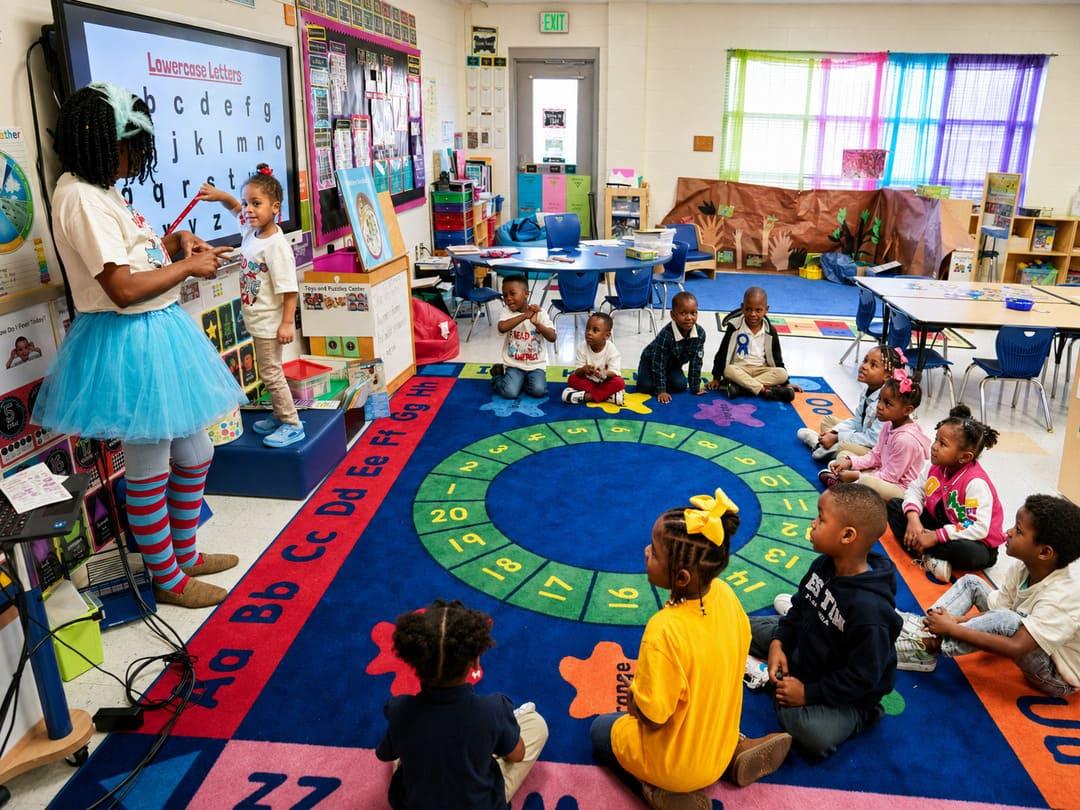
Federal preschool rules may change, but a child’s development will not wait for a policy process to finish. As questions emerge around preschool developmental screening in Head Start, families need a steady distinction: proposed regulations can affect how programs operate, while parents can continue observing progress and requesting professional guidance now.
Milestones are most useful when they help families notice patterns across understanding, gestures, play, sounds, words, and social interaction. A broader guide to toddler speech milestones can provide context, but no checklist should replace a conversation with a qualified professional when a caregiver is concerned.
The Head Start Rules Have Not Changed Yet
The Trump administration is considering a substantial reduction in Head Start’s federal performance standards, potentially replacing 122 pages of requirements with roughly a dozen pages and leaving more details to state and local rules. The possible changes could loosen or remove federal requirements involving health and developmental screening.
The proposal had not been publicly released as of August 3, 2026. It would still need to move through a federal rulemaking process, including public notice and an opportunity for comment. Families should therefore treat the reported federal proposal as an important development, not as a rule already governing their child’s classroom.
Head Start currently serves more than half a million babies, toddlers, and preschoolers. Its existing standards cover developmental monitoring and medical, dental, hearing, and vision needs, making the program more than a classroom placement for many families.
The immediate question for parents is not whether to panic over a draft. It is how to preserve clear developmental information regardless of what federal, state, or local requirements eventually apply.
Policy Changes Do Not Remove the Need for Clear Developmental Information
Families may hear about proposed changes to preschool rules and wonder whether fewer federal requirements could mean fewer opportunities to identify developmental concerns. The policy details may still change, but the practical need remains the same: children benefit when communication, hearing, movement, learning, and social participation are observed carefully over time.
Preschool staff often see children in situations that do not happen at home. They may notice how a child follows group directions, joins peer play, handles transitions, tells a story, asks for help, or responds in a noisy classroom. Parents contribute a different view through familiar routines, family languages, favorite activities, and changes noticed across weeks or months.
Neither perspective is complete by itself. A child may speak freely with siblings but remain quiet at school, or follow classroom routines while struggling with unfamiliar directions at home. Combining caregiver observations with educator information produces a more accurate picture than relying on one appointment, one score, or one difficult day.
That broader picture is especially valuable when a concern first appears. The next step is not always a diagnosis or therapy. Sometimes it is continued monitoring, a hearing check, a conversation with the pediatrician, or a referral for a more detailed assessment. The purpose is to understand what support may help, not to attach a label as quickly as possible.
Preschool Developmental Screening Is a Starting Point
A developmental screening is a brief check designed to identify whether a child may need a more detailed evaluation. It may use a caregiver questionnaire, educator observations, or a standardized tool covering areas such as language, movement, thinking, behavior, and social-emotional development.
Screening does not diagnose a speech disorder, autism, hearing loss, developmental language disorder, or another condition. A result may indicate that development appears on track, that progress should be monitored, or that a referral is appropriate.
Under the current Head Start screening rule, programs must complete or obtain a developmental screening with parental consent within 45 calendar days of a child beginning attendance or receiving the first home visit. The screening covers language along with behavioral, motor, social, cognitive, and emotional skills.
An evaluation is more comprehensive. A speech-language evaluation, for example, may examine receptive language, expressive communication, speech sounds, social communication, play, oral structures, and the child’s use of gestures or AAC.
Daily Communication Shows More Than a Single Score
Parents often see communication that does not appear during a short preschool screening. A child may be quiet with unfamiliar adults but highly expressive at home. Another may repeat classroom routines successfully while struggling to communicate new ideas.
Useful observations include what the child understands without visual clues, how the child asks for help, whether gestures and words are increasing, and how easily unfamiliar people understand the child. Changes over several weeks are often more informative than one especially good or difficult day.
For bilingual children, observations should include every language. A child may know family vocabulary in Vietnamese, classroom routines in English, and songs in both. Skills across languages belong together when adults consider the child’s communication development.
Parents do not need to count every word. Short notes, voice memos, and occasional videos of natural interaction can help show patterns without turning family life into continuous testing.
A Simple Record Helps Professionals See Patterns
The table below offers a practical documentation format. It is not a milestone test or diagnostic scorecard.
| What to record | Example | Why it may help |
|---|---|---|
| Date and setting | Aug. 8, breakfast at home | Shows context and change over time |
| Child’s communication | Pointed to cereal and said “more” | Captures words, gestures, and purpose |
| Understanding | Followed “put the spoon in the sink” | Separates comprehension from speaking |
| Adult support | Needed a gesture with the direction | Shows which cues were useful |
| New concern or progress | Began combining two words this week | Helps professionals identify a pattern |
A record should remain light and realistic. One or two examples each week may be enough to support a useful conversation with a pediatrician, teacher, SLP, or early-intervention provider.
Hearing and Evaluation Should Not Wait on Policy
Hearing access affects speech, language, attention, and classroom participation. A child may pass a newborn hearing screen and later experience temporary or permanent hearing changes, including difficulties related to recurring ear infections.
Families can request a hearing check when a child is not responding consistently, speech is not progressing, pronunciation changes unexpectedly, or teachers and parents see different response patterns. Guessing whether the child “can hear when they want to” is not a substitute for assessment.
Parents can also ask the preschool what screening was completed, which tool was used, when results will be shared, and what happens after a concern is identified. A referral needs follow-through; handing a family a score without explaining the next step is not enough.
When a family already has a significant concern, it may be reasonable to request a full evaluation rather than waiting for the next routine screening. Pediatricians, early-intervention programs, school systems, audiologists, and speech-language pathologists may each provide part of that pathway.
Families Can Keep the Next Step Moving
The future of federal Head Start standards deserves close attention because consistent requirements can shape whether children receive timely screening and referral. Yet families do not need to wait for the policy outcome before asking questions about communication, hearing, behavior, or development.
Preschool developmental screening works best as one part of a larger system that includes caregiver observations, educator knowledge, health services, and access to comprehensive evaluation. It should open a door when concerns appear, not become a gate that families must wait behind.
Whatever rules eventually change, the most useful parent action remains steady: notice development across settings, document meaningful patterns, ask what a result means, and request qualified support when progress or participation raises concern.
FAQ’s
Is developmental screening the same as a diagnosis?
No. Screening is a brief process that identifies possible concerns. Diagnosis requires a more comprehensive evaluation, professional interpretation, developmental history, and information about how the child functions across relevant settings.
What should parents do after a preschool screening raises concern?
Ask for the written results, the areas that prompted concern, and the recommended referral. Depending on the finding, the next step may involve a pediatrician, audiologist, SLP, early intervention, or school evaluation.
Can a parent request an evaluation when a screening result appears typical?
Yes. Screening tools do not capture every child or every setting. A persistent caregiver concern, loss of skills, limited progress, or difficulty participating can justify discussing a more complete evaluation.