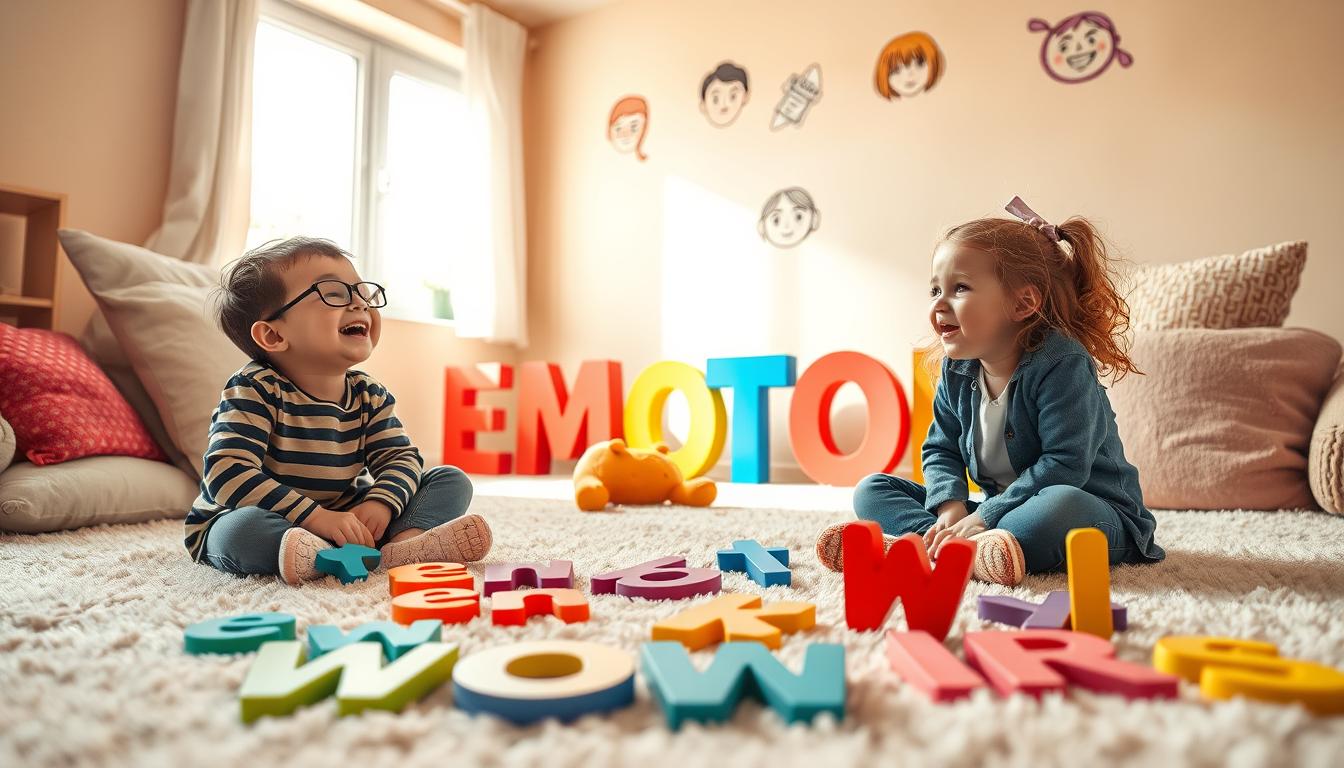
What if understanding your child’s heart is more important than math or reading? Emotional intelligence (EQ) is key. It helps kids know, manage, and understand their feelings and others’ too.
Children with high EQ make friends easier. They deal with disappointment well and recover quickly. This starts with naming their feelings.
Teaching a child the right emotion words changes everything. It makes them feel seen and understood. Instead of a tantrum, they say, “I’m frustrated.” This is the base of emotional growth.
Purposeful play is the best teacher. Games like feelings charades make learning fun. A calm corner teaches self-control—the skill to pause, breathe, and try again.
This play builds a strong emotional vocabulary. That vocabulary is the first step to clear social communication and self-understanding. It lets kids express themselves and connect with the world.
Why naming feelings supports behavior and speech
Saying ‘You seem disappointed’ can stop a child’s frustration. It tells them, “I see you. What you feel is real.” This lets their thinking brain calm down.
Labeling emotions does two important things. It helps manage tough behavior now and builds language skills for later. This is key to self-regulation language.
Imagine a young child overwhelmed by a big feeling. Without words, it might show as a shout or a meltdown. Naming the feeling makes it manageable. A child who feels understood can calm down faster.
This practice helps build better coping strategies later. You can’t teach a child to “take a deep breath when angry” without first recognizing the feeling. Naming it is the first step.
From Recognition to Regulation: How It Works
Games like Emotion Charades teach kids to read non-verbal cues. A Feelings Journal helps them understand their feelings. This builds self-awareness and moves them from reacting to understanding.
It’s important for adults to remember: children are learning, not trying to be “bad.” Their behavior shows an unmet need or unmanaged feeling. Our job is to teach them the words.
A daily “Feelings Check-In” is helpful. If a child says they’re “mad,” your response is key. Validate first (“It’s okay to feel mad”). Then, ask a problem-solving question like, “What can help you feel better right now?” This links the feeling to a solution.
Here’s a clear look at how naming feelings benefits behavior and speech:
| Emotion-Naming Action | Impact on Behavior | Impact on Speech |
|---|---|---|
| Adult Validation (“You look frustrated”) | Acts as a circuit breaker, de-escalates tension, reduces meltdowns. | Models precise descriptive vocabulary beyond “good” or “bad.” |
| Daily Feelings Check-In | Creates a predictable emotional outlet, preventing buildup. | Practices regular use of feeling words in a safe context. |
| Exploring ‘Why’ in a Journal | Builds self-awareness, helping kids identify triggers for next time. | Develops complex sentence structure and causal thinking. |
| Playing Emotion Charades | Teaches calm observation of others, fostering empathy and patience. | Connects physical cues to emotional words, expanding comprehension. |
This work supports a child’s speech development. Each new feeling word adds to their expressive tools. A rich emotional vocabulary lets them explain their world instead of acting it out.
This foundational work makes specific coping strategies effective. When a child can identify “I’m getting overwhelmed,” they can use a tool from their calm corner. This is the goal of self-regulation language: giving them words to navigate their inner world.
Parents play a key role in speech development by being emotion narrators. Your calm voice naming their experience is their first guide.
Designing a calm corner with visuals and tools
Visual tools like feeling charts and emotion thermometers help kids understand their feelings. Your calm corner is a safe space for your child to learn to manage their emotions. It’s a place for growth, not punishment.
Think of it as a skill-building zone. This is important. When a child goes to their calm corner, they’re practicing a skill, not being punished. This helps them see managing feelings as something they can do.
A great visual tool is an Emotion Regulation Thermometer. It shows how intense a child’s feelings are. The thermometer has “cool” blue for calm and “hot” red for big emotions. Next to each level, there are simple ways to cope.

To make a good calm corner, keep it cozy and simple. Here’s what you need:
- A Feelings Faces Chart: This chart shows basic emotion words like happy and sad. It lets kids show how they feel without words.
- A Soft Comfort Item: A favorite stuffed animal or a soft blanket offers comfort and security.
- A Small Sensory Tool: A stress ball or a calming glitter jar helps focus and soothe.
- Calm-Down Choice Cards: Create cards with simple strategies like “Breathe Deeply” or “Count to Five.”
Make this space with your child. Let them pick the pillow’s color or where to hang the chart. This makes the corner their own safe place. Practice using it together to help them know how to use the tools when they’re upset.
These visuals help kids build a strong emotional vocabulary. When they point to “frustrated” on a thermometer, they’re using emotion words in a visual way. This self-awareness is the first step to better social communication.
This foundation of recognizing and naming feelings is key to teaching children to use calming strategies. The calm corner, with its clear visuals and tools, gives them the power to soothe themselves.
By creating this supportive space, you give your child a way to understand their feelings. They learn that all feelings are okay and they have the tools to handle them. This builds confidence and resilience that goes beyond the corner.
Running feelings charades with validation language
Feelings Charades is more than just acting. It’s about the talks that come after. It makes your home a place to explore feelings safely. Kids act out emotions with their faces and bodies, and everyone tries to guess.
Begin with simple feelings like happy, sad, mad, and scared. Keep it easy. One person acts, and others guess. The real fun starts when someone guesses right.
Validation language is key here. Instead of just saying “good job,” be detailed. Say, “I saw how you slumped your shoulders for ‘disappointed’—that was a great clue!” or “Thanks for showing us ‘proud.’ Your big smile told the whole story.” This shows the child’s effort and teaches them to notice physical signs.
Ask questions that make you think deeper. “What clues did you see in my face?” or “When do you feel that way?” This helps build empathy and a better understanding of emotions. It naturally leads to talking about coping strategies.
Always connect the emotion to action. After guessing “frustrated,” ask, “What could someone do when they feel this way?” or “What helps when you feel mad?” This shows that feelings have names and ways to handle them.
Here are key tips for a successful game:
- Keep the mood light and encouraging. Laughter is welcome.
- Focus on describing the body language you saw. This sharpens observational skills.
- Model acting out feelings yourself. Show that adults have emotions too.
- End each round by brainstorming one simple coping strategy for the acted emotion.
This game teaches more than just words. It shows kids how emotions look and feel. They learn to read others’ cues and notice their own. This awareness is the first step to using self-regulation language and healthy coping strategies in life.
Expanding to “because/when” sentences and problem‑solving frames
We start by teaching kids to use simple emotion labels. Then, we help them create ‘feeling sentences’ to explain their feelings. This is a big step. It turns basic emotion words into a tool for understanding why things happen.
Begin by showing them how to say, “I feel frustrated because my tower fell down,” or “When my friend doesn’t share, I feel sad.” This structure adds context to their feelings. It helps them move from just saying “I’m mad” to understanding the why behind it.
Storytime is a great time to practice. After reading a book, ask questions like, “How do you think the character felt when that happened?” and “What could they do next?” This helps build empathy. It lets kids imagine how others feel and connect it to their own life.
Once kids get the hang of ‘because’ and ‘when’ sentences, introduce a simple problem-solving frame. This combines emotional awareness with coping strategies.
Teach a three-step process they can remember:
- Identify the problem: “The problem is we both want the same toy.”
- Brainstorm solutions: “We could take turns, find another toy, or set a timer.”
- Choose one to try: “Let’s try taking turns first.”
Role-playing makes this skill stick. Use puppets or stuffed animals to act out scenarios. A puppet might say, “I feel angry because you took my block. What can we do?” Guide your child to use the steps to find a solution.
This practice is powerful. It turns a child from someone who reacts to big feelings into someone who responds with thought. They learn that recognizing an emotion is just the first step. The real power comes from linking it to a cause and then brainstorming what to do next.
By combining emotion words and practical coping strategies, you give your child a blueprint for emotional resilience. They learn that every feeling has a story, and for every problem, there is a path to try.
Creating a coping kit: breathe, count, squeeze, ask for help
Building a coping kit makes self-regulation real for kids. It turns important strategies into tools they can use anytime. This helps them manage big feelings better.
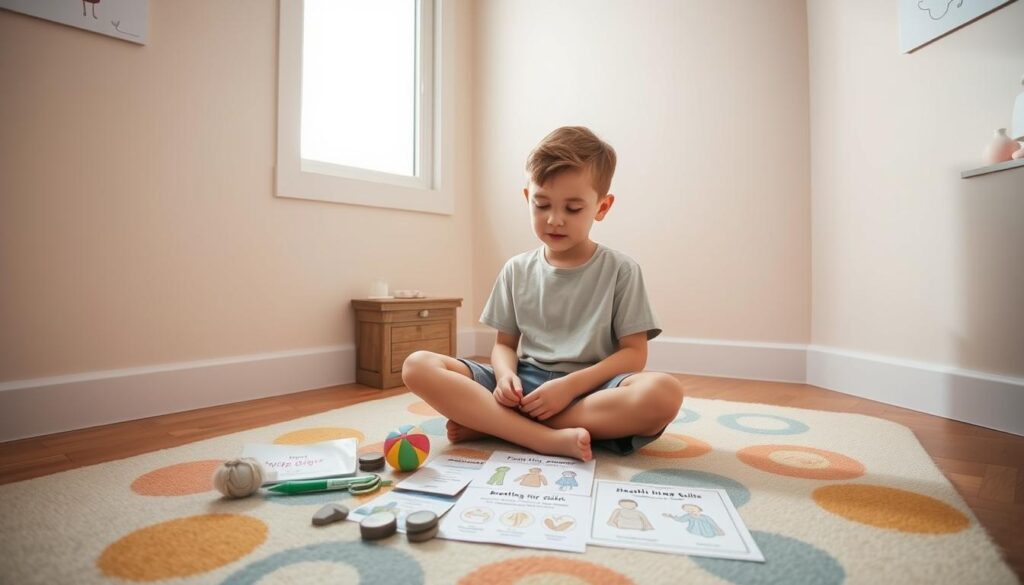
Think of it as an emotional first-aid kit. The goal is to have a few key techniques your child can use when they’re feeling overwhelmed. Let’s create that kit together.
Breathing Made Playful
Breathing is key for self-regulation. Make it fun. Teach “Balloon Breaths” by imagining your belly is a balloon filling up and then deflating.
“Bumblebee Breath” is another fun way. Buzz softly when you breathe out. You can also use “smell the flower, blow out the candle” to practice breathing.
Link this practice to self-regulation language. Encourage your child to say, “I need to do my balloon breaths” when they feel upset. This connects the action to their feelings.
The Power of Counting
Counting is a simple way to focus. It can be counting to five, objects in the room, or breaths. This helps calm a racing mind and gives a moment to think before reacting.
Practice counting during calm times, like car rides or before bed. This makes it easier to use when feeling upset.
Squeeze and Release for Tension
Progressive muscle relaxation works well for kids. Teach them to squeeze their fists like Play-Doh, hold for three seconds, and then release. Notice how their muscles feel different.
You can also practice with toes, shoulders, or a “whole-body squeeze.” During a meltdown, offer a calm tool like squeezing Play-Doh. It can be a gentle anchor.
The Vital Tool: Asking for Help
Teach asking for help as a strong social communication skill. Use the phrase, “I need help.” Role-play scenarios where asking for help solves a problem.
After a child calms down, use that moment to teach. Say, “Next time, you can say ‘help.'” This builds their emotional toolkit for the future.
Practice During Peaceful Times
Practice every tool in the kit when your child is happy and calm. This is not for the middle of a meltdown.
Make it fun. Have a “Coping Kit Drill” where you pick a strategy and practice it together. This builds muscle memory for the brain and body.
Use “First-Then” language to set limits and preview using a tool. For example, “First, let’s do two balloon breaths, then we can talk about the problem.”
Creating this kit empowers your child. It gives them control over their emotions. They learn that self-regulation language is a way to advocate for their needs. Seeking support is the most advanced form of social communication we can teach.
Family mood check‑ins and bilingual adaptations
To support a child’s emotional growth, we must respect their family’s language and culture. Emotional skills grow when all environments work together. This section looks at two ways to build this bridge: family mood check-ins and bilingual adaptations.
Family mood check-ins make talking about feelings a regular thing. Choose a calm time, like dinner or bedtime. Ask, “How is your heart feeling today?” or “Show me with your face how you feel right now.” This makes emotions normal and safe at home.
When we share culture, we learn the emotion words families use. Start by asking, “What words do you use at home for feelings?” Families might say “frustrated” instead of “angry.” Write these words down and use them with the child. This makes your support feel familiar and respectful.
Different cultures express feelings in unique ways. Some are very open, while others are more reserved. The goal is always the same: safety, kindness, and helping the child communicate. Ask families about their calming methods. When we blend these with school tools, children feel understood everywhere.
| Aspect | Home Practice | School Practice | Bridge Strategy |
|---|---|---|---|
| Emotion Language | Family’s native language or dialect words for feelings | Common English emotion vocabulary (happy, sad, mad) | Create a visual chart with both sets of emotion words |
| Calming Rituals | Cultural or family-specific routines (e.g., deep breathing, song) | Classroom calm corner with standard tools | Add a family-suggested item to the child’s coping kit |
| Communication Style | May value quiet coping or collective problem-solving | Often encourages verbal expression and individual steps | Offer both “talk it out” and “show me” options for check-ins |
| Shared Goals | Safety, respect, and family harmony | Safety, kindness, and learning to ask for help | Highlight these common values in all conversations |
Aligning coping strategies creates consistency. If a child squeezes a stress ball at school, maybe they hug a pillow at home. The action is similar, but the tool fits their environment. This consistency helps skills stick. Children learn that their feelings are manageable, no matter where they are.
Bilingual adaptations make tools accessible. Translate simple feeling cards into the family’s language. Use pictures for children who are just starting to learn words. The focus is on understanding, not perfect speech. When a child sees their home language valued, they feel proud and included.
Start small. Pick one new practice to try this week. Maybe it’s a three-minute mood check-in. Or perhaps it’s asking one family about their favorite calming method. Each step builds a stronger bridge between home and school. This teamwork makes every child’s emotional world more secure and supported.
When bigger support is needed: resource list
Knowing when a child needs more than a calm corner is key to good care. The fun strategies we’ve talked about are a great start. But, some kids might need extra help.
This doesn’t mean you’ve failed. It’s a sign to take action. Look for signs like long, intense tantrums or trouble making friends.
Looking for help is brave and caring. It gives your child special tools for their needs. Here’s a list to help you find those tools.
- Targeted Children’s Books: Books that talk about feelings like anxiety or anger can help. They’re a gentle way to start.
- Parent Coaching & Educator Training: Adults can learn new ways to handle big behaviors. Teachers can learn about emotional intelligence too.
- Social Skills Groups: These groups, led by therapists, help kids practice being friends. They’re a safe place for social communication.
- Child Therapists & Counselors: Experts like play therapists can help your child. They teach special ways to cope with feelings.
These resources help kids grow emotionally. They teach self-regulation language and social communication. They add to the emotional skills you’re teaching at home.
Reaching out for help is a big step. It shows you care about your child’s emotional health. You’re not alone, and you’re giving your child a great gift.
Printable feelings cards and a personal calm plan
Your emotional vocabulary work gets stronger with personalized tools. Start with Feelings Face Matching and Emotion Cards. Take photos of your child showing different feelings. Print these or draw simple pictures.
Place these feeling faces on the wall at your child’s eye level in their calm corner.
These cards spark daily conversations. They help move beyond just naming feelings. Create a “Personal Calm Plan” with your child.
This is a simple poster or a large note. Help your child fill in the blanks: “When I feel [emotion word], I will try [coping strategy] or [ask for help].” This plan uses clear self-regulation language.
It turns abstract skills into a child-owned roadmap. Keep this plan visual in the calm corner next to the feelings cards. It synthesizes everything.
Your child practices identifying emotion words, chooses a coping strategy, and uses a script for social communication. This final step makes their new skills concrete and always available.
Empower your child with these tangible tools. A personal calm plan builds confidence. It turns their calm corner into an active hub for managing big feelings every day.