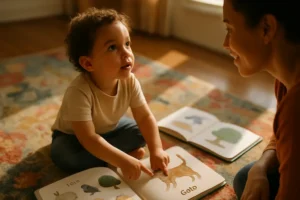
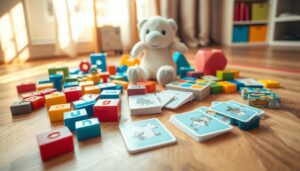
Learning should be fun, not boring. That’s why games are perfect for growing skills.
Kids might not like practicing their speech at first. But when it’s part of a game, they love it. It’s amazing to see.
These games put kids in a special state called “flow state.” It’s like they’re in a different world, mastering words and sounds.
Playing games over and over helps kids remember better than just repeating words. It’s like magic for their brains. Plus, it makes learning a fun family activity.
When kids feel relaxed, they learn more. Games help them feel confident and try new things. Learning becomes something fun everyone can enjoy together.
10 Must-Try Language Games
Turning language practice into play is smart teaching. It’s like hiding veggies in brownies. Kids enjoy the fun while learning. Here’s a list of games that make learning fun and effective.

Quick Games for Home
The Mirror Game turns vanity into victory. Kids watch their mouth while repeating tricky words. It’s like speech bootcamp with instant feedback.
Scavenger Hunts turn your living room into a treasure hunt. “Find three things that start with ‘sh'” makes ordinary objects special. It boosts vocabulary and thinking skills.
Word Categories is like mental gymnastics. Kids name animals, foods, and colors fast. It strengthens their brain’s ability to process language.
Story Dice create storytellers. Roll dice with images and build tales. It’s a fun way to improve sentence skills.
Simon Says trains listening skills. Following commands like “Simon says touch your nose then jump twice” improves hearing. It’s like obedience school for the ears.
Obstacle Courses mix physical and language challenges. “Crawl under the table while naming three fruits” combines movement with memory. It’s a fun way to learn.
On-the-Go Games
License Plate Word Games turn traffic jams into learning. Create words from license plate letters. It’s like mobile Scrabble.
Battleship is more than sinking ships. It’s a game that boosts critical thinking. Guessing coordinates while describing positions improves spatial reasoning and language skills.
Memory Game is a language practice upgrade. Match words with definitions or synonyms. It strengthens recall and vocabulary.
Sticker Match turns rewards into learning. Place stickers under cups with words or pictures. Then, describe what they’re looking for before lifting. It’s a fun twist on peekaboo.
What’s Under the Cup? enhances descriptive language. Hide objects, then give clues until they guess. It’s like twenty questions meets object permanence.
For older learners, games like Apples to Apples build vocabulary. Word Teasers challenge quick associations, while Scribblish combines drawing with description. These games are cognitive workouts in disguise.
Making Up Your Own Games
Ever watch a teenager design a language game? It’s like seeing Gordon Ramsay critique a microwave dinner – everyone’s attention is caught. When kids start creating games, magic happens. They’re not just learning language; they’re building their minds.
Give your older students a challenge. Ask them to create a game from scratch that they love. They get to decide on everything from the layout to the rules. It’s not just fun; it’s a way to improve their thinking skills.
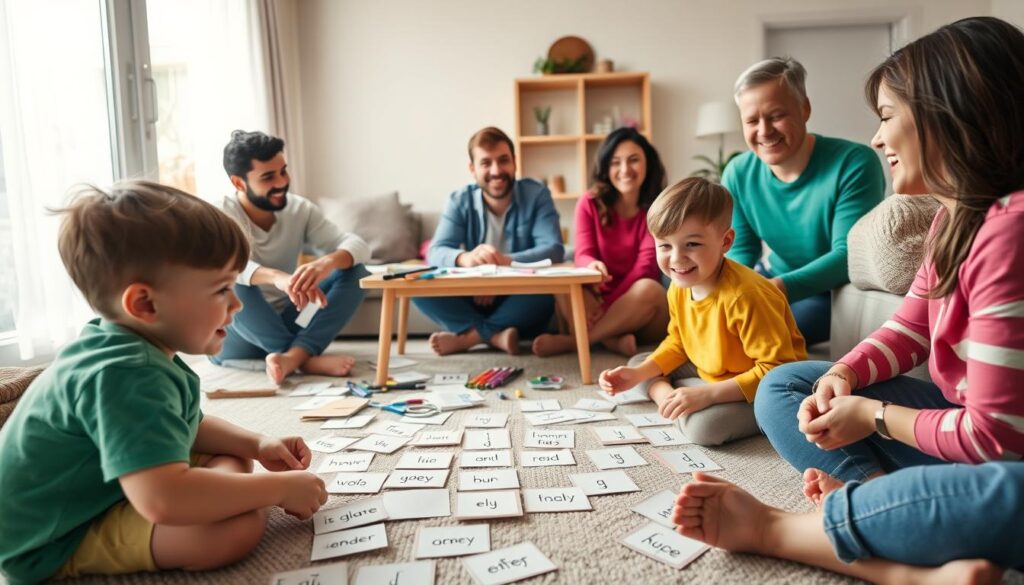
I’ve seen middle schoolers make games about lacrosse that even Hasbro would notice. The key is that they’re solving problems and thinking creatively. It’s like they’re building their own world with words.
Watching them work is fascinating. You see how they organize and talk about their ideas. It’s like watching a reality TV show that teaches you something new.
These family speech activities turn learning into making. Here’s what happens when kids start designing instead of just following rules:
| Consumer Mode | Creator Mode | Cognitive Benefits |
|---|---|---|
| Follows rules | Makes rules | Develops logical reasoning |
| Answers questions | Creates questions | Enhances critical thinking |
| Uses provided materials | Designs materials | Boosts creativity |
| Plays within structure | Builds structure | Improves organizational skills |
This method turns boredom into excitement. That preteen who used to roll their eyes becomes a game design star. They’re not just learning language; they’re mastering systematic thinking through family speech activities they made up.
The best part? You don’t need expensive stuff. Just imagination and the freedom to be creative. Watch what happens when you let them take charge. You might be surprised at what they come up with.
Games for Different Ages
Choosing language games by age isn’t about making them simple. It’s about matching the game’s challenge with the player’s brain development. Toddlers and teenagers need different levels of challenge.
For young children, games should be rich in sensory experiences and repetition. Their brains are wired to recognize patterns and learn from input.
The Memory Game turns into a vocabulary challenge when you name each pair. Sticker Match becomes a game of categorization, grouping items like animals or colors.
The “What’s under the cup?” game is more than just learning about objects. It’s a magic trick that also boosts vocabulary.
Elementary school is when language games get competitive. Word Bits becomes a game of linguistic showdowns. Kids at this age love rules and winning.
Teenagers want games that are cool and also help with language. They enjoy games that challenge their minds, like Apples to Apples.
Language development follows cognitive growth, from simple to complex. It’s like how their music tastes change from Baby Shark to more complex songs.
| Age Group | Game Type | Cognitive Focus | Sample Games |
|---|---|---|---|
| 2-4 years | Sensory & Repetition | Object recognition | Memory Game, Sticker Match |
| 5-8 years | Competitive Word Play | Vocabulary building | Word Bits, Category Race |
| 9-12 years | Strategy Games | Complex syntax | Sentence Scramble, Story Dice |
| 13+ years | Social Deduction | Persuasive language | Apples to Apples, Debate Games |
Games progress from simple to complex as kids grow. This mirrors cognitive development. Each stage builds on the last, creating a strong foundation for language skills.
The best language games are fun, not like school. They’re like hiding veggies in pasta – effective because they’re enjoyable.
Measuring Progress
Tracking language growth is like watching a witty sitcom. The real development is between the big laughs. Educational play doesn’t have progress bars or percentages. It’s more subtle and human.
The magic number is three. When your child uses a word or sound correctly three times, it’s part of their repertoire. This isn’t about science; it’s like the three-beat rule of comedy.
Those data collection sheets are like treasure maps. They’re not for testing; they’re for seeing language grow. The Cariboo game adaptation we studied has amazing student response sheets. They make sentence writing a discovery, not a chore.
The real metrics are in everyday life. When your child corrects pronunciation during play. When new words pop up at dinner. When learning moves from the lab to the real world.
Progress takes time, so celebrate small wins. Don’t turn your living room into a testing lab. The goal is to have fun, not to be perfect. High-fives are more important than percentages.
Remember, in educational play, the journey is the fun. The destination will take care of itself if you enjoy the ride.
Keeping it Fun & Light
The secret to great family speech activities? It’s like jazz over classical music. There’s structure, but the magic is in the surprises.
More language skills are learned during cookie-baking than in drills. The FLOP method from that giant bunny show is key. It says model, don’t correct. This keeps confidence up while skills grow.
The best activities fit into daily life – during meals, chores, or bedtime. It’s not about being perfect. Progress is like a toddler’s drawing: messy, creative, and beautiful.
These language games for family fun focus on connection, not correction. It’s about real talk, not perfect grammar. Laughing together builds vocabulary and memories.
Don’t stress about being perfect. Keep it fun and playful. Watch language skills grow with laughter.